Bali Tap Water Safety for Kids 2026
Need personalized advice for your Bali journey? Ask our AI Bali Mom—expertly trained by parents with 10+ years on the island.
Start Chatting →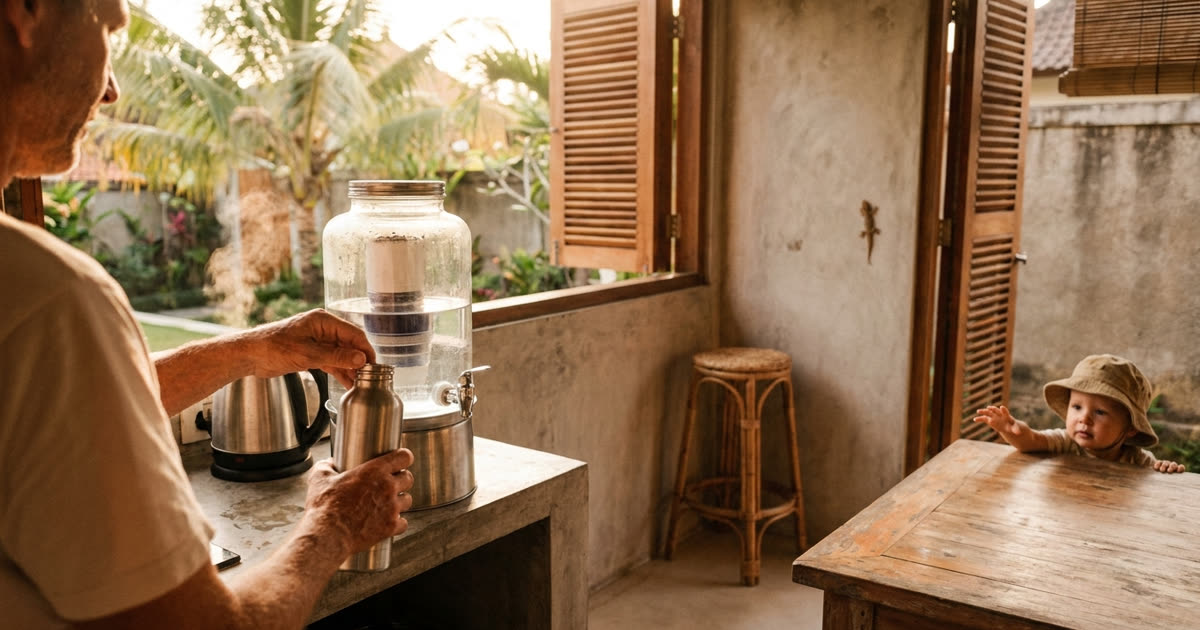
Is Bali Tap Water Safe for Kids?
No. Bali's tap water is not safe for kids to drink, brush teeth with, or mix into infant formula straight from the tap. Boil it to a rolling boil for one full minute, or use sealed bottled or filtered water instead — every time, not just when it's convenient. Ice counts too: trust it only if it's made from bottled or filtered water, and ask when you're not sure. This isn't Bali-specific paranoia. It's the same standard families use across most of Southeast Asia, and once it's a habit, it stops feeling like a big deal.
The Reality of Health in Bali
Here's what catches new families off guard: tap water here isn't consistently bad. It's unpredictable. Some properties run on treated municipal supply, others on bore wells, others on tanks trucked in and stored who-knows-how. Even within one neighborhood, water quality can vary house to house, depending on the pipes, the tank, and how recently it was cleaned. That inconsistency, not a single dramatic contaminant, is the real risk for kids. Their smaller bodies dehydrate faster and get hit harder by the bacteria and parasites in improperly treated water: E. coli, Giardia, Cryptosporidium.
The good news: this is one of the easiest health risks in Bali to manage completely. Unlike mosquito-borne illness or air quality, water risk is fully within your control. You just have to be consistent about it, including with grandparents, guests, and any staff preparing food for your kids.
What to Look For
Drinking and cooking water
Never serve tap water to a child untreated. Boiling to a rolling boil for one minute kills the bacteria and parasites that matter. A home filter rated for biological contaminants — not just taste or sediment — is the permanent fix once you're staying long-term. Sealed bottled water is the simplest option when you're out and about. Check that the seal is intact before opening: refilled bottles do circulate in some tourist areas.
Ice in drinks
This is where families get caught out. Reputable restaurants and cafes generally make ice from filtered or bottled water, because international customers ask. But "generally" isn't "always," and warungs and roadside stalls vary widely. If you're not sure, ask, or skip the ice for your kids. It's a small thing that's easy to control.
Formula and baby bottles
Mixing formula needs water brought to a rolling boil, then cooled to body temperature, before use. This matters more for infants than any other group: their gut flora hasn't built up any tolerance yet. Sterilize bottles the same way you would anywhere else. The water going into the bottle is what changes here, not the sterilizing process.
Brushing teeth
Small kids swallow toothpaste-rinse water without thinking about it. Keep a cup of boiled-and-cooled or bottled water by the sink for rinsing, and get older kids into the habit of using it automatically — it becomes second nature within a week or two.
Bathing and skin contact
Showering and bathing in tap water is generally fine for healthy skin with no open cuts. Swallowing it is the real risk, not brief external contact. Kids with eczema, recent scrapes, or sensitive skin should avoid prolonged soaking. Rinse off after a bath if a child has any open skin.
⚠️ Warning: Water treatment realities, product availability, and local guidance can shift. Always check current recommendations with a licensed pediatrician or health consultant in Bali. Don't rely on any single article, including this one.
Practical Tips
- Keep a dedicated "kid water" jug of boiled-and-cooled or bottled water in the kitchen at all times. Don't rely on remembering to boil in the moment.
- Brief anyone who prepares food or drinks for your child (nannies, grandparents, visiting friends) on the boiled or bottled rule explicitly. Don't assume it's obvious to them.
- Bottled water in Bali is widely available and cheap relative to most household budgets. Aqua is common on shelves everywhere, but any sealed, reputable brand works the same way.
- Carry a small bottle of drinking water for your child whenever you're out, especially at warungs or beach clubs where ice and rinse-water practices vary.
- If your household is on PDAM (Bali's regional municipal water utility) supply, treat it as safe for washing and bathing but not for drinking or oral use unless boiled or filtered. Municipal treatment targets general household use, not direct child consumption.
- Watch for the actual warning signs of waterborne illness in kids: sudden watery diarrhea, vomiting, or fever that doesn't settle in a day. Dehydration moves fast in small children. Don't wait it out.
- If a child shows signs of dehydration (dry mouth, no tears when crying, unusually few wet diapers, lethargy), seek medical care promptly. RSUP Sanglah in Denpasar is Bali's main public referral hospital and can handle pediatric emergencies, but call ahead, or have someone call ahead before you arrive, to confirm current availability. Don't assume walk-in capacity.
- Rotate and clean any home water storage tanks or dispensers regularly. Stagnant stored water is often a bigger risk than the source water itself.
A Conscious Note
Water access and infrastructure are real, ongoing challenges for Bali's communities too, not just a travel inconvenience for visiting families. Support local businesses that invest visibly in clean water practices. Reduce single-use plastic where you can by refilling from large bottled-water dispensers instead of buying small bottles daily. Remember that the water systems you rely on for convenience are systems many Balinese families depend on every day, not a backdrop to your stay. Treading lightly here means using water thoughtfully, not just safely.
Quick-Reference FAQ
Can I use tap water to mix my baby's formula if I boil it first? Yes. Bring it to a full rolling boil for at least one minute, then cool it to body temperature before mixing. This is the standard approach recommended for infant formula preparation anywhere tap water quality is inconsistent, and it works reliably.
Is ice at restaurants in Bali safe for kids? Often yes at established restaurants and cafes serving international visitors, since they typically use filtered or bottled water for ice. But practices are inconsistent enough that asking directly, or skipping ice for young kids when unsure, is the safer default.
My toddler swallowed a little tap water in the shower: should I worry? A small accidental swallow during a bath is unlikely to cause problems for most healthy kids. Watch for any diarrhea, vomiting, or fever over the next couple of days, and check in with a pediatrician if symptoms appear or you're uneasy.
Looking for a children's dentist? See our Kids Dental Care in Bali 2026: Clinics & Costs guide.
Get the weekly Bali family digest
Events, new guides, one seasonal tip. No spam.
One email a week. Unsubscribe anytime.
Related Articles
Trusted Bali family partners
Backus Ceramics
CangguBackus Ceramics is a beloved ceramics studio in Canggu where families can get hands-on with clay in a relaxed, creative atmosphere. Class…
View partner →Mogi Artperience
SanurMogi Artperience is a warm, hands-on art studio in Sanur, Bali, where children and families explore painting, drawing, and crafts guided…
View partner →Bali Arthouse
UmalasBali Arthouse is an art café and community space in Umalas. Pick a creative activity from the daily art menu and settle in with a coffee,…
View partner →