Bali Kids Scooter Safety 2026: Gear & Rules
Need personalized advice for your Bali journey? Ask our AI Bali Mom—expertly trained by parents with 10+ years on the island.
Start Chatting →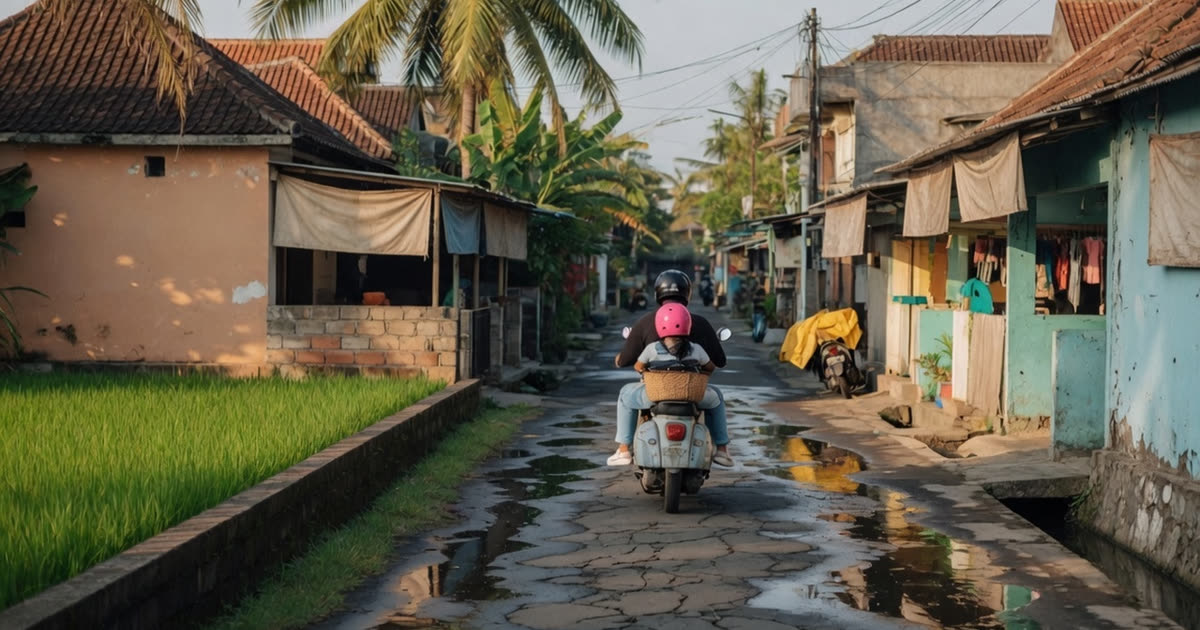
Bali Kids Scooter Safety 2026: Gear & Rules
Is it actually safe to carry a toddler on a scooter in Bali? Not inherently, but it's manageable if you treat it seriously: the risk goes down, it doesn't disappear. The non-negotiables are a correctly fitted child helmet (never an adult one strapped loosely), closed-toe shoes for everyone on board, a child old enough to sit upright and hold on unassisted, and a firm rule to skip fast arterial roads whenever you can. Gear lowers the risk. It doesn't remove it.
The reality of transport in Bali
Scooters are the default way most families get around here, not a novelty. Villa compounds, school runs, grocery trips: a huge share of it happens on two wheels, often with a child wedged between two adults or standing on a footboard. This is not the safest way to move a small child, and no amount of gear makes it risk-free.
The biggest trap is reading "everyone does it" as "it's fine." Seeing other families ride three-up with no helmets isn't evidence of safety: it's evidence of normalized risk. Helmet and licensing requirements for riders, including foreign visitors, exist and do get enforced — rules and enforcement shift, so check the current requirements with a licensed agent or official source rather than assuming last year's answer still holds. Enforcement varies by area and by day, but Bali's traffic police (Polantas) do run checks. "I didn't know" won't hold up as a defence, and it's not worth testing with a child on the bike.
Roads here don't behave like roads elsewhere. Traffic in areas like Canggu has grown faster than the infrastructure, so narrow lanes carry a mix of scooters, cars, trucks and pedestrians with minimal separation. Arterial roads such as Jalan Bypass Ngurah Rai move at genuinely high speed and carry heavy truck traffic, categorically different from a quiet village lane. Treat it that way when you're deciding whether to ride or find another way.

What to look for
Instead of judging one rental shop or scooter model against another, judge against these criteria every time. They apply no matter where you are on the island.
Helmet fit, not helmet price
A helmet only works if it fits. For kids, that means a snug fit with no side-to-side movement, a secured chin strap, and full coverage rather than an open-face style. Look for a local safety certification sticker (SNI) as a baseline, and size the helmet to the child, not to what happens to be hanging on the rack. An adult helmet loosely bungeed onto a toddler's head is not protection: it's a false sense of it.
Price roughly tracks three bands, and it's worth knowing what you're paying for. Budget helmets, the kind many rental shops hand over by default, usually clear the SNI sticker and nothing more: a couple of fixed sizes, thin padding, no adjustment. Mid-range helmets add an adjustable fit system, a dial or swappable pads, so the shell can actually be sized to a growing child's head, which matters more than any other single factor. Premium kids' helmets carry a recognised international standard (SNELL or DOT) on top of SNI, plus better ventilation and impact padding. The jump in price buys fit and certification, not the colour or the logo: a correctly fitted mid-range helmet beats a loose premium one every time.
How the child is actually seated
There's a real difference between a child sandwiched securely between two adults with feet on a proper footrest, and a child standing on the floorboard or perched on a parent's lap with nothing to hold. Before you ride, ask: does my child have a stable foot position, something to grip, and an adult directly behind or in front of them at all times? If the answer involves balancing, that's your signal to reconsider.
Road and weather judgment
The same ten-minute trip can be a reasonable risk on a quiet backstreet at 9am and a bad idea on a main road at rush hour in the rain. Bali's rainy season, typically November through March, brings sudden, heavy downpours that turn a routine ride slick and unpredictable fast. Wet roads get slick fast, visibility drops, and braking distance changes. Build the habit of asking "is this specific trip, right now, worth it with a child on board" rather than treating scooter-or-not as a decision you make once and never revisit.
When a scooter isn't the right call
Long distances, late nights, bad weather, a child who's overtired or wriggly, or a route that touches a fast arterial road are all good reasons to choose something else. Ride-hailing apps and private drivers exist for exactly this gap, and leaning on them for the trips that don't feel right is a sign of good judgement, not failure. Our full breakdown of the options is in Getting Around Bali with Kids: Safe Transport Guide 2026.
If someone else is riding with your child
If a nanny or carer regularly transports your child by scooter, their riding competence and helmet habits matter as much as your own. That's a conversation worth having directly rather than assuming it's fine. See our guide on Bali Nanny Safety 2026: CPR, Pool Rules & Certification for the fuller checklist on vetting anyone who cares for your kids.
Practical tips
- Fit the helmet before you buy or rent it. A helmet that moves on the head is close to useless: try it on the child, not just the box.
- Closed-toe shoes, every ride, every passenger. Flip-flops offer no protection and can slip off the footrest mid-ride.
- Set an age and ability bar, not just a weight limit. A child needs to sit upright independently and follow a basic instruction ("hold on") before they belong on a scooter at all.
- Avoid fast arterial roads with kids on board. Choose the slower, smaller route even if it takes longer.
- Reconsider when it rains. Wet asphalt and reduced visibility change the risk calculation. A taxi or ride-hail trip is often the better call.
- Check brakes and tyre pressure before any longer trip, not just when something already feels off.
- Keep both hands and full attention on the ride. No filming, no phone checks, no calls while a child is on the bike.
- Carry travel or health insurance that explicitly covers scooter accidents. Many policies exclude them by default, so check the wording rather than assuming.
A conscious note
Choosing how your family moves around Bali is also a choice about the roads and community you share. Ride at speeds that respect pedestrians, other riders and the neighbourhoods you pass through: many are residential streets, not routes between your destinations. Supporting local mechanics for servicing and repairs over the cheapest option keeps money circulating in the community you're a guest in. Modelling calm, rule-following riding (full stop at junctions, helmets on every time, no shortcuts through rice-field paths) teaches your kids, and the families watching, that safety isn't a tourist inconvenience. It's how you treat a place you live in.
Quick-reference FAQ
Is there a legal minimum age for a child to ride on a scooter in Bali? There's no widely enforced minimum age specific to child passengers, which is exactly why it's on parents to set their own bar. Licensing age rules exist for operating a scooter, but that's a different question from when a child is ready to ride as a passenger — check the current licensing rule with a licensed agent or official source rather than relying on a number here. A practical minimum is a child who can sit upright unsupported, grip something securely, and follow a basic safety instruction. Younger than that, choose a car, app-based ride, or private driver instead.
Do I need an international licence to ride a scooter here as a foreigner? Requirements for foreign riders change and enforcement varies, so don't treat anything written here as the final word — check the current requirement with a licensed agent or official source before you ride, and carry whatever documentation they confirm you need. Sort it before you need it, not after a traffic stop.
What's the single biggest mistake parents make with kids on scooters here? Treating "everyone does it" as the same thing as "it's safe." The two aren't the same, and the fix is small but consistent: a properly fitted helmet every time, a child who's genuinely ready for the ride, and a car or app ride on the table when the road, weather or trip doesn't feel right.
Get the weekly Bali family digest
Events, new guides, one seasonal tip. No spam.
One email a week. Unsubscribe anytime.
Related Articles
Trusted Bali family partners
Sama Sama Store
SesehSama Sama Store is a charming boutique nestled in Seseh, one of Bali's most serene and authentic villages, offering a lovingly curated se…
View partner →Bali Artisan Baby
BerawaBali Artisan Baby is a beloved boutique in Berawa specialising in beautifully handcrafted baby and children's items — from soft toys and…
View partner →Billie's
Kerobokan / Munggu / LombokBillie's is a shop with locations in Kerobokan, Munggu, and Lombok, offering a free bracelet from a selected range with a minimum spend o…
View partner →