GWK with Kids 2026: Worth It?
Need personalized advice for your Bali journey? Ask our AI Bali Mom—expertly trained by parents with 10+ years on the island.
Start Chatting →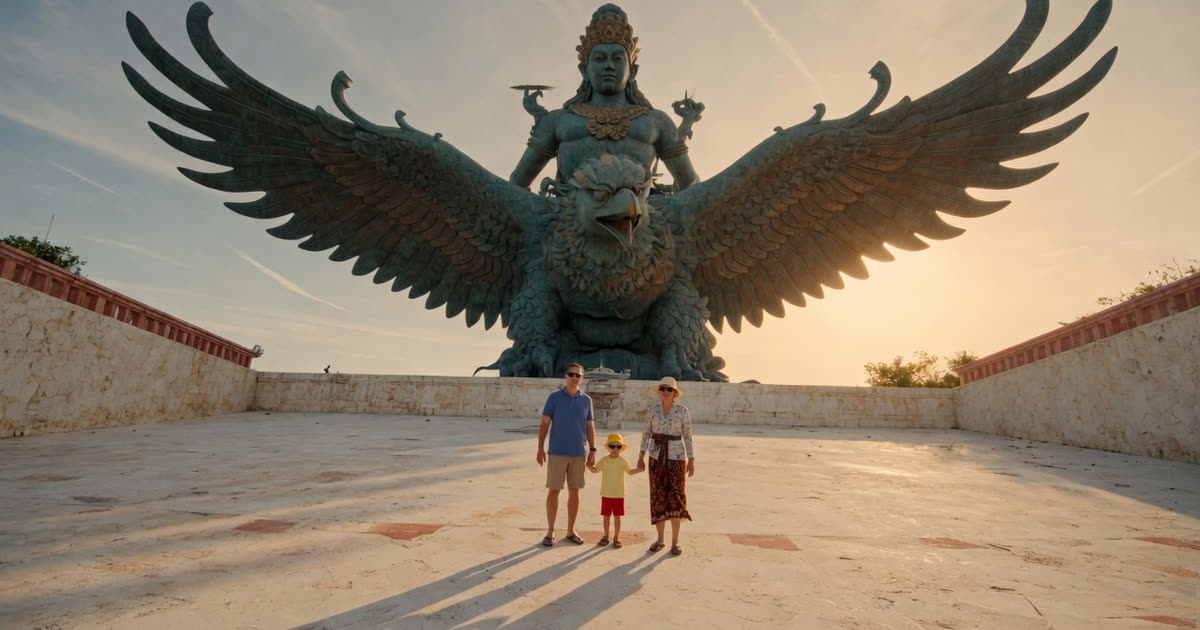
GWK Cultural Park is worth visiting with young kids: the entrance fee buys a large, open site that rewards families who linger, the heat is manageable with the right timing, and the uphill walk to the statue is doable — in a carrier for toddlers, on foot for older kids, tougher with a stroller. Go first thing in the morning or after 3pm, budget three to four hours, and treat it as a proper outing, not a quick stop — the payoff is views over southern Bali you won't get anywhere else.
The Reality of Cultural Park Visits with Kids in Bali
GWK Cultural Park surprises most first-time visitors the same way: they show up expecting a quick photo stop and instead find a sprawling site on the Bukit Peninsula, south of the airport past Jimbaran, built around limestone cliffs and open plazas with the giant Garuda Wisnu Kencana statue — among the tallest statues in the world — as the anchor. That scale is the whole point, and also what trips families up. Parents who give the space time end up loving it; parents who rush it end up frustrated.
The other thing people underestimate is the sun. The Bukit sits higher and drier than Ubud or Canggu, with little natural shade across the main plazas. Midday visits with young kids tend to go badly — overheating, meltdowns, a rushed exit. Planning the timing in advance changes the whole experience, from "why did we do this" to "that was actually beautiful."
Some Bukit Peninsula attractions tolerate a spontaneous midday visit — shaded paths, vehicle transport between stops. GWK asks more of you upfront: real heat, real walking, real timing. What you get in return is the open plaza at the statue's base looking out toward Jimbaran Bay and, on a clear afternoon, the coastline toward Uluwatu.

What to Look For
Timing and crowd levels
Early morning (right at opening) and late afternoon into golden hour are the two windows that make this park sing. The light turns warm and forgiving, the heat drops, and the crowds thin out because most tour buses run a midday circuit. Late afternoon also lines you up for cultural performances, which tend to cluster in the cooler parts of the day.
The walk and the physical demands
Getting from the entrance to the statue base involves real distance and a real incline, some of it through cliff-carved corridors that are dramatic but not stroller-friendly. A soft carrier beats wheels if you're traveling with a baby or a toddler who tires fast. For kids six and up, treat it as an adventure walk, not a stroll.
What actually holds kids' attention
The scale is the draw for children — a statue taller than anything they've likely stood beneath, wide plazas to run in, and open-air performances happening at intervals throughout the park. Kids respond more to the space and the spectacle than to any interpretive signage, so don't over-plan the "educational" angle. Let them look up, run, and ask questions; that's the visit doing its job.
Budgeting realistically
Treat entrance costs as mid-range for a Bali family outing — comparable to other major cultural or nature attractions on the island rather than a quick, cheap stop. Prices and inclusions shift from year to year, so check the official current 2026 rates before you go rather than relying on any article's numbers, including this one.
Practical Tips
- Arrive at opening or after 3pm — midday sun on the open plazas is genuinely hard on young kids.
- Carry more water than feels necessary; there's limited shade between the entrance and the statue viewpoint.
- Bring a soft carrier instead of relying on a stroller for kids under three — the terrain includes stairs and uneven stone.
- Pack hats and reef-safe sunscreen; reapply before the uphill stretch, not after.
- Check performance schedules when you arrive so you can time your walk around a show rather than missing it.
- Wear closed shoes with grip — the limestone corridors can be uneven and slightly slick after rain.
- Build in a rest stop halfway up; there's no shame in a snack break for small legs.
- If you're driving from Jimbaran or elsewhere on the peninsula, allow extra time — Uluwatu-bound traffic backs up in the late afternoon, which is exactly when you want to arrive.
A Conscious Note
GWK employs Balinese dancers, guides and grounds staff whose work deserves to be seen as skilled labor, not scenery. Watch a performance in full rather than drifting off after the photo, tip if it feels appropriate, and resist the urge to treat cultural shows as background noise for your own content. If you want to extend that awareness beyond the visit, look for small, community-run warungs near the park entrance rather than defaulting to chain options — it's a small choice, but it's the kind that keeps tourism dollars circulating locally instead of leaking straight back out.
Quick-Reference FAQ
Is GWK Cultural Park stroller-friendly? Only for the flat sections near the entrance. The path to the statue involves stairs and inclines through stone corridors. A soft carrier works better than a stroller for babies and toddlers; older kids generally manage the walk fine on foot.
How long should we plan for a visit with kids? Three to four hours is realistic once you factor in the walk, rest breaks, and at least one performance. Rushing it in under two hours usually means missing the parts kids actually enjoy.
Is GWK worth it if we're short on time in Bali and can only pick one Bukit Peninsula stop? If your kids respond well to scale, open space and live performance, yes. If they do better with animals and shaded, low-effort paths, a park built around that kind of pacing may suit your trip better — plan the choice around your own kids' temperament rather than the itinerary everyone else follows.
Get the weekly Bali family digest
Events, new guides, one seasonal tip. No spam.
One email a week. Unsubscribe anytime.
Related Articles
Trusted Bali family partners
Backus Ceramics
CangguBackus Ceramics is a beloved ceramics studio in Canggu where families can get hands-on with clay in a relaxed, creative atmosphere. Class…
View partner →Bali Arthouse
UmalasBali Arthouse is an art café and community space in Umalas. Pick a creative activity from the daily art menu and settle in with a coffee,…
View partner →Mogi Artperience
SanurMogi Artperience is a warm, hands-on art studio in Sanur, Bali, where children and families explore painting, drawing, and crafts guided…
View partner →