Bali Banjar Fees 2026: What Renters Pay
Need personalized advice for your Bali journey? Ask our AI Bali Mom—expertly trained by parents with 10+ years on the island.
Start Chatting →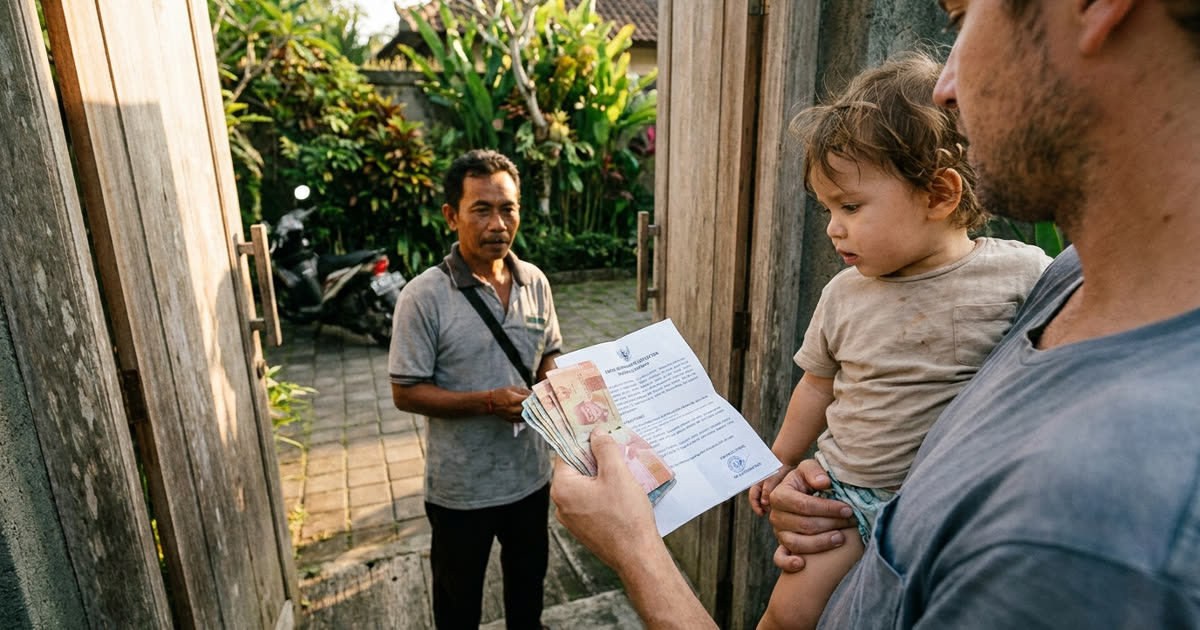
Do Renters Really Pay Banjar Fees in Bali?
Yes, renters usually do pay banjar fees when their rental sits inside a banjar's territory — refusing or ignoring the request rarely stays quiet, showing up instead as friction with neighbors, an awkward call to your landlord, or quiet exclusion from the community goodwill that keeps daily life in Bali running. It's framed as a voluntary customary contribution, not a legal tax. Confirm with your landlord first, in writing, to settle who's actually on the hook.
The Reality of Banjar Fees for Renters
A banjar is the traditional neighborhood association that every Balinese village is divided into: part civic body, part religious congregation, part social safety net. Banjars sit under the wider Desa Adat (customary village) structure, which handles ceremony, land, and community obligations that exist separately from Indonesia's formal government system. This dual system, official government administration running alongside customary adat law, is the single biggest thing newcomers misunderstand. Paying your visa fees and your kos or villa rent does not cover you with the banjar. They're unrelated systems.
Here's what trips people up: banjar fees were never designed with foreign renters in mind. They were built for Balinese families who are born into a banjar, marry into one, or buy land within its boundaries. Renters, especially short-term ones, are a category the system is still figuring out. In practice, that means the rules aren't written down anywhere you can look up. They vary by banjar, by neighborhood, and sometimes by how long you've already been living there.

The logic behind it stays consistent: if you're living inside a banjar's territory, you're using its roads, its security patrols (pecalang), its waste collection, and its capacity to keep the neighborhood running during ceremonies and ordinary days alike. The fee is the price of being a good-faith participant in that shared infrastructure — closer to neighborhood dues than a tax, and not something you get to sit out.
What to Look For Before You Pay
Whose Name Is Actually on the Fee
Some landlords fold banjar contributions into the rent and handle it themselves. This is common with longer leases and villa owners who've rented to foreigners before. Others expect the tenant to pay directly, especially for month-to-month arrangements. Before you hand over any money, ask your landlord directly: "Is banjar fee included in this rent, or do I pay it separately?" Get the answer in writing, even just over WhatsApp — it heads off confusion down the line.
What the Money Actually Funds
Contributions typically go toward shared community costs: temple ceremony expenses, security staffing, road and drainage upkeep, and mutual-aid funds the banjar draws on for members' life events like weddings, cremations, and births. Fee structures differ by banjar and by whether it's a one-time or recurring contribution, so treat any specific number you hear from a friend or a Facebook group as anecdotal, not a rate card. Ask locally rather than assuming your situation matches someone else's post.
How and When Payment Happens
There's rarely a formal invoice. More often, a member of the banjar or your landlord's contact lets you know verbally, sometimes around a specific ceremony or annual event. Areas with heavy foreign rental turnover, Canggu is the clearest example, are where you're most likely to run into a defined process, simply because so many renters cycle through without ever being told the norms. If you're in a fast-turnover area, ask early and expect a more structured answer than you'd get in a quieter village.
Practical Tips
- Ask before you're asked. Bring it up with your landlord or property manager in your first week, not after someone knocks on your door.
- Keep a record of what you pay. A simple note with date and amount protects you if the question comes up again.
- Don't negotiate the amount aggressively. Treat it as a contribution to a system you're a guest in, not a fee to haggle down.
- Separate banjar fees from other neighborhood costs. Security (pecalang) fees, waste collection, and banjar contributions are sometimes bundled and sometimes not: clarify each one individually.
- If no one has mentioned it, don't assume it doesn't apply to you. Silence usually means nobody's gotten around to explaining the system yet, not that you're exempt.
- When in doubt, ask your landlord to make the introduction. A short, respectful conversation with the banjar directly, mediated by your landlord, resolves more uncertainty than months of guessing.
A Conscious Note
Banjar fees are one of the few places where the line between "guest" and "resident" becomes concrete and financial. Treat that moment with care rather than as red tape to minimize. Paying promptly and without complaint is a small act, but it's also real reciprocity for a community that absorbs the cost of extra traffic, water use, and waste that comes with foreign renters: costs that don't show up on any invoice. Where you can, go further than the minimum: show up to community clean-up days if invited, greet your neighbors, learn a few words of Balinese or Indonesian. Bali's culture is the reason the island still feels the way it does, and it stays that way because the people who live here, temporarily or not, choose to tread carefully.
Quick-Reference FAQ
Do renters legally have to pay banjar fees? Banjar fees generally fall under customary adat practice rather than formal Indonesian civil law, but that distinction is a legal nuance, not a green light to skip payment — refusing to participate still carries real social consequences in a system built on community reciprocity. For a definitive answer on your specific situation, check with a local legal professional rather than relying on general guidance like this.
What happens if I just ignore a banjar fee request? Nothing happens immediately, but ignoring a banjar fee request tends to surface later: a strained relationship with neighbors, a landlord asked to explain your absence from community life, or difficulty if you ever need the banjar's goodwill, for a lost item, a local dispute, or an emergency.
Should I pay the banjar directly or through my landlord? Ask your landlord first before paying a banjar fee directly. Many villa and long-term rental agreements already include it in the rent, so paying twice, or paying the wrong party, is an easy mistake to make.
Get the weekly Bali family digest
Events, new guides, one seasonal tip. No spam.
One email a week. Unsubscribe anytime.
Related Articles
Trusted Bali family partners
Hatiku Ubud
UbudHatiku Ubud is a beloved boutique nestled in the heart of Ubud, offering a curated selection of handcrafted Balinese goods, local artwork…
View partner →Jeremy Ley Artshop
CangguJeremy Ley Artshop is a colourful little shop on Batu Bolong in Canggu, full of prints, postcards, stickers, tote bags, ceramics, keyring…
View partner →Pippa & Luca
Canggu / UmalasDiscover Pippa & Luca, a delightful children's boutique in Canggu and Umalas, Bali, where charming clothes and accessories await your lit…
View partner →