Bali Water Birth 2026: Cost & Safety
Need personalized advice for your Bali journey? Ask our AI Bali Mom—expertly trained by parents with 10+ years on the island.
Start Chatting →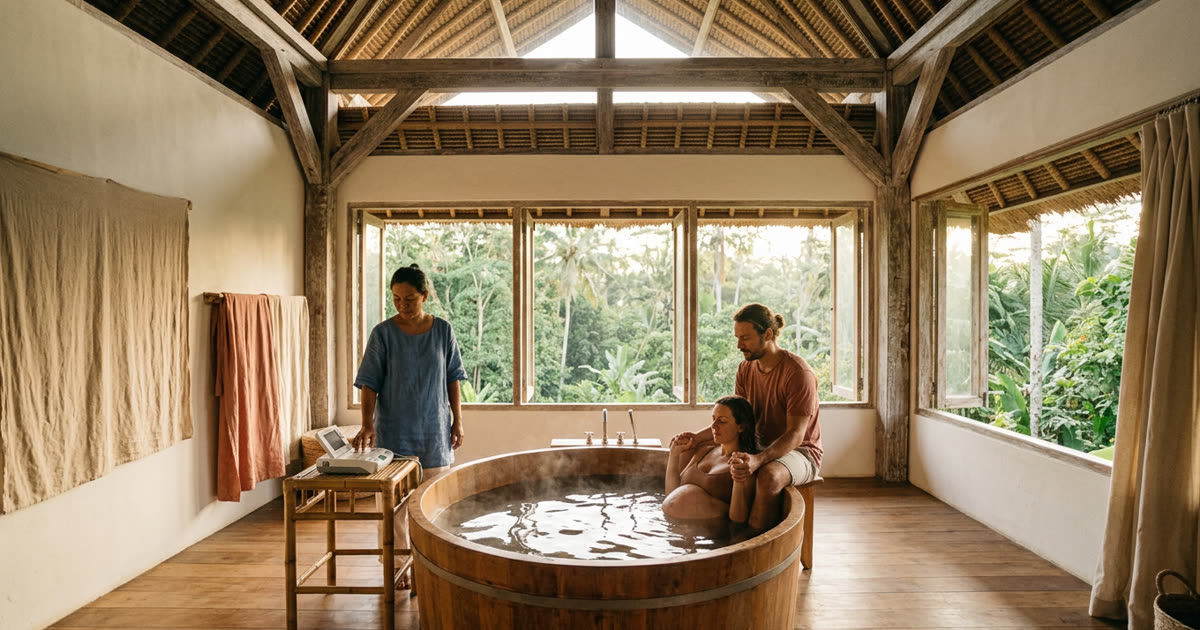
The Reality of Pregnancy Care in Bali
Newcomers sort Bali birth options into "natural" versus "medical," as if a gentler setting means skipping medical oversight. That's the wrong frame. A water birth at a community birth center is still a medical event: it happens with a midwife instead of an OB, usually without an operating theater down the hall.
Bali has three tiers of maternity care: public hospitals, private international-standard hospitals, and community midwife-led birth centers. Each has a different cost and a different level of emergency capability. None of them is automatically the safe choice or the risky one: safety depends on your pregnancy and on your attendant's credentials and hospital access.
The other thing newcomers underestimate is logistics. Traffic between Ubud, Denpasar, and the south coast can turn a 20-minute drive into an hour at the wrong time of day. Whatever setting you choose, map the real transfer time to the nearest hospital with an operating theater: don't just look at the distance on a map.
What to Look For
A Licensed, Currently Registered Attendant
Ask directly whether the midwife or OB holds a current STR (Surat Tanda Registrasi), Indonesia's medical practice license, and how many water births they've personally attended. A warm, confident manner is not a substitute for credentials: ask to see them.
A Real Hospital Backup Plan
This matters more than which building you choose. Ask exactly which hospital your attendant transfers to, whether they call ahead and ride with you, and how long that transfer takes in daytime traffic. Bali's main public referral hospital, RSUP Sanglah in Denpasar, and private hospitals such as BIMC are realistic destinations, but availability changes. Confirm current obstetric capacity directly with the hospital by phone, not through a birth center's assurance.
What Actually Drives the Cost
Three things move the price: the setting (birth center, public hospital, or private hospital), whether labor stays low-risk or needs a transfer, and what's bundled into the package (antenatal visits, lab work, postpartum checks). As a rough guide, current as of October 2026:
- Budget band: community birth center or midwife-led clinic. Lower overhead, cash-based, minimal hospital infrastructure on site.
- Mid-range band: public hospital. Lower facility fees than a private international hospital, but expect queues, limited English, and a more bureaucratic admission process.
- Premium band: private international hospital. Higher facility fees, English-speaking staff, and faster escalation if something goes wrong. You're paying for infrastructure you may not end up needing.
Any complication that triggers a hospital transfer adds that hospital's fees on top of whatever you've already paid the birth center. Budget for that possibility, not just the plan you hope for.
Practical Tips
- Ask your OB or midwife to confirm in writing that your pregnancy is genuinely low-risk before committing to a water birth — this is the single biggest safety factor, bigger than which facility you choose, and it's a clinical call, not a self-assessment.
- Get the transfer plan in writing: which hospital, estimated drive time from the birth center, and what happens to your records in an emergency.
- Ask about limits on water during labor: some attendants support water immersion for comfort in early labor but bring you out of the pool before the final pushing stage. Ask your attendant where they draw that line, why, and how they handle the transition — and confirm it matches current guidance from your own OB or midwife.
- Register the birth promptly: foreign parents typically need both an Indonesian civil registry record (Dukcapil) and registration with their home consulate, regardless of where the birth happens — but requirements and documents change, so confirm the current process with your consulate or an immigration professional before you're sleep-deprived with a newborn.
- Check your insurance or travel policy now, not during labor: coverage for a birth-center delivery versus a hospital delivery, and for an unplanned transfer, often differs.
- If you're already weighing water quality for the birth, apply that same scrutiny to water at home afterward: see our guide to tap water safety for kids in Bali for what to boil, filter, or buy for mixing formula and bathing a newborn.
A Conscious Note
However you give birth in Bali, you're a guest in a healthcare system built mainly to serve Balinese families, not international ones. Choose providers that reinvest in the community where you can. Community birth centers often run on a mix of fees and donations that subsidize care for local families who couldn't otherwise afford it. Your "once in a lifetime" birth story is, for the staff around you, daily work. It deserves the same respect and fair pay as any other job.
Quick-Reference FAQ
Is a water birth safe in Bali? It can be, for a genuinely low-risk pregnancy, with a currently licensed midwife or OB and a real, timed hospital transfer plan. It carries different risks than a hospital birth, not fewer risks. Verify credentials and backup plans directly rather than assuming "natural" means "safe."
Is a community birth center cheaper than a hospital birth? Generally yes for an uncomplicated delivery: birth centers sit in the budget band, public hospitals in the mid-range band, and private international hospitals in the premium band. Any transfer to a hospital adds that hospital's fees on top, so budget for the possibility even if you don't plan on it.
What happens if a water birth needs to become a hospital birth? Your attendant should have a named hospital, a known transfer time, and a process for handing off your records. Bali's public referral hospital (RSUP Sanglah, Denpasar) and private hospitals such as BIMC are realistic destinations. Call ahead yourself to confirm current obstetric capacity rather than relying on secondhand assurance.
Get the weekly Bali family digest
Events, new guides, one seasonal tip. No spam.
One email a week. Unsubscribe anytime.
Related Articles
Trusted Bali family partners
Bali Kiddo Pastry
KerobokanBali Kiddo Pastry runs hands-on pastry classes for kids in Kerobokan — small groups, a different recipe every class, and games and little…
View partner →Bali Circus Sanctuary
DalungBali Circus Sanctuary in Dalung welcomes beginners and little ones with a dedicated mini circus class, offering a fun and supportive intr…
View partner →The Family Club
UmalasThe Family Club is a warm social club for families in Umalas, where parents can have a coffee, eat lunch, work or meet friends while the…
View partner →