Bali Third Culture Kids 2026: Finding Home
Need personalized advice for your Bali journey? Ask our AI Bali Mom—expertly trained by parents with 10+ years on the island.
Start Chatting →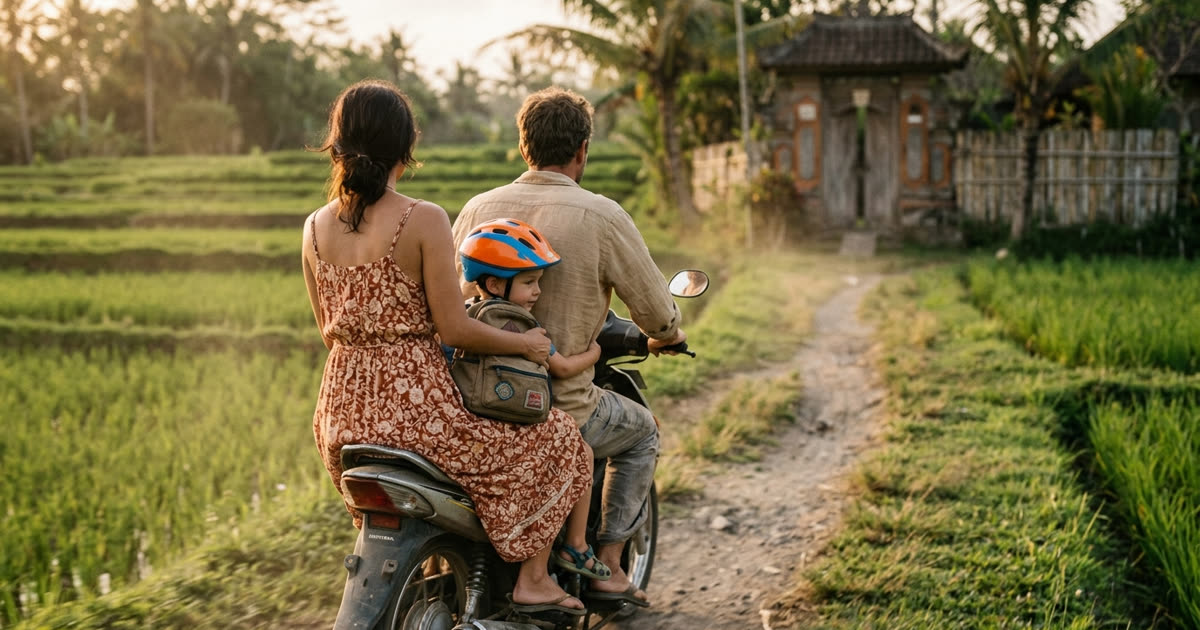
Bali Third Culture Kids 2026: Finding Home
Yes, and it's normal — a child who's moved countries or mixes languages often can't name one "home" because their sense of home was never built around a single place. The useful reframe here: stop trying to find the "right" place and instead help your child locate home in people, routines, and objects. That shift alone takes the pressure off both of you.
The Reality of Child Behaviour & Emotions in Bali
Every family that relocates here eventually has some version of this moment: your kid, asked the simple playground question "where are you from?", goes quiet, shrugs, or gives three different answers depending on the week. Newcomers tend to panic and read this as a problem to solve fast, as if the "not knowing" is a wound. It usually isn't. It's a normal developmental response to a genuinely unusual life. A Third Culture Kid (TCK), a child raised outside their parents' passport culture during their formative years, is building an identity out of more pieces than most kids their age. That takes longer to settle, and it settles unevenly.
What newcomers get wrong is trying to manufacture a fixed sense of place: picking "the" neighbourhood, "the" school, "the" friend group and hoping permanence alone will do the emotional work. Bali doesn't cooperate with that plan. The expat and nomad community here is genuinely transient: many families rotate through on visas that run six months to a year, so school rosters change mid-year, best friends move on, favourite cafés close. A child can be perfectly settled and still lose their whole social world in a term. That's not your family doing something wrong. That's the actual shape of this life, and kids read that instability faster than adults admit.
The other thing worth naming plainly: "I don't know where home is" is not the same sentence as "I'm not okay." Watch the whole child, not just the one sentence — you know your kid, and you'll generally sense the difference between one who's working something out loud and one who seems genuinely low. If your gut says something feels off, that's reason enough to mention it to a paediatrician, GP, or child psychologist. Asking early is completely normal parenting, not an overreaction.
What to Look For
Instead of chasing one perfect location, look at what actually gives a TCK a stable floor. These criteria matter far more than which part of the island you land in: a busier hub like Canggu, a quieter inland base like Ubud, or somewhere in between.
Consistency of people over consistency of place
A rotating cast of caregivers and friend groups is harder on a child than a smaller, more consistent circle. Before choosing a neighbourhood or school, ask how long families typically stay, not just how nice the amenities are.
Community structure, not just community size
Some areas have loose, high-turnover expat scenes; others have built-in structures (school communities, sports clubs, faith or cultural groups) that keep reintroducing your child to the same people over years, not months. International school communities are often a good place to look for this kind of continuity, since families who enrol tend to stay for years, which gives kids something to return to.
Predictable rhythms, not perfect scenery
A gorgeous villa doesn't build identity; a Tuesday-night dinner ritual does. Look for a base where you can realistically keep the same small routines running for years, not just a beautiful backdrop for the current season.
Room to be from more than one place
A good environment doesn't ask your child to pick a single identity. It lets "I'm part-Bali-life, part-my-passport-country, part-something-else" be a complete, acceptable answer, at school, at home, and in casual conversation.
Practical Tips
- Replace "where are you from?" with "where do you feel most like yourself?" It gets a truer, calmer answer and takes the pressure off picking one country.
- Build a small set of portable rituals (a bedtime song, a Sunday pancake, a specific song for car rides) that travel with you regardless of address. These become the "home" your child can access anywhere.
- Keep one or two physical objects consistent across every move: the same blanket, the same photos on the wall, the same order of stuffed animals on the bed. Familiar objects do real psychological work for young kids.
- Let your child grieve friends who leave. Don't rush past it with "you'll make new friends." Name the loss out loud first, then talk about staying in touch.
- Talk about your own mixed feelings honestly, in age-appropriate language. Kids pick up on unspoken parental ambivalence about "home" faster than they process anything you say directly.
- If your child is old enough, let them help choose small things, like their room setup or a weekend activity, so they have agency somewhere, even when the big decisions (visas, schools, moves) aren't theirs to make.
- Normalise multiple answers to identity questions. "I'm from a few places" is a complete sentence, not a dodge.
A Conscious Note
However you build your child's sense of home here, do it in a way that treats Bali as somewhere you live, not a backdrop for your family's journey. Choose local warungs over chain cafés when you can, learn a little Bahasa Indonesia as a family ritual, and let your kids see you engaging with the island's rhythms and neighbours as neighbours, not scenery. A TCK's sense of belonging grows stronger, not weaker, when they watch their parents treat the place itself with respect and genuine investment rather than convenience.
Quick-Reference FAQ
Is it normal for my TCK to say they have no home? Yes, it's a common way kids process a life with more than one culture and more than one place, and on its own it isn't a warning sign. Trust your instincts as a parent — if something about your child's mood or behaviour feels different from their normal self, that's worth mentioning to a paediatrician or child psychologist rather than waiting it out.
Should we stay in one place longer to help them feel settled? Consistency of people and rituals matters more than years spent at one address. A shorter stay with strong routines and steady relationships can feel more stable to a child than a long stay with a revolving social circle, so weigh who's around and how often before weighing how long the lease is.
How do I answer when my child asks where home really is? Try answering together rather than for them: "Home is wherever the three of us are having pancakes on Sunday" works better for a young child than a country name, and it's honestly true for a lot of Bali families. Anchor the answer in a shared ritual or relationship rather than a place name — that's what the child can actually carry with them.
Raising a teenager in Bali? See Bali Teens 2026: Independence, Safety & Mental Health.
Get the weekly Bali family digest
Events, new guides, one seasonal tip. No spam.
One email a week. Unsubscribe anytime.
Related Articles
Trusted Bali family partners
Backus Ceramics
CangguBackus Ceramics is a beloved ceramics studio in Canggu where families can get hands-on with clay in a relaxed, creative atmosphere. Class…
View partner →Mogi Artperience
SanurMogi Artperience is a warm, hands-on art studio in Sanur, Bali, where children and families explore painting, drawing, and crafts guided…
View partner →Everytuft Bali
CangguA hands-on tufting studio in Canggu where kids, teens and adults make their own rug from scratch. Pick one of their designs or bring your…
View partner →