Bali School Lunches 2026: Pack or Buy?
Need personalized advice for your Bali journey? Ask our AI Bali Mom—expertly trained by parents with 10+ years on the island.
Start Chatting →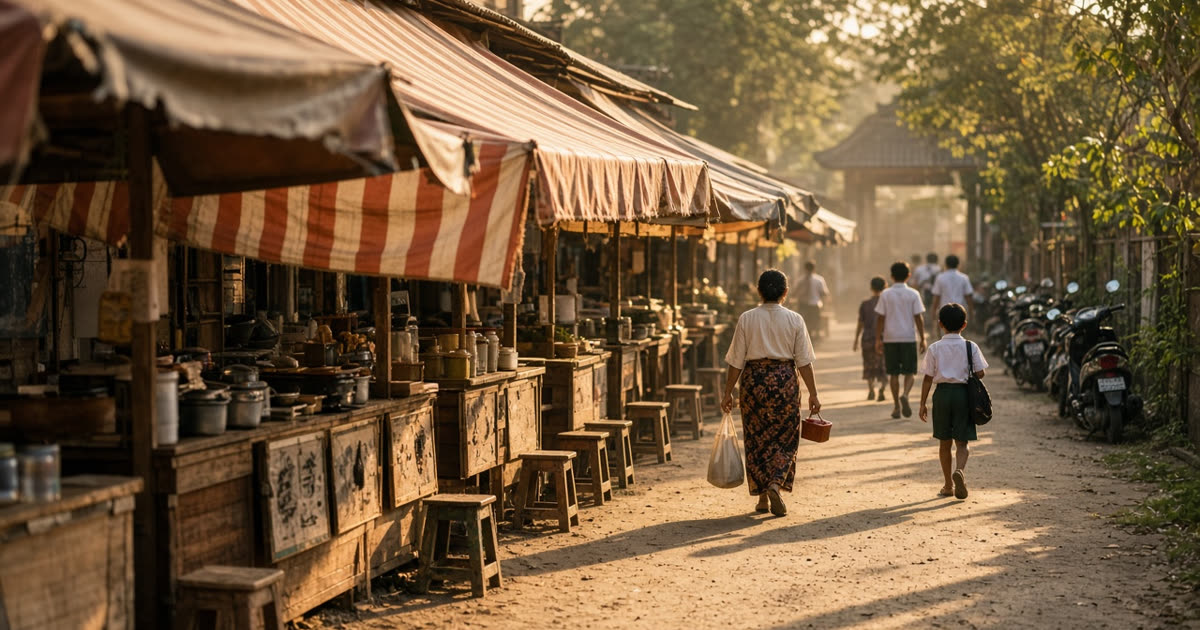
Pack it when you can, and only buy canteen food from a kitchen you've personally vetted. The real lunch risk isn't the food — it's the heat: a sandwich in a hot bag from 7am to noon spoils faster than most parents expect, and canteen safety varies wildly by campus. The safest approach is a hybrid: pack cold items with ice, buy hot food only where you trust the kitchen.
The reality of food in Bali
Newcomers usually import their food-safety instincts from somewhere with reliable refrigeration and mild weather. None of that holds here. Bali's heat and humidity push perishable food into the danger zone much faster than most parents are used to: anything left out warms quickly in tropical temperatures, and the safe window shrinks accordingly. Power cuts happen, ice isn't always made from filtered water, and "best before" labels are far less consistent than what you'd find at a supermarket back home.
None of this means Bali food is unsafe. It means the margin for error is smaller, and the habits that worked elsewhere need adjusting. If you've already had a round of stomach trouble in your household, you know the drill: for the signs and what actually helps, see Bali Belly in Kids 2026: Signs, Safe Food & What Helps.
The other thing newcomers get wrong: assuming a school's reputation tells you anything about its canteen. It doesn't. A school can be academically excellent and still run a canteen that's an afterthought, or vice versa. Canteen quality is a separate question, and it's one you're allowed to ask directly.
What to look for
Judge any canteen (or your own packing routine) on these four things, not on the name over the door.
How the cold chain is handled
Ask what happens to food between when it's cooked or prepped and when it's served. A canteen that preps hot food to order, or keeps cold items in an actual fridge until serving time, is doing the hard part right. A canteen that lays food out on a table at 8am for a 12pm lunch service is not, regardless of how nice the campus looks.
Who's cooking, and when
Look for one standard on any campus, big or small: freshly cooked, served hot, with visible turnover. Schools across areas like Canggu run everything from big, well-resourced campuses (Green School Bali and Bali Island School, or BIS, are two names most expat parents will recognise) down to small local operations, and canteen setups vary just as much as the campuses do. Don't assume; ask.
Water and ice
Check that drinking water and any ice used in food prep come from a filtered or bottled source, not tap. This is a simple question to ask, and any well-run kitchen will answer it without hesitation.
Allergy and dietary handling
Ask how the school manages a stated allergy in practice, not just whether they say they "can accommodate." Capacity to separate ingredients and communicate clearly varies a lot between schools.
What it actually costs
Canteen pricing generally falls into three rough bands: budget options built around simple rice-and-vegetable plates, mid-range setups offering a rotating hot menu, and premium programs at larger campuses with more variety and often a nutritionist-designed rotation. Costs shift with import prices and the rupiah, so get current numbers directly from the school's office rather than relying on anything you read online. Packing from home is almost always the cheaper baseline, since you're working from groceries you're already buying.
Practical tips
These habits make the biggest difference in Bali's climate:
- Freeze a small water bottle overnight and tuck it into the lunchbox: it keeps things cold and doubles as a drink by midday.
- Skip dairy- or mayonnaise-based items on your hottest, most humid days; they're the first thing to turn.
- Use a properly insulated bag, not a fabric tote: the difference in internal temperature by noon is significant.
- Rinse fruit and vegetables in filtered or bottled water, never tap.
- Ask the canteen directly what time food is prepared relative to serving time: the answer tells you more than the menu does.
- If buying, look for food coming from a warmer or being served straight off the stove, not sitting at room temperature in an open tray.
- Keep a shelf-stable backup (crackers, a piece of whole fruit) for days when nothing on offer looks right.
- Check the lunchbox each afternoon. Uneaten packed food that's been sitting in a hot bag all day should be thrown out, not saved.
A conscious note
However you land on pack-or-buy, there's a lower-impact way to do it. Favour reusable containers and a real water bottle over single-use plastic and juice pouches: Bali's waste system is already stretched, and lunchboxes are one of the easiest daily habits to fix. Where you can, buy fresh produce from local markets and warungs rather than imported packaged snacks; it's cheaper and keeps money in the community you're a guest in. If your child's canteen sources from small local kitchens, that's worth supporting rather than quietly switching everyone to packed lunches out of convenience alone.
Quick-reference FAQ
Is it safe to buy lunch from a school canteen in Bali? It depends on that canteen's hygiene practices and food turnover: there's no blanket yes or no. Ask directly how food is stored and served, and don't assume a school's academic reputation extends to its kitchen.
What foods should I avoid packing in a Bali school lunch? Skip anything perishable without a cold source alongside it, like dairy or cut fruit that's been sitting out, especially on hot, humid days. Add an ice pack or frozen water bottle whenever you pack these.
How can I tell if a canteen is doing food safety well? Ask about prep timing (is food cooked close to serving time or hours ahead?), refrigeration between prep and service, and whether drinking water and ice are filtered or bottled. A kitchen that answers these clearly is usually one that's paying attention.
Get the weekly Bali family digest
Events, new guides, one seasonal tip. No spam.
One email a week. Unsubscribe anytime.
Related Articles
Trusted Bali family partners
Open Flow
Lukluk (Mengwi)Open Flow is a nature-based school in Lukluk (Mengwi) for children aged 2–12, weaving Steiner, Montessori, Reggio Emilia and forest-schoo…
View partner →Codeco STEAM Learning Center
Denpasar / Kerobokan / Nusa DuaCodeco STEAM Learning Center is a kid-friendly STEAM education center in Bali — hands-on science, technology, engineering, arts and maths…
View partner →Island Kids
Canggu / BukitIsland Kids is an international kindergarten for curious little explorers aged 2–6, with campuses in Canggu and the Bukit. Rooted in the…
View partner →