Bali Kids Wet-Season Packing 2026
Need personalized advice for your Bali journey? Ask our AI Bali Mom—expertly trained by parents with 10+ years on the island.
Start Chatting →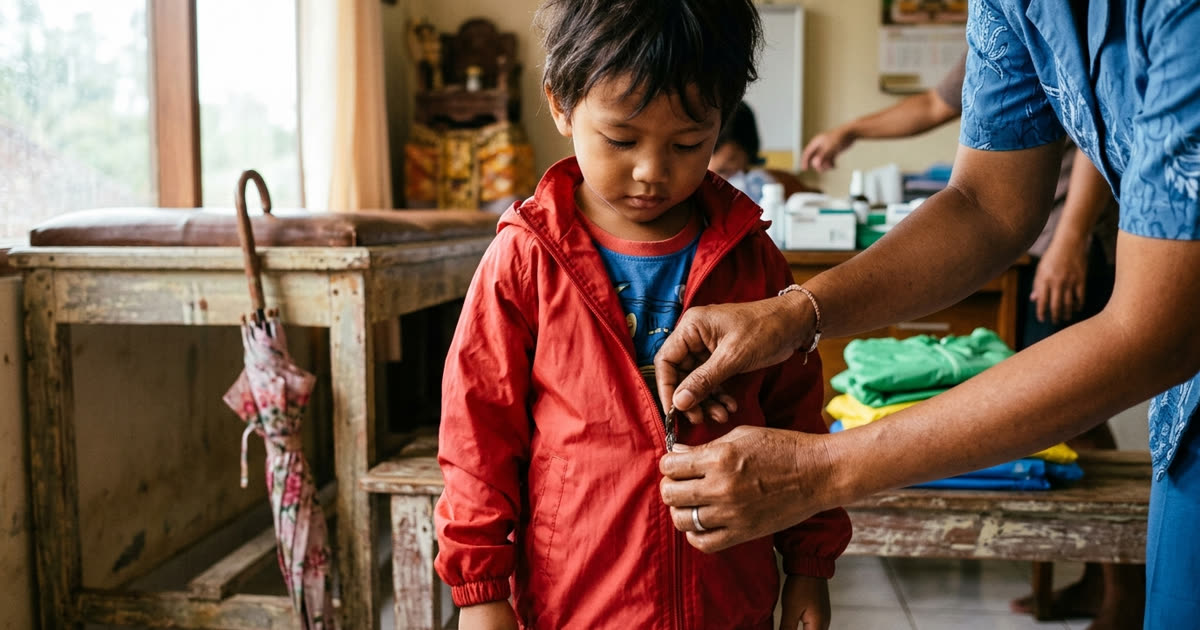
Bali's Wet Season With Kids: What to Actually Pack for 2026
Yes: pack one real waterproof rain jacket per kid, and don't count on ponchos and local shopping to cover you. A poncho does not survive a scooter ride or a school run in a genuine downpour, and it leaves hands and backpacks exposed. Buy quick-dry shoes locally instead — they're cheap and sold everywhere on the island — but bring the jacket, a dry bag for electronics, and one change of clothes kept at school or in the car.
The Reality of Packing in Bali's Wet Season
Plenty of families picture "rainy season" as the light drizzle they remember from a honeymoon trip in July. It isn't. From roughly November through March, Bali gets short, genuinely intense downpours: the kind that turn a driveway into a stream in minutes, and the wettest months bring far more rain than the dry season does.
There's also the assumption you'll figure it out when you land. You can (Bali sells rain gear everywhere), but not at 7:40am when you're already late for school drop-off and the sky just opened. What works is packing the two or three things that are genuinely hard to buy well here, and leaving the rest for local shopping.
What people get wrong specifically:

- Ponchos as the primary rain layer. Fine for a five-minute walk to a warung. On the back of a scooter it flaps open and lets water in at the neck and wrists, and it doesn't leave a kid's hands free for a backpack.
- Cotton everything. Cotton takes hours to dry in humidity this high. A kid's outfit that gets soaked at 8am is still damp at 2pm.
- Underestimating flooding. Streets in low-lying parts of Canggu and other rice-paddy-adjacent areas can pool ankle-deep water after a heavy session. Real shoes with grip matter more than cute shoes.
- Forgetting electronics and paperwork. Phones, passports, and school folders get ruined by surprise downpours far more often than by dramatic flooding.
What to Look For
Rain jackets, not ponchos
A proper kids' rain jacket needs three things: a hood that stays on in wind, cuffs that seal (velcro or elastic, not just loose fabric), and a hem long enough to cover the waistband. Packable, lightweight shells work better here than heavy-duty alpine jackets: you want something that breathes, because it's 28°C and humid even while it's pouring. If you only bring one wet-weather item from home, make it this.
Footwear: what to bring vs. what to buy here
Quick-dry sandals and closed-toe water shoes are sold cheaply and widely across the island, including in family-dense areas like Ubud, Canggu, and Seminyak, so there's little reason to pack more than one pair of "real" shoes per kid. What's worth bringing from home:
- One pair of proper closed-toe sneakers if your kid's school has a uniform shoe requirement (these are harder to find in the right sizes locally).
- Cheap flip-flops or slides you don't mind losing (the mud takes at least one pair per trip).
What to buy locally: everyday sandals, a second poncho for the diaper bag (as a backup layer, not the primary one), umbrellas.
Bags and dry storage
Look for a dry bag or a well-sealed ziplock system over a "waterproof" backpack claim: most bags marketed as waterproof are actually water-resistant, and a genuine tropical downpour will find the seams. A 5-10L dry bag for phones, passports, and school folders costs little and prevents the most common ruined-item problem: a soaked phone, passport, or school folder.
Layering for AC-to-humidity swings
Wet season days swing hard: humid and warm outside, aggressively air-conditioned inside cafes, malls, and cars. A light long-sleeve layer for kids guards against that temperature whiplash, which causes more sniffles than the rain itself.
Practical Tips
- Pack one full spare outfit per kid in a dry bag and leave it at school or in the car, not in the suitcase at home. The moment you need it, you need it fast.
- Check the radar, not the forecast. Wet season storms are short and localized; a rainy-looking forecast might mean just one brief, localized downpour in the afternoon. A live radar app matters more than a daily percentage.
- Avoid rice-paddy-adjacent roads right after a heavy storm. Areas near Canggu's rice fields and other low-lying zones can hold standing water for an hour or more after a big session. Plan school runs around it if you can.
- Dry bags beat waterproof-labeled backpacks. "Water-resistant" and "waterproof" get used interchangeably in product listings, and they are not the same thing — a genuine downpour will find the gap.
- Bring a second pair of shoes to school if the commute involves any walking. Wet shoes on a child all day is a bigger discomfort than most parents expect.
- Budget for mud. Scooters kick it up, sidewalks pool it, and a child's white sneakers will not survive wet season looking new. Dark colors hide it better.
- A small towel in the car or scooter box for wiping down seats, kids, and bags before you get moving again.
A Conscious Note
Wet season is when Bali's rice terraces and jungle turn the most vivid green of the year, and it's worth pausing for on the days the rain cooperates. Choose gear that lasts rather than single-use ponchos that end up as plastic waste within a week; a proper jacket gets years of use and skips that cycle entirely. When storms disrupt plans, that's often the moment to support a local warung or family-run cafe with a quiet indoor spot rather than defaulting to a mall chain. The income matters more to them than it does to the chain, and it's usually the better hour of your day anyway.
Quick-Reference FAQ
Do kids need real rain jackets in Bali, or will ponchos do? Bring a real jacket for each kid rather than relying on ponchos. A poncho is a fine backup for a five-minute walk, but it fails on scooters, in wind, and in the kind of short, intense downpour that defines Bali's wet season, leaving kids soaked at the neck, wrists, and hands.
What should we buy in Bali instead of packing from home? Everyday sandals, backup ponchos, and umbrellas are all cheap and available everywhere, including family hubs like Ubud and Canggu, so there's no need to pack them from home. Save suitcase space instead for the real rain jacket, a dry bag, and any specific-fit shoes your kid's school requires.
When exactly is Bali's wet season, and how bad does it get? Bali's wet season runs roughly November through March. Expect short, intense afternoon downpours rather than all-day rain, and real flooding risk on low-lying streets after a big storm, so it's worth planning school runs and errands around it.
Get the weekly Bali family digest
Events, new guides, one seasonal tip. No spam.
One email a week. Unsubscribe anytime.
Related Articles
Trusted Bali family partners
Backus Ceramics
CangguBackus Ceramics is a beloved ceramics studio in Canggu where families can get hands-on with clay in a relaxed, creative atmosphere. Class…
View partner →Mogi Artperience
SanurMogi Artperience is a warm, hands-on art studio in Sanur, Bali, where children and families explore painting, drawing, and crafts guided…
View partner →Eva Scolaro Talent Studio
Canggu / SanurEva Scolaro Talent Studio teaches singing, dance, acting and modelling to children aged 3 to 16, from two studios in Sanur and Canggu. Ni…
View partner →