Best Beaches in Sanur for Families 2026: Tides & Safety
Need personalized advice for your Bali journey? Ask our AI Bali Mom—expertly trained by parents with 10+ years on the island.
Start Chatting →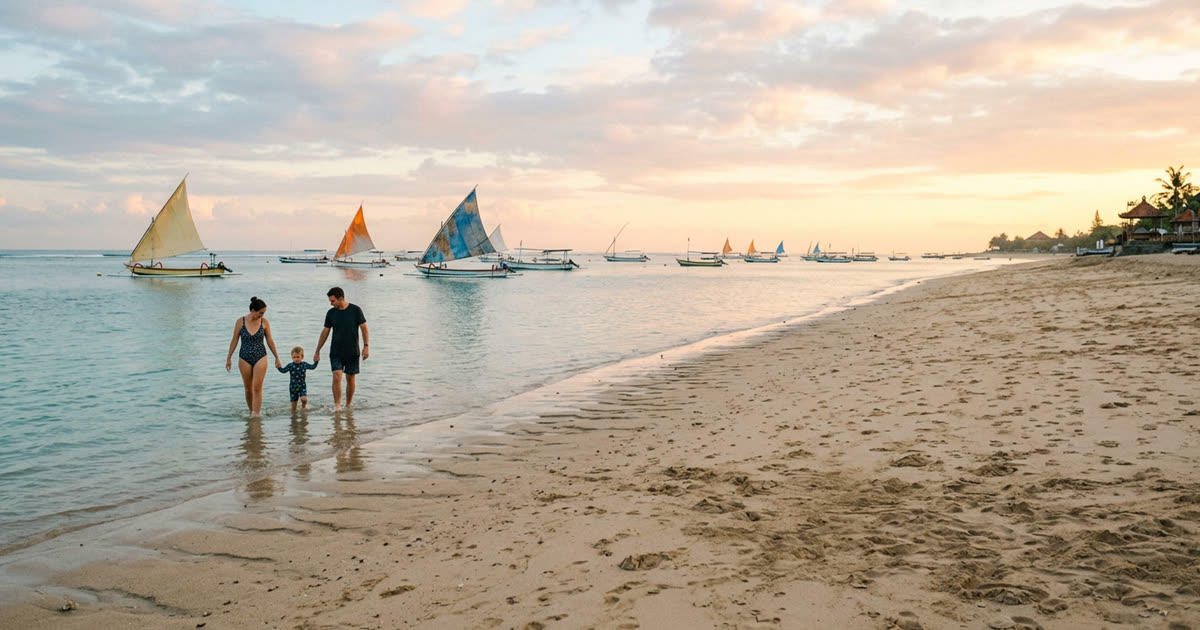
Best Beaches in Sanur for Families 2026: Tides & Safety
Is Sanur Beach Safe and Swimmable for Kids?
Yes, but only around high tide — at low tide it's a wading and exploring zone, not a swimming beach. Sanur Beach sits behind an offshore reef that blocks big swell, so on a rising or high tide the water inside the lagoon is calm, shallow and safe for kids to swim in. The catch: at low tide, that same reef leaves behind sandbars, seagrass, loose coral rubble, and the occasional rock underfoot. Check a tide chart, go in a couple of hours either side of high tide, and keep reef shoes on small feet.
The Reality of Sanur Beach for Families
Here's what trips up a lot of newcomers: they hear "Sanur is the calm, kid-safe beach" and picture a Mediterranean-style sandy swimming beach all day, every day. It isn't quite that. Sanur's calm comes from a reef sitting a few hundred metres offshore, which does a good job knocking down waves before they reach the sand. That part of the reputation is earned.
What doesn't always make it into the pitch is the tide swing. Bali's tides swing more than people expect, and Sanur's flat profile turns that into a big horizontal shift in the waterline over a few hours. At high tide you can have knee-to-waist-deep water close to shore, pleasant for toddlers and non-swimmers. At low tide, the sea can retreat far enough to expose sand flats, patches of seagrass, and rock or dead coral that's uncomfortable (and occasionally sharp) on bare feet. It's not dangerous in the way a shore-break beach is dangerous, but it's also not the swim-anytime spot people assume from a single sunset photo.

The other thing worth knowing: "Sanur Beach" isn't one uniform strip. Conditions shift noticeably as you move along it, and the sand-to-rock ratio, shade, and crowd levels all vary block by block. That's a decision point, not a flaw: you just need to know what you're choosing between.
What to Look For When Picking Your Spot
Read the tide before you read the reviews
A tide chart (any Bali tide app or a quick search for "Sanur tide today") tells you more about whether a spot will work for your kids than any list of named beaches. Aim to arrive within 2–3 hours of high tide if the goal is actual swimming. If you're stuck with a low-tide window, treat it as a walking, shell-hunting, tide-pool morning instead of a swim session, and adjust your plans instead of forcing it.
Footwear over folklore
The biggest complaint from parents at Sanur isn't waves — it's stepping on something at low tide. Reef shoes or old trainers for anyone walking into the water solve most of this. Sunscreen and a rash guard matter more here than at a surf beach, because shallow, still water plus tropical sun burns a kid who's happily playing for two hours straight.
The promenade as your actual family base
The Sanur Beach Walk (the paved path running along Jalan Pantai Sanur) is one of the more useful pieces of family infrastructure in Bali. Sanur also sits roughly 20–30 minutes from Ngurah Rai International Airport, which is part of why so many families use it as a low-key first or last base. The promenade is flat, shaded in stretches, and works for strollers, wobbly walkers, and bikes with training wheels, a good fallback when the tide isn't cooperating with swimming. Use it to scout the water from above before committing a toddler to a specific patch of sand.
Morning light, calmer water, fewer people
The northern stretch of Sanur, around Pantai Matahari Terbit (Sunrise Beach), draws an early sunrise crowd, but mornings there stay quieter and cooler, which suits small kids better than the midday sun, regardless of tide.
What actually differs, spot to spot
- Shade availability: some stretches have tree cover or umbrellas nearby; others are exposed sand for long stretches.
- Sand vs. rubble underfoot: varies within a few hundred metres; walk it before you unpack.
- Boat and water-taxi traffic: busier near the harbour areas further south; quieter toward the northern end.
- Crowd levels: early morning and late afternoon are calmer than midday.
- Promenade access: not every beach access point connects directly to the paved walk; check before you're carrying a sleeping toddler and a beach bag.
Practical Tips for Sanur with Kids
Keep it simple:
- Check the tide chart the night before, not the morning of, so plans change less painfully with notice.
- Pack reef shoes for every kid old enough to walk into the water.
- Treat low tide as a walking-and-exploring window, not a swimming one.
- Bring more sun protection than feels necessary: flat, still water reflects sun back up at kids in a way pools and shaded jungle spots don't.
- Keep a change of clothes and a rinse-off plan handy; there's often no fresh shower right at the water's edge.
- Sand and reef debris underfoot can sting bare feet, so make checking the ground before running in a habit with toddlers.
- If anyone has a cut, sting, or reaction that needs medical attention, Bali's hospitals and clinics can help. Call ahead to confirm they can see you before you go, since availability and services shift.
- If you're still deciding where to base yourselves for a Sanur stay, our guide on where to stay in Bali with kids covers how Sanur compares to Canggu and Ubud for this exact age-and-stage question.
A Conscious Note
Sanur's calm water and reef aren't a given: they're a living system a lot of families share. Use reef-safe sunscreen where you can find it, carry your rubbish back out with you (footprint left, nothing else), and stay mindful around the fishing boats and small offerings you'll sometimes see near the shoreline: they belong to someone's daily life, not the scenery. Supporting local warungs and small operators along the beach walk, not just the larger chains, is a simple way to put something back into the community you're enjoying.
Quick-Reference FAQ
Is Sanur Beach good for toddlers? Yes, particularly around high tide when the water is shallow and calm close to shore. At low tide, expect exposed sand and rubble rather than swimmable water, so time your visit around the tide chart.
Do we need reef shoes at Sanur? Yes — for anyone walking into the water. Low-tide conditions can expose seagrass, sand and occasional rock or coral debris that's uncomfortable underfoot.
Is the Sanur Beach Walk stroller-friendly? Yes — it's a paved, mostly flat promenade running along Jalan Pantai Sanur, and one of the more practical stretches in Bali for strollers, scooters and early walkers.
Sponsored · Featured family stay
Beachfront family base at KeramasFree Range Kids Club · 25m lap pool · East Bali sunrise coast
Get the weekly Bali family digest
Events, new guides, one seasonal tip. No spam.
One email a week. Unsubscribe anytime.
Related Articles
Trusted Bali family partners
Backus Ceramics
CangguBackus Ceramics is a beloved ceramics studio in Canggu where families can get hands-on with clay in a relaxed, creative atmosphere. Class…
View partner →Eva Scolaro Talent Studio
Canggu / SanurEva Scolaro Talent Studio is a boutique performing arts and talent development studio with locations in Canggu and Sanur, helping childre…
View partner →Rumah Rabbit Bali
MungguRumah Rabbit is a relaxed, home-based art studio in Munggu where children from about 3 years old up to teens explore painting, drawing, c…
View partner →