Bali Nanny Safety 2026: CPR, Pool Rules & Certification
Need personalized advice for your Bali journey? Ask our AI Bali Mom—expertly trained by parents with 10+ years on the island.
Start Chatting →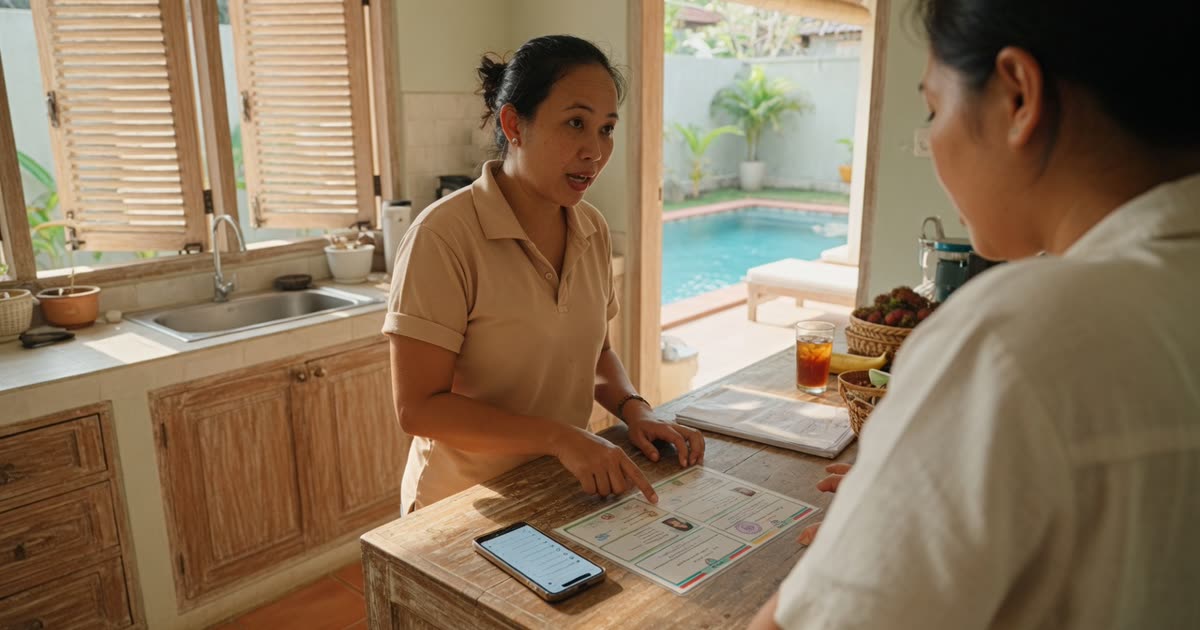
Does Your Nanny Actually Know CPR? Here's the Straight Answer
No — most nannies hired informally in Bali (through a friend, a Facebook group, or a villa referral) have never taken a pediatric CPR or first aid course, since none is legally required here. Get her properly certified through a half-day Basic Life Support / pediatric first aid class at BIMC Hospital or International SOS Bali (SOS Medika Klinik), before she's ever alone with your toddler near water.
Villa pools in Bali carry zero mandated safety oversight — no lifeguard requirement, no fencing code, nothing enforced by law. The fix is simple and fast: most BLS courses run monthly and take just an afternoon.
The reality of nannies in Bali
Here's what catches new families off guard: there's no licensing body for nannies in Bali. No government registry, no mandatory training, no pool-fencing code that applies to private villas. A nanny's CPR knowledge, if she has any, almost always came from a previous employer who paid for it, not from any standard she was required to meet.
That doesn't mean the pool of caregivers is bad. Most nannies here are warm, experienced, genuinely attentive women who've raised their own kids and half the neighborhood's besides. But "experienced with children" and "knows what to do in the four minutes before oxygen deprivation becomes brain damage" are two different skill sets, and only you can close that gap. Toddler drowning is fast and silent (it's the leading cause of death for children aged 1–4 worldwide, per the World Health Organization, and can take under 60 seconds): no splashing, no shouting, just a quiet slip under the surface while an adult is a few meters away on their phone. Villa pools in Canggu, Seminyak, and Ubud, with no lifeguard, no fence between the pool deck and the living area, and often a gate that doesn't latch, are exactly the environment where that happens — and with ambulance response times to remote villa compounds sometimes exceeding 20 minutes (per Bali expat community reports, as of 2026), the person standing poolside is the only "first responder" your toddler has.
Experienced Bali families recommend running through this checklist before you hire:
- Ask for two verifiable references — call them, don't just read a WhatsApp message she forwards you.
- Ask directly: "Have you ever done a CPR or first aid course? Can you show me a certificate?" A confident no is more trustworthy than a vague yes.
- Watch her around water on a trial day — does she stay within arm's reach, or does she relax the moment your child is "just" wading?
- Confirm she's comfortable with your rules (phone away during pool time, one-child-one-adult near water, no exceptions for "just a minute").
- Agree on certification as a condition of employment, not an optional bonus, and offer to pay for it. It's a few hours and it's the single highest-leverage thing you'll do all year.
- Do a paid trial period before committing long-term, and reassess after you've seen her handle one real minor incident (a fall, a fever, a scraped knee).
Vetted recommendations
BIMC Hospital (Kuta & Nusa Dua)
BIMC is Bali's best-known private hospital network, with international-standard emergency departments at both the Kuta and Nusa Dua campuses. Both locations periodically run Basic Life Support and first aid courses open to domestic staff and caregivers, not just medical professionals. Call the campus nearest you to confirm the next open session, group size, and current pricing. Schedules shift month to month, so don't rely on anything you read online without confirming by phone first.
International SOS Bali (SOS Medika Klinik)
International SOS Bali, operating through SOS Medika Klinik in Kuta, is built around exactly this kind of readiness: international-standard clinical care plus training and evacuation assistance for the expat community. If BIMC's course calendar doesn't line up with your timeline, SOS Medika is your second call. Ask specifically for a pediatric-focused CPR/first aid module — general adult BLS is useful but not the same as knowing infant and toddler compression depth and rescue breathing ratios.
Go Nanny (go-nanny.id)
According to local expat communities, Go Nanny is a Bali-based platform built to solve exactly this trust gap. It vets caregivers and makes their background and training status visible before you ever meet them, instead of starting from zero with a Facebook post. If you're hiring fresh rather than formalizing an existing arrangement, start there instead of a cold referral.
Pro-tips: what the locals know
According to local expat communities, these are the details that separate a good hire from a lucky one:
- A "certificate" from an untraceable one-day seminar isn't the same as a hospital-issued BLS card. Ask which organization issued it and check it's a name you recognize.
- CPR knowledge fades fast without practice. Budget for a refresher every 12–18 months, not a one-and-done course.
- Pool alarms and physical fencing beat trust every time. A floating pool alarm is inexpensive insurance even with a great nanny on duty.
- Save BIMC's and SOS Medika's emergency numbers in your nanny's phone, not just yours. She needs to be the one who can call if you're not there.
- Agree on a specific water-safety protocol in writing (who's "on," when phones go away). Verbal understandings get fuzzy under routine, exactly when you need them not to.
- If your villa manager says the pool is "always supervised," ask by whom, and confirm that person isn't also the housekeeper, the gardener, and the front-gate guard.
A conscious note
Paying for your nanny's CPR certification isn't just protection for your family. It's a skill she keeps for life, one that makes her more employable and more capable of protecting her own kids and community. Treat it, and her, as the professional she is: fair pay, clear hours, real respect, not a bargain to be optimized. The trust you build with one family, done right, is the reputation that carries an entire community of caregivers forward.
Quick-reference FAQ
Does Indonesian law require nannies to be CPR certified? No, Indonesian law does not require nannies in Bali to be CPR certified. There's no government mandate for domestic caregiver training here, so certification is entirely something you arrange and pay for yourself, typically through a private hospital or clinic like BIMC or SOS Medika.
How long does a CPR/first aid course actually take? A pediatric-focused CPR/first aid course in Bali typically takes three to four hours, often completed in a single afternoon session at BIMC Hospital or SOS Medika Klinik. Courses generally run monthly, though schedules shift, so confirm the next session by phone before you plan around it.
Should I still supervise the pool myself if my nanny is certified? Yes, you should still supervise the pool yourself even after your nanny is certified. CPR certification changes what happens once an emergency has already started, but it doesn't replace constant, direct supervision, which is the only thing that reliably prevents an emergency from happening in the first place.
Get the weekly Bali family digest
Events, new guides, one seasonal tip. No spam.
One email a week. Unsubscribe anytime.
Related Articles
Trusted Bali family partners
Kids Learning Club
CangguKids Learning Club is a family-friendly activity provider based in Canggu, offering learning experiences for children.
View partner →Kaizen Kids
CangguKaizen Kids is a beloved children's activity hub in Canggu offering drop-in classes and immersive full-week camps where kids grow, play,…
View partner →Bali Kiddo Pastry
KerobokanBali Kiddo Pastry runs hands-on pastry classes for kids in Kerobokan — small groups, a different recipe every class, and games and little…
View partner →