Bali Medical Evacuation 2026: When & What It Costs
Need personalized advice for your Bali journey? Ask our AI Bali Mom—expertly trained by parents with 10+ years on the island.
Start Chatting →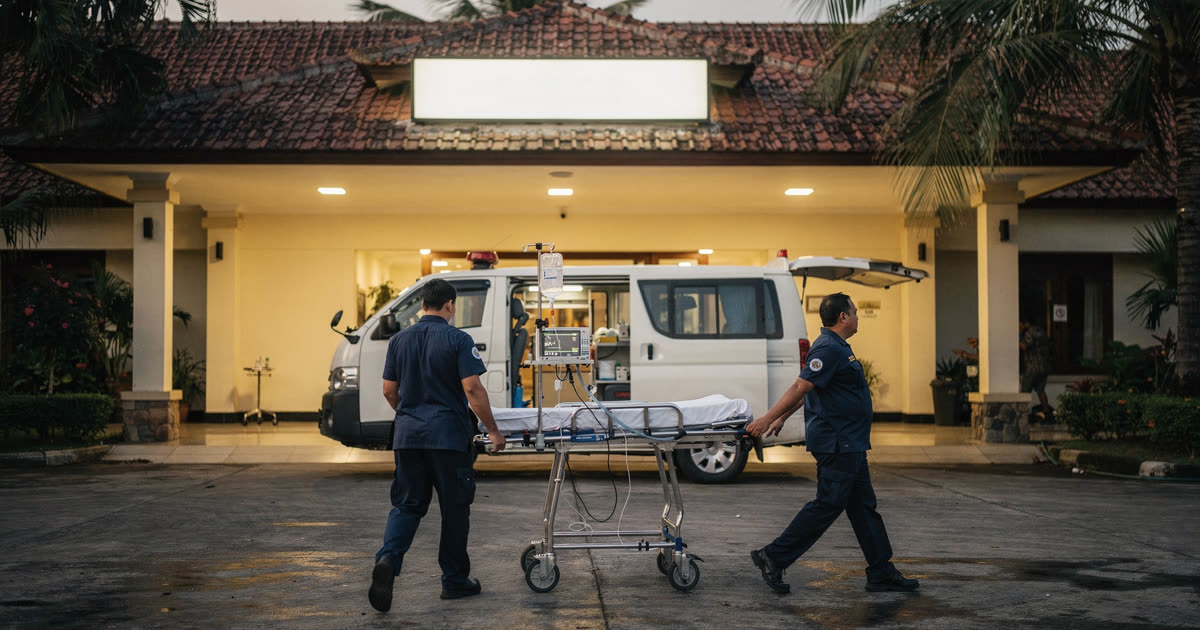
Bali medical evacuation 2026: when it happens and what it costs
If a Bali hospital can't treat your child, the attending doctor issues a formal referral for evacuation. Your travel insurance's 24/7 assistance line then arranges the flight, ground transfer and receiving hospital; without insurance, a private air-ambulance broker does. Uninsured, that flight alone is a major out-of-pocket expense, due in full before departure. That's the short version. Here's what actually happens, step by step, so you're not the family paying it out of pocket.
The reality of health care in Bali
Most of what sends a family to a doctor here (fever, a bad fall off a scooter step, dehydration, an ear infection, dengue fever) is handled completely within Bali's private hospital network. Newcomers usually get this wrong in both directions. Bali's private hospitals handle the vast majority of pediatric emergencies well: stabilizing trauma, IV fluids, X-rays, short-term admission. What they're not built for is highly specialized or long-term intensive care: certain neonatal complications, complex neurosurgery, advanced cardiac cases, or injuries needing equipment and specialists that just aren't stocked on an island this size.
The second thing people get wrong: private hospitals in Indonesia require payment, or a guaranteed payment source, before or during treatment, not after. If your insurer can confirm a guarantee of payment quickly, this is a non-event. If you're uninsured or your policy is unclear, this is the moment a manageable emergency turns into a financial crisis on top of a medical one.

⚠️ Always verify with a licensed consultant: regulations change. Insurance requirements, evacuation procedures and hospital capabilities get updated by providers and Indonesian authorities often. Treat every figure and process below as a starting point for your own research, not a final answer for your policy or situation.
What to look for when your child needs more than local care
Insurance that actually covers evacuation, not just treatment
Many travel policies cover in-country hospital bills but cap or exclude medical evacuation, or only cover it if a case manager pre-approves the transfer. Before you need it, confirm in writing: does your policy cover fixed-wing air ambulance, does it cover a seat for a connecting family member, and does it name specific receiving hospitals (commonly Singapore, roughly a 2.5-hour flight from Denpasar, plus Jakarta or Australia) or leave that decision to the insurer's medical team. As of August 2026, Indonesia doesn't nationally mandate travel insurance for tourists, though Bali's provincial government has repeatedly floated making it compulsory. Check current entry requirements before you travel: this is exactly the kind of rule that can change with little notice. Long-stay KITAS holders — Indonesia's temporary stay permit, typically issued and renewed in 6- to 12-month increments — generally have to enroll in Indonesia's national BPJS scheme, but BPJS doesn't cover evacuation abroad, so it's not a substitute for private evacuation coverage.
What a transfer within Bali looks like
For most serious cases, the first move isn't off the island. It's from a smaller clinic to a larger private hospital better equipped for the problem. Private hospitals such as BIMC Hospital and Siloam Hospitals Bali are commonly used by expat and international families for this level of care. Call ahead whenever possible to confirm current emergency capacity and whether they can handle your child's situation before you arrive: capability and staffing vary, and shouldn't be assumed from a website or an old recommendation.
When it becomes an off-island evacuation
Evacuation gets triggered when the treating doctor decides the case needs equipment, a specialist, or an ICU level of care unavailable anywhere on the island. From there, your insurer's medical assistance team (or, without insurance, a private medevac company) coordinates everything: the aircraft, a medical escort team, ground ambulance to and from Ngurah Rai International Airport (DPS, Bali's international gateway and departure point for evacuation flights), and admission at the receiving hospital. You're not expected to organize any of this yourself. Your job is to have a policy or funding source in place that lets someone else move fast.
Practical tips
- Read your policy's evacuation clause before you need it: look for the words "pre-authorization," "guarantee of payment," and any dollar cap on air ambulance costs.
- Keep your insurer's 24/7 assistance number and policy number saved offline (photo, printed card). Phone signal and app access can't be assumed during a crisis.
- Ask your pediatrician or GP which private hospitals they'd personally refer a serious pediatric case to, and why — this matters more than any list you find online.
- If you're uninsured or underinsured, know your evacuation companies and their rough cost structure in advance, not while your child is on a gurney.
- Carry a credit card with a limit high enough to cover an initial hospital deposit; ask your bank about temporary limit increases before extended travel.
- Re-confirm your policy each renewal: evacuation terms and exclusions get revised, and a policy that covered evacuation last year may not this year.
A conscious note
None of this planning has to come at Bali's expense. Choosing hospitals and insurers thoughtfully, paying promptly and fairly for the care your family receives, and treating Indonesian medical staff (many of them highly trained professionals working demanding emergency shifts) with the same respect you'd want for your own child's doctor is part of being a responsible guest here. Preparedness isn't about assuming the worst of the island. It's about making sure that if the worst happens, your energy goes toward your child, not a payment dispute.
Quick-reference FAQ
Does travel insurance automatically cover medical evacuation? No — many travel insurance policies cover hospital treatment in Bali but cap, exclude, or require separate pre-approval for medical evacuation. Confirm the evacuation terms in your policy in writing before you need them, not after an emergency has already started.
Who decides my child needs to be evacuated? The treating physician in Bali makes the medical case for evacuation based on your child's condition. Your insurer's medical assistance team, or a private medevac provider if you're uninsured, then confirms the logistics and the receiving hospital. Confirm this chain of command with your insurer in advance, so no one is figuring it out for the first time mid-emergency.
What if we have no insurance at all? You'll still receive emergency treatment, but Indonesian hospitals typically require a deposit or guarantee of payment before non-emergency procedures continue. Without insurance, you'll be responsible for the full evacuation cost, which is substantial, upfront and before departure.
Get the weekly Bali family digest
Events, new guides, one seasonal tip. No spam.
One email a week. Unsubscribe anytime.
Related Articles
Trusted Bali family partners
Palm Four Basketball
CemagiPalm Four is a basketball court and community in Cemagi on Bali's southwest coast. According to Palm Four's website, there is private coa…
View partner →Kingz Academy
BaliKingz Academy, located in Bali, welcomes individuals and offers our community members 15% off its services.
View partner →Paint & Glow
Canggu, Ubud & SanurPaint & Glow runs board painting classes for kids aged 8 and up and adults in Canggu, Ubud and Sanur, and makes DIY painting kits. Each k…
View partner →