Bali Jellyfish Season 2026: First Aid
Need personalized advice for your Bali journey? Ask our AI Bali Mom—expertly trained by parents with 10+ years on the island.
Start Chatting →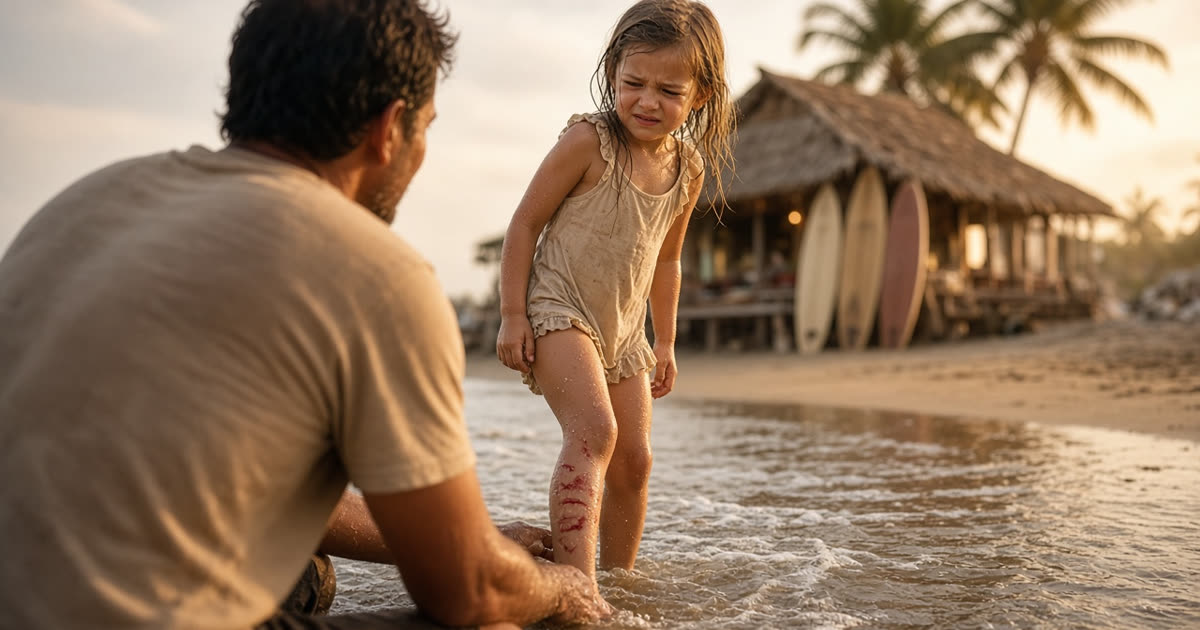
Why Jellyfish Show Up on Bali's Beaches This Month
Bali's beaches get a seasonal jellyfish bloom as the wet season sets in, usually from November into the new year. Shifting winds and the first big swells push plankton toward the south coast, and the jellyfish that feed on it follow. If your child gets stung, the short version is: get them out of the water, rinse with seawater, and get the tentacle off before anything else — the full first-aid sequence is below, along with when a sting is worth a clinic visit and when it isn't. None of this replaces medical advice: if anything about the reaction worries you, call a doctor or get to a clinic.
The Reality of Beach Season Right Now
Most families who move here expect jellyfish to be a rare, freak encounter. In reality they're seasonal, about as predictable as rip currents or the first rains flooding a rice field. Every year, as the wind swings around and the surf builds ahead of the wet season, jellyfish get carried into the surf zone at the same beaches everyone already swims at. It's simply a sign the season changed — and exactly the kind of thing nobody tells you about in your first few months here.
See our guide on Bali culture shock in the first month for the longer list of "nobody warned me" surprises.
The jellyfish most families encounter on Bali's beaches are small, drifting stingers that cause pain, redness, and welts — uncomfortable, occasionally frightening for a child, but rarely dangerous. The deadly box jellyfish species you may have read about live in other parts of the Indo-Pacific, not on Bali's popular swimming beaches. That's worth knowing before you're standing on the sand holding a crying toddler: for almost every family, this means a scared kid, not an emergency.

Why They Show Up Now, Specifically
Jellyfish don't swim to shore on purpose: they drift on currents and get pushed by wind. When the wind direction flips ahead of the wet season and the first strong swells roll in, anything floating offshore, plankton included, gets shoved toward the coast. Jellyfish follow their food. A run of heavy rain and runoff can thicken the bloom further. It's the same weather pattern that drags loose rubbish back onto the sand after months of clean water. If you've noticed both at once, that's not a coincidence.
Our piece on Bali's trash season and which beaches stay clean covers the other half of this same seasonal shift.
What to Look For Before You Let the Kids In
Forget which specific beach "has" jellyfish this week: that changes daily with the wind. Judge the water in front of you instead.
Flags and Patrol Presence
Bali's busier south-coast beaches, including Kuta Beach, have lifeguard towers and a flag system (usually red, yellow, and green). A red flag means stay out, full stop, regardless of how calm the water looks. Lifeguards are also the fastest, most reliable read on whether jellyfish have been spotted that day: ask before you set up your towels, not after someone's been stung.
Time of Day
Jellyfish tend to concentrate in the surf zone with incoming tide and are often worse in the hour or two around sunset, when the light goes gold and half the beach wants one last swim. Mornings, especially before the tide turns, are usually your calmest, clearest window: fewer crowds and less jellyfish activity.
Reading the Water Itself
Cloudy, churned-up water after rain hides everything, jellyfish included. Clear, calm water lets you see what's drifting near your kids before they do. If you spot even one jellyfish, assume there are more nearby you haven't seen yet.
First Aid: What to Do the Moment It Happens
This is the general first-aid guidance recommended for the kind of stings most families encounter on Bali's beaches — it isn't a substitute for medical advice. If you're ever unsure, or the reaction seems severe, call a doctor or get to a clinic rather than relying on this alone.
- Get them out of the water calmly: don't let panic turn into a second accident.
- Rinse with seawater, not fresh water or a shower — fresh water can trigger remaining stingers to fire.
- Remove any visible tentacle with tweezers, a credit card edge, or a gloved hand. Avoid bare fingers.
- Avoid rubbing the area, using sand, or applying ice directly to the skin, which can worsen the sting.
- Soak or rinse the area in comfortably hot water until the pain eases — check with a pharmacist or clinic locally if you want specific guidance, since advice can vary by how bad the sting is.
- Watch for red-flag symptoms: difficulty breathing, swelling of the face or throat, dizziness, or welts spreading well beyond the sting site. Any of these means getting to the nearest emergency department immediately, not finishing the beach day first. Keep the number for your nearest hospital or clinic saved before you need it, and when in doubt, call a doctor rather than guessing.
What a Clinic Visit Might Cost
Most stings never need more than what you can do on the beach towel: rinse, de-tentacle, hot water, done. If a sting does need a clinic — because the pain isn't settling, or because of any of the red-flag symptoms above — costs on the island vary a lot by facility and by what the doctor on duty decides you need, and we're not going to guess at numbers here.
A few things that actually help: check what your travel or health insurance covers before you need it, keep your insurer's number saved next to your clinic's, and ask the clinic directly about cost when you call ahead. A local friend or your accommodation host can usually tell you which nearby clinic families actually use for this kind of thing.
Practical Tips for Beach Days This Season
- White vinegar isn't necessary for most Bali stings: hot water is the more useful thing to have on hand, so bring a thermos if you're somewhere without a warm shower nearby.
- Bring rash guards or swim shirts for younger kids: covered skin means fewer places a tentacle can touch directly if you swim through a patch you didn't see.
- Check the flag and ask a lifeguard before you commit to a swim spot, not after you've set up camp.
- Keep a small stash of rupiah on hand: several beachfront car parks charge a modest fee per motorbike or car, and change isn't always available at the gate.
- If a sting happens, stay calm in front of your kid: their panic usually tracks yours, and a calm adult gets through first aid faster.
Most families get through a sting season or two before it even registers as a season — now you'll notice it before your kid does.
Get the weekly Bali family digest
Events, new guides, one seasonal tip. No spam.
One email a week. Unsubscribe anytime.
Related Articles
Trusted Bali family partners
EPIC
EPIC is a Bali-born kids clothing brand crafting beautifully soft muslin cotton pieces for babies and toddlers — lightweight, breathable,…
View partner →Alive Wholefoods
Canggu / Umalas / KedunguAlive Wholefoods is one of the best-loved organic shops in Canggu, stocking everything from vegetables and snacks to ready-made meals, an…
View partner →Billie's
Kerobokan / Munggu / LombokBillie's is a shop with locations in Kerobokan, Munggu, and Lombok, offering a free bracelet from a selected range with a minimum spend o…
View partner →