Bali Head-Touching Taboo 2026: What to Do
Need personalized advice for your Bali journey? Ask our AI Bali Mom—expertly trained by parents with 10+ years on the island.
Start Chatting →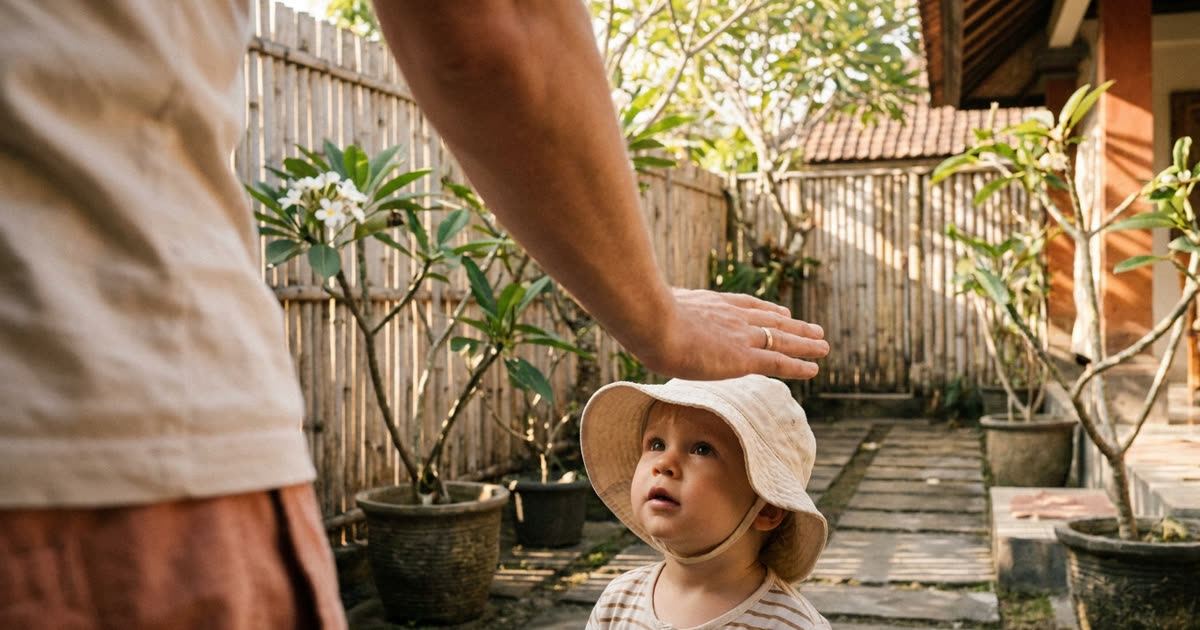
Bali Head-Touching Taboo 2026: What to Do
The Short Answer
Yes, it's real. In Balinese Hindu belief, the head is the body's most sacred point, and touching a child's head without warmth or permission carries real weight for the people around you. If a stranger touches your child's head, redirect gently and smile. If your child touches a Balinese baby's head, apologize immediately and explain you're teaching them — no one expects perfection, just visible effort.
Where This Comes From
Most newcomers hear about the head-touching rule as a random "fun fact" before they land, then forget it the moment a chubby-cheeked baby crosses their path. The actual risk is muscle memory from home, where ruffling a kid's hair is affection.
In Balinese Hindu cosmology, the body has a sacred hierarchy: the head is closest to the divine and houses the soul, while the feet are the lowest and least pure. That's why you'll see people step carefully around offerings on the ground, avoid pointing their feet at temples or elders, and treat a baby's head (not yet "grounded" by the ceremonies that mark a child's early months) with real reverence. This shapes how Balinese parents handle their own children and how they quietly read the rest of us.
The gap for newcomers is one of scale. The belief doesn't switch off outside a ceremony — it travels into ordinary life too, showing up at playgrounds, warungs and the beach right alongside temples and holy days.
What to Look For
When It's Just a Habit From Home
If another foreigner (a visiting relative, a tourist at a cafe) touches your child's head, your child isn't part of the belief system the gesture would offend. It's still worth teaching kids that not everyone wants to be touched, but you don't need to treat it as a cultural emergency.
When Your Child Touches a Balinese Child
This is the direction that actually matters most for expat and nomad families. A Balinese baby or toddler's head carries the full weight of that belief, and small children reach for other small children's hair, faces, and heads instinctively. This is the moment to intervene fastest and apologize most warmly.
Ceremonies and Sacred Settings
Around temple life, from a neighborhood shrine to Bali's Mother Temple, Pura Besakih, the same head-high, feet-low hierarchy governs how you dress, where you stand and which way your feet point — touch is only one part of it. In communities like Ubud, where the ceremonial calendar is part of daily rhythm, families notice these details more, and gentle correction often comes from whoever's nearby, neighbors and shopkeepers included. Local norms like this are usually upheld by the community itself: the banjar, the customary council that runs day-to-day life in a Balinese neighborhood, rather than any written law.
The Blessing Exception
Occasionally an elder will rest a hand lightly on a child's head as part of a blessing during a ceremony or a warm family moment. This comes from someone with standing to give it, in context, and reads completely differently from a casual touch. It's slow and deliberate — the opposite of a quick "how cute" reach.
Practical Tips
- Make "ask first, hands to yourself" your default rule everywhere in Bali — with any child, in any setting. It solves this problem before it starts.
- If you catch your child mid-touch, don't yank them back dramatically: a startled reaction draws more attention than the touch itself. Calmly redirect their hand and apologize to the parent.
- A simple "maaf" (sorry) plus a warm smile goes a long way. Balinese parents are far more forgiving of an honest slip followed by visible effort than of no acknowledgment at all.
- Brief visiting relatives before they meet local friends or attend a ceremony. Grandparents reaching for a "cute baby" moment are often the ones who need the reminder most.
- Remember the rule runs in both directions on the body: feet are the least respectful part to point or touch with, so the same instinct that protects a child's head should also keep shoes and feet away from offerings, altars, and people.
- If a situation feels ambiguous, watch the Balinese parent's body language rather than assuming. Many will stay polite rather than correct you directly, so read the room and err toward caution.
Get the weekly Bali family digest
Events, new guides, one seasonal tip. No spam.
One email a week. Unsubscribe anytime.
Related Articles
Trusted Bali family partners
Billie's
Kerobokan / Munggu / LombokBillie's is a shop with locations in Kerobokan, Munggu, and Lombok, offering a free bracelet from a selected range with a minimum spend o…
View partner →Casa Amar
Delivers across BaliCasa Amar makes science-backed water filters built for Bali's toughest water, from groundwater to chlorinated mains. Choose from shower f…
View partner →Berawa Luxe
CangguBerawa Luxe is a shop in Canggu offering 20% off both online and in-store.
View partner →