Giving Birth in Bali 2026: Hospitals, Costs & Reality
Need personalized advice for your Bali journey? Ask our AI Bali Mom—expertly trained by parents with 10+ years on the island.
Start Chatting →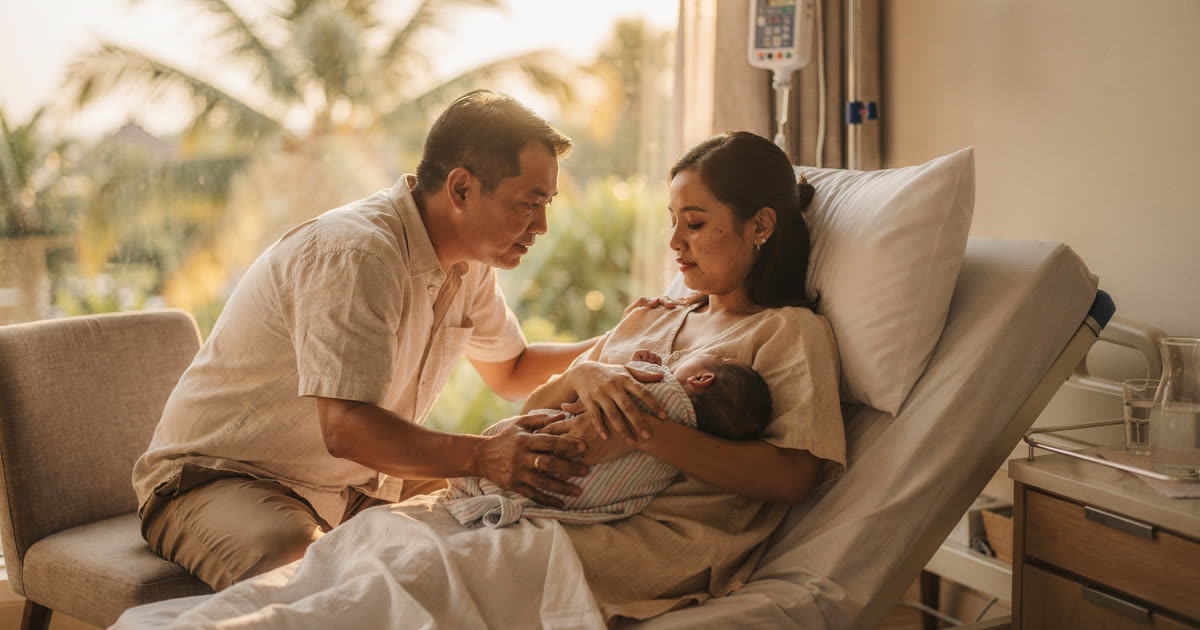
Giving Birth in Bali 2026: Hospitals, Costs & Reality
Yes, foreigners can give birth in Bali — thousands do every year. The most trusted options are Siloam Hospitals Bali in Denpasar for full obstetric backup, BIMC Kuta/Nusa Dua for expat-familiar prenatal care, and Bumi Sehat Birth Center in Ubud for low-risk natural birth. All three are established, English-speaking, and routinely serve international families. Verify your insurance, visa status, and hospital relationship before your third trimester. Don't wait.
The Reality of Pregnancy in Bali
Let's start with what most articles won't tell you.
Bali is not Singapore. It is not Bangkok. The island has genuinely excellent options for healthy, low-risk pregnancies, but the safety net thins fast the moment complications arise. The nearest level-one trauma center with full neonatal ICU capacity is on a different island. Traffic between Ubud and Denpasar during a medical emergency is not theoretical. It is a real variable you must plan for.
What newcomers consistently get wrong:
They assume their home-country insurance works here. Many expat and travel policies require pre-authorization for delivery. Some explicitly exclude elective delivery abroad. Read the fine print in your second trimester, not your ninth month.
They underestimate the visa situation. Indonesia does not restrict foreigners from delivering in Bali. There is no law against it. But a newborn born here to foreign parents does not automatically receive Indonesian citizenship. Indonesia is not a birthright-citizenship country. Your child needs to be registered at your home country's embassy or consulate in Jakarta or Bali — according to the Australian Consulate Bali and other Western missions, this registration should be completed within 30–60 days of birth. Budget time and paperwork for it.
They romanticize the birth center experience without vetting their risk profile. Natural birth in a beautiful rice-field setting is a real option in Bali, but only if you are genuinely low-risk. Placenta previa, gestational diabetes, twins, VBAC with complications: these are not Bumi Sehat cases. Know which category you're in before you commit.
They don't register with a provider early enough. Experienced Bali expat families consistently recommend contacting your preferred OB or birth center by 16–20 weeks gestation — the best English-speaking OBs book out fast, and Bumi Sehat's midwifery team has growing waitlists as of 2026.
Vetted Options: Where to Actually Give Birth
Bumi Sehat Birth Center, Ubud
Robin Lim's nonprofit birth center — operating since 2003 and recognized when Ibu Robin won the CNN Hero of the Year award in 2011 — is one of the most respected natural birth facilities in Southeast Asia. Bumi Sehat operates on a free/donation model. No bills, no invoices. You give what you can.
What it is: midwife-led, holistic, low-intervention, genuinely community-embedded. What it is not: an obstetric hospital. There is no operating theater. If you need a C-section, you will be transferred.
Waitlists are real and growing as of 2026. Contact them early, ideally before 20 weeks. Walk-ins are not turned away in emergencies, but planned births require building a relationship with the midwifery team. If you live in Canggu or Seminyak, Ubud's road access is a real factor in your planning.
Best for: healthy, low-risk pregnancies where natural birth is the genuine priority and the family has thought through transfer protocols.
Siloam Hospitals Bali, Denpasar
Siloam is the most capable obstetric facility on the island. Full surgical suite, C-section capability, neonatal unit, 24-hour specialist coverage, international billing coordination. If something goes wrong, you want to be here.
English-speaking staff are standard in the maternity ward. The environment is clinical. This is a real hospital, not a boutique birth center. Costs are significantly higher than local options and vary by delivery type:
- Normal delivery: approximately IDR 15–30 million (USD 900–1,800)
- C-section: approximately IDR 40–80 million (USD 2,400–4,800)
- These figures shift. Get a written quote from admissions before your due date.
Prenatal care packages are available and worth asking about. Siloam is also the facility most likely to accept direct billing from international insurance providers.
Best for: higher-risk pregnancies, families who want full surgical backup, anyone whose insurance requires a hospital delivery.
BIMC Hospital Kuta (and Nusa Dua Campus)
BIMC is the default expat clinic for prenatal care across southern Bali. The Kuta location is accessible, staff are experienced with foreign patients, and the admin process is straightforward. BIMC Kuta handles routine prenatal visits, scans, and blood work without drama.
For actual delivery, particularly anything higher-risk, BIMC partners with its Nusa Dua campus, which has stronger obstetric infrastructure. Discuss your delivery plan with your OB explicitly. Don't assume Kuta handles everything.
Prenatal care packages typically run IDR 8–20 million for a full package. Delivery costs sit between local Indonesian facilities and Siloam. International insurance coordination is generally smooth.
Best for: expats based in Seminyak, Kuta, or Canggu who want consistent prenatal care in a familiar Western-style clinic.
Pro-Tips: What the Locals Know
- Register your birth at your home country's consulate or embassy immediately. Don't let this slip past 60 days. Indonesia has no easy provision for extending this deadline.
- Get a written birth plan and hospital protocol in Bahasa Indonesia. Even if your OB speaks perfect English, the night-shift nurse may not.
- Ask your provider explicitly about their transfer protocol. What hospital do they transfer to? How far? By what transport? In what conditions? According to local expat communities in Bali, this single question reveals more about a provider's preparedness than any brochure.
- Print physical copies of all prenatal records. Indonesian hospital systems don't always talk to each other. You are your own medical records department.
- Hire a local doula even if you're delivering at a hospital. Experienced Bali families recommend this above almost any other preparation — having someone who knows the system, speaks the language, and can advocate for you in real-time is worth every rupiah.
- Don't rely solely on travel insurance for birth coverage. Most travel policies specifically exclude planned or expected delivery. Expat health insurance with maternity riders is a different product.
- Blood type and crossmatch availability matters. Ask your hospital about blood bank capacity. Rare blood types can be a real constraint in an emergency.
- Bring cash backup. Even internationally-insured patients sometimes face upfront payment requirements before admission. Have IDR 20–30 million accessible.
A Conscious Note
Bali's birth infrastructure, especially places like Bumi Sehat, exists in part because of decades of community investment, not just expat patronage. If you receive care at a free or donation-based center, give generously and honestly. If you deliver at a local Indonesian facility, be a respectful patient, not a demanding tourist. The midwives, nurses, and doctors here are skilled professionals working in a system with real resource constraints. Your presence as a foreign family in Bali's healthcare ecosystem has a footprint. Make it a light one.
Quick-Reference FAQ
Can a foreigner give birth in Bali without special permits? Yes — Indonesia does not require foreign nationals to obtain special permits to give birth in Bali. You need a valid passport and a current visa; there is no additional birth-specific authorization required. Your newborn, however, does not automatically acquire Indonesian citizenship, as Indonesia does not recognize birthright citizenship for children of foreign parents. You will need to register the birth at your home country's embassy or consulate (typically in Jakarta or Denpasar) and apply for your child's citizenship documentation through your own country's process. According to multiple Western embassies operating in Indonesia, this registration should be completed within 30–60 days of birth. Plan and budget for this step before your due date, not after.
What does a hospital birth in Bali actually cost without insurance? Without insurance, a straightforward vaginal delivery at a mid-tier international facility runs approximately IDR 15–30 million (roughly USD 900–1,800 at 2026 exchange rates). A C-section at Siloam Hospitals Bali or equivalent typically costs IDR 40–80 million (USD 2,400–4,800). Prenatal care packages at BIMC generally run IDR 8–20 million for a full package covering scans, consultations, and lab work. Bumi Sehat Birth Center operates on a donation model with no fixed fees. All figures are estimates — costs shift with room type, specialist fees, and complications. Always request a written quote from the admissions or billing department before your due date, not after.
Is Bali safe for a high-risk pregnancy? Bali is not the right place for high-risk pregnancies. Siloam Hospitals Bali in Denpasar offers the most advanced obstetric care on the island — full surgical suite, neonatal unit, 24-hour specialist coverage — but full neonatal ICU capacity and maternal-fetal medicine subspecialties typically require transfer to Jakarta or Singapore. According to local expat health advisors and OBs practicing in Bali, conditions including preeclampsia risk, fetal growth restriction, multiples with complications, placenta previa, and severe gestational diabetes warrant serious evaluation of whether to remain in Bali for delivery at all. If your pregnancy involves known complications, consult a maternal-fetal medicine specialist before committing to a Bali birth.
⚠️ Always verify with a licensed healthcare consultant and your legal representative. Hospital protocols, insurance requirements, and visa regulations change. This guide reflects information current to May 2026 and is not a substitute for professional medical or legal advice.
Get the weekly Bali family digest
Events, new guides, one seasonal tip. No spam.
One email a week. Unsubscribe anytime.
Related Articles
Trusted Bali family partners
Bali SBK
KedunguBali SBK (Sepak Bola Kolektif) is a professional youth soccer academy where kids and teens train like mini pros — coached by former profe…
View partner →Gradual Movement
Gradual Movement offers thoughtful, body-centred private classes in Bali — perfect for families looking to move, stretch, and recharge du…
View partner →Kingz Academy
Bali15% off
View partner →