Camilan Ulang Tahun Sekolah Bali 2026: Green School, BIS & Aturan
Butuh saran personal untuk perjalanan Bali Anda? Tanya AI Bali Mom kami—dilatih secara ahli oleh orang tua dengan pengalaman 10+ tahun di pulau ini.
Mulai Chat →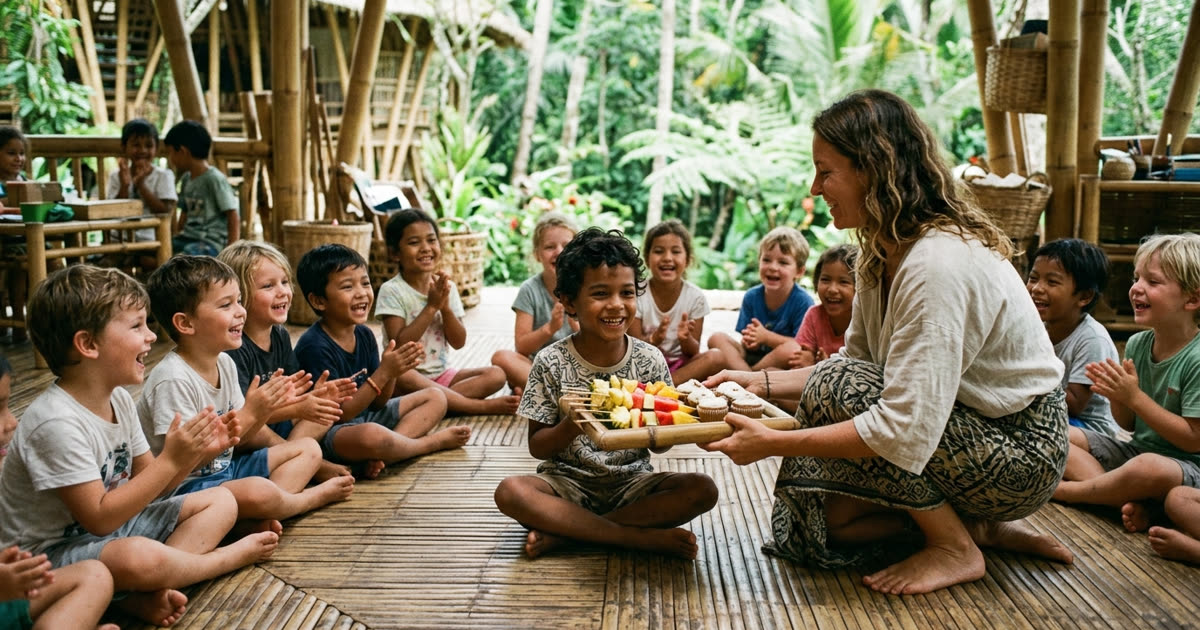
Camilan Ulang Tahun Sekolah di Bali 2026: Apa yang Sebenarnya Boleh Anda Bawa ke Green School, BIS & Canggu Community School
Untuk camilan ulang tahun kelas di Bali, bawalah piring buah segar atau bola kurma — bukan kue konvensional. Green School Bali melarang keras semua gula pasir/refined sugar dan gluten dari camilan kelas sepenuhnya; tidak ada kue ulang tahun standar yang diperbolehkan. BIS Ubud lebih fleksibel tetapi waspada terhadap kacang (nut-aware). Canggu Community School mewajibkan pelabelan bahan yang jelas. Keluarga Bali yang berpengalaman selalu mengirimkan email kepada koordinator kelas setidaknya satu minggu sebelum hari ulang tahun untuk mengonfirmasi apa yang saat ini diperbolehkan.
Realita Hari Ulang Tahun di Sekolah Internasional Bali
Anda telah tinggal di sepuluh negara. Anda tahu bagaimana camilan ulang tahun bekerja. Anda membawa cup cake, anak-anak memakannya, semua orang pulang dengan senang.
Bali akan membuat Anda tersadar.
Hal pertama yang sering salah dipahami oleh orang tua baru adalah berasumsi bahwa "sekolah internasional" berarti "santai". Terutama di Green School, komitmen sekolah terhadap gaya hidup sadar lingkungan meluas hingga ke dalam kelas. Roti pisang buatan rumah akan ditolak di gerbang jika mengandung tepung terigu olahan atau pemanis yang salah.
Hal kedua yang salah ditafsirkan oleh pendatang baru adalah sumber dari peraturan tersebut. Di sebagian besar sekolah internasional di Bali, panduan diet bukan sekadar kebijakan administratif. Aturan itu tertanam dalam filosofi pendirian sekolah, diperkuat oleh para guru, dan diawasi oleh anak-anak itu sendiri. Seorang anak berusia tujuh tahun di Green School akan memberi tahu Anda bahwa gula olahan "membuat hutan sedih". Hormatilah hal itu. Jangan membuatnya menjadi canggung.
Kesalahan ketiga: menunggu hingga sehari sebelumnya. Sekolah-sekolah ini memiliki kelas-kelas kecil, komunitas yang erat, serta profil alergi dan gaya hidup yang sangat spesifik. Satu kelas mungkin memiliki dua anak penderita celiac, alergi kacang yang parah, dan tiga keluarga vegan. Menurut orang tua ekspatriat yang sudah lama tinggal di komunitas sekolah internasional Bali, mengirim email kepada guru dua minggu sebelumnya — bukan dua hari — adalah satu-satunya hal terpenting yang dapat Anda lakukan. Selalu.
Rincian Per Sekolah: Apa yang Sebenarnya Diperbolehkan
Green School Bali (Sibang Kaja, Abiansemal)
Green School adalah yang paling membatasi, dan yang paling serius dalam hal ini. Didirikan pada tahun 2008, sekolah ini menarik keluarga dari lebih dari 40 kewarganegaraan dan telah menjadi salah satu program pendidikan berkelanjutan yang paling diakui di Asia. Kebijakan pangan mereka melarang gula olahan, tepung olahan, dan gluten dari camilan kelas. Ini bukan sekadar preferensi longgar. Ini benar-benar ditegakkan.
Apa yang cocok di Green School:
- Piring buah segar (buah naga, rambutan, salak: pilihlah buah lokal, pilihan ini selalu disukai oleh komunitas ini)
- Bola energi berpemanis kurma yang dibuat dengan kelapa, oat, dan mentega kacang (pastikan kebijakan kacang dengan kelas spesifik Anda terlebih dahulu)
- Camilan kakao mentah (raw cacao) dan minyak kelapa yang dimaniskan dengan sirup maple atau madu murni
- Camilan berbahan dasar beras bebas gluten buatan lokal (periksa label: banyak camilan Indonesia mengandung gula kelapa/gula merah, yang diterima oleh Green School)
- Gelas smoothie dari vendor lokal Ubud, sekitar IDR 25.000–35.000 per gelas (sekitar $1,50–$2,20 USD dengan kurs saat ini), jika Anda memiliki bantuan di hari H
Apa yang tidak cocok: Kue komersial apa pun, cupcake standar, biskuit dari supermarket, atau apa pun dengan tulisan "gula" di tiga bahan pertama. Guru akan mengarahkannya kembali dengan sopan.
Catatan praktis: Keluarga Bali yang berpengalaman menyarankan untuk terhubung dengan komunitas orang tua Green School di Facebook atau WhatsApp sebelum Anda mencoba opsi di luar kebiasaan. Orang tua di sini akan memberi tahu Anda dengan tepat vendor Ubud mana yang membuat camilan yang mendapat sambutan meriah pada hari ulang tahun terakhir.
Bali Island School / BIS (Jl. Pengosekan, Ubud)
BIS mengambil pendekatan yang lebih konvensional terhadap kebijakan pangan. Namun, jangan salah mengira "lebih fleksibel" sebagai "apa saja boleh". Sekolah ini waspada terhadap kacang (nut-aware) di semua tingkatan kelas: tidak ada selai kacang, tidak ada tepung almon, tidak ada camilan kacang campuran. Konfirmasikan dengan guru kelas Anda apakah itu kebijakan bebas kacang sepenuhnya atau hanya waspada kacang. Aturan ini bervariasi di setiap kelas tergantung pada siapa yang terdaftar.
Apa yang cocok di BIS:
- Kue ulang tahun standar umumnya diperbolehkan, tetapi konfirmasikan dengan koordinator kelas
- Cupcake, brownie, camilan yang dibeli di toko dari vendor terpercaya
- Alternatif mentega biji bunga matahari jika Anda ingin menghindari kacang dengan aman
- Camilan kemasan berlabel alergi dari Zara (toko makanan sehat, bukan merek pakaian), Bali Buda, atau Down to Earth
Orang tua siswa BIS mencakup spektrum yang luas, mulai dari yang konvensional hingga yang sangat sadar kesehatan. Menurut komunitas ekspatriat setempat, kue yang enak dari Bali Buda Café di Ubud — seharga IDR 200.000–400,000 untuk pesanan ukuran satu kelas (sekitar $12–25 USD) — akan memuaskan sebagian besar keluarga. Tanyakan tentang preferensi vegetarian atau vegan di kelas tersebut. Biasanya setidaknya ada satu keluarga vegan.
Canggu Community School (Jl. Subak Canggu)
CCS menarik konsentrasi tertinggi keluarga nomad digital dan ekspatriat yang tinggal sementara di pulau ini, yang berarti lanskap diet di sini benar-benar tidak dapat diprediksi. Anda akan menemukan anak-anak yang bebas gluten, bebas susu, vegan, patuh kosher, dan alergi kacang duduk di meja yang sama. Sekolah menanganinya secara praktis: komunikasikan lebih awal dan Anda akan baik-baik saja.
Apa yang cocok di CCS:
- Apa pun yang diberi label bahan dengan jelas
- Opsi vegan dan bebas gluten mencakup kelompok yang paling luas
- Kotak buah organik lokal, sangat populer di kalangan keluarga yang telah tinggal di Canggu lebih dari satu tahun
- Camilan bermerek dari tempat makanan sehat terkenal di Canggu (Kynd Community, Bali Buda)
Jaringan guru di CCS sangat responsif. Kirim pesan ke grup kelas, tanyakan langsung, dan Anda akan mendapatkan jawaban praktis dalam beberapa jam.
Tips Profesional: Apa yang Diketahui Warga Lokal
- Kirim email terlebih dahulu, selalu. Pesan singkat dua baris kepada koordinator kelas dapat menyelamatkan Anda dari rasa malu yang besar saat mengantar anak.
- Bola kurma adalah andalan di Green School. Keluarga Bali yang berpengalaman belajar membuatnya pada semester pertama mereka. Makanan ini membeku dengan baik, mudah dibawa bepergian, dan disukai anak-anak.
- Bali Buda adalah cadangan komersial teraman Anda. Memiliki lokasi di Ubud dan Seminyak. Produk berlabel bebas gluten dan vegan, tanpa bahan tambahan tersembunyi yang berbahaya. Pesanan ukuran kelas berkisar antara IDR 150.000–300.000 tergantung pada pilihan Anda.
- Supermarket Down to Earth menyediakan camilan kemasan yang memenuhi sebagian besar kebijakan sekolah. Lokasi Sunset Road di Seminyak memiliki stok paling lengkap.
- Jangan pernah berasumsi gula kelapa dilarang. Gula ini tidak dimurnikan dan banyak digunakan dalam masakan Indonesia. Green School menerimanya. Batasannya adalah gula putih.
- Tanyakan tentang daftar alergi kelas, bukan hanya kebijakan sekolah. Kebijakan berlaku untuk seluruh sekolah. Kelas Anda mungkin memiliki kebutuhan spesifik yang lebih ketat.
- Buatan sendiri lebih baik daripada membeli di toko untuk sekolah yang sadar lingkungan. Menurut orang tua Green School yang berpengalaman, piring buah yang ditata sendiri dengan label tulisan tangan lebih dihargai daripada kue seharga IDR 600.000 dari toko roti di Seminyak.
- Jumlah lebih penting daripada yang Anda kira. Kelas-kelas di sekolah-sekolah ini kecil — berkisar antara 12–18 siswa di Green School, BIS, dan CCS. Jangan membeli terlalu banyak.
Catatan Kesadaran
Komunitas sekolah internasional Bali melakukan sesuatu yang sangat langka: membangun budaya makanan yang mereka inginkan untuk tumbuh kembang anak-anak mereka. Saat Anda membawa camilan yang dipersiapkan dengan matang ke kelas, Anda tidak hanya memberi makan anak-anak. Anda berpartisipasi dalam proyek tersebut. Jika memungkinkan, dapatkan bahan makanan dari produsen lokal Bali. Belilah buah naga Anda dari warung di pinggir jalan, bukan dari supermarket. Gunakan pembuat roti lokal yang membayar upah layak. Jika keluarga Anda memiliki kemampuan finansial, pertimbangkan untuk menyandingkan camilan kelas dengan donasi kecil ke sekolah lokal atau dapur komunitas atas nama anak Anda. Ini adalah gerakan kecil. Komunitas ekspatriat Bali akan menyadarinya. Begitu pula anak-anak.
FAQ Referensi Cepat
Bisakah saya membawa kue ulang tahun biasa ke Green School Bali? Tidak. Kebijakan pangan kelas Green School Bali secara ketat melarang gula pasir dan gluten dari semua camilan kelas — ini termasuk kue ulang tahun konvensional, cupcake standar, dan sebagian besar biskuit supermarket. Kebijakan ini ditegakkan di tingkat kelas, tidak hanya di atas kertas. Keluarga Green School yang berpengalaman mengandalkan bola energi dengan pemanis kurma, piring buah segar, dan camilan beras bebas gluten buatan lokal sebagai alternatif andalan mereka. Selalu konfirmasikan dengan koordinator kelas anak Anda sebelum menyiapkan atau memesan apa pun, karena persyaratan kelas masing-masing mungkin lebih ketat daripada kebijakan di seluruh sekolah.
Apakah BIS Ubud memiliki kebijakan bebas kacang? BIS menerapkan kebijakan waspada kacang (nut-aware) alih-alih larangan bebas kacang di seluruh sekolah, tetapi kelas masing-masing dapat menerapkan batasan yang lebih ketat tergantung pada siswa mana yang terdaftar pada tahun tersebut. Menurut orang tua di komunitas BIS, aturan praktisnya adalah selalu memeriksa langsung dengan guru kelas anak Anda sebelum membawa apa pun yang mengandung kacang pohon atau kacang tanah — jangan pernah mengandalkan kebijakan umum sekolah saja. Produk mentega biji bunga matahari dan camilan bebas kacang berlabel jelas dari Bali Buda atau Down to Earth adalah cadangan aman yang cocok di sebagian besar kelas BIS.
Apa hal termudah yang bisa saya bawa yang akan cocok di sekolah internasional Bali mana pun? Piring buah lokal segar adalah pilihan aman yang universal di Green School, BIS, dan Canggu Community School. Buah naga, rambutan, semangka, dan salak bebas dari alergen, secara alami vegan, tidak diproses, dan sangat diterima dengan baik di ketiga sekolah tersebut. Menurut komunitas ekspatriat setempat, menyandingkan piring buah tersebut dengan air kelapa muda kecil untuk setiap anak adalah sentuhan yang selalu disukai. Untuk kelas dengan 15 siswa, perkiraan biaya yang dihabiskan adalah IDR 100.000–200.000 (sekitar $6–12 USD dengan kurs saat ini) untuk semuanya — menjadikannya pilihan paling hemat anggaran di sekolah internasional Bali mana pun, dan pilihan yang paling kecil kemungkinannya untuk ditolak di pintu kelas.
Get the weekly Bali family digest
Events, new guides, one seasonal tip. No spam.
One email a week. Unsubscribe anytime.
Artikel Terkait
Mitra keluarga Bali tepercaya
TropiKidz Academy
Imam Bonjol / Dalung / RenonTropiKidz Academy adalah sekolah di Imam Bonjol, Dalung, dan Renon yang menawarkan keluarga diskon 15% untuk setiap program serta diskon…
Lihat mitra →Bali Sunny Kids
UbudBali Sunny Kids adalah sekolah prasekolah berbasis bermain di Ubud untuk anak-anak usia 18 bulan hingga 6 tahun, menyambut baik keluarga…
Lihat mitra →Balu Kids
UbudBalu Kids adalah pusat anak Montessori di dekat Ubud, di Kemenuh, Sukawati (Gianyar), sekitar 30 menit berkendara dari pusat kota Ubud. T…
Lihat mitra →