Membawa Obat-obatan ke Bali Bersama Anak 2026: Apa yang Harus Dibawa
Butuh saran personal untuk perjalanan Bali Anda? Tanya AI Bali Mom kami—dilatih secara ahli oleh orang tua dengan pengalaman 10+ tahun di pulau ini.
Mulai Chat →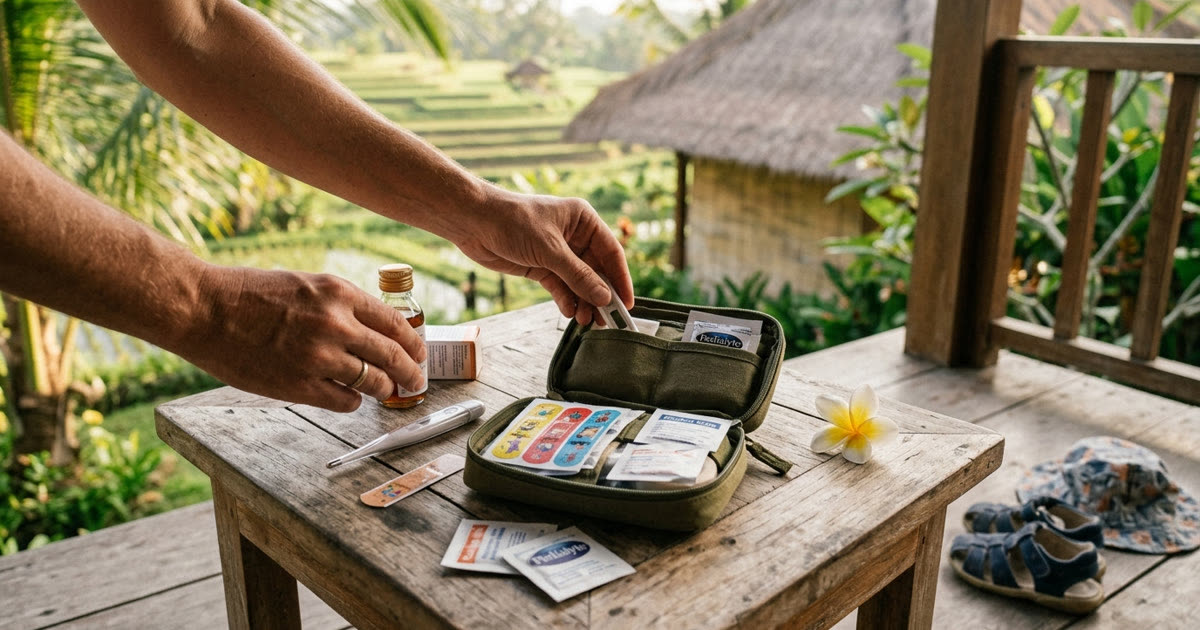
Membawa Obat-obatan ke Bali Bersama Anak 2026: Apa yang Harus Dibawa (dan Apa yang Diizinkan oleh Bea Cukai)
Anda dapat membawa sebagian besar obat anak standar ke Bali di dalam tas kabin atau bagasi terdaftar Anda — parasetamol, ibuprofen, antihistamin, saset oralit, dan obat resep dengan surat dokter. Bea cukai Indonesia mengizinkan jumlah penggunaan pribadi (hingga pasokan 3 bulan) tanpa deklarasi. Jika bea cukai menghentikan Anda, tunjukkan kemasan asli, label resep, dan surat dokter Anda; jumlah penggunaan pribadi hampir selalu langsung diizinkan lewat di tempat.
Itulah poin utamanya. Sekarang mari kita bahas detailnya, karena celah antara "mungkin baik-baik saja" dan "pasti siap" adalah tempat di mana sebagian besar keluarga sering kali mengalami kesulitan.
Realitas Membawa Obat-obatan ke Bali
Sebagian besar keluarga yang baru pertama kali tiba di Bali membawa obat yang terlalu sedikit atau justru salah sama sekali. Mereka hanya membawa satu strip parasetamol dan mengira mereka bisa "membelinya di sana nanti". Kemudian anak mereka mendadak demam tinggi pada jam 2 pagi di Canggu, apotek terdekat tutup, dan mereka panik mencari informasi di Google.
Kelompok lainnya membawa terlalu banyak: seluruh apotek dipindahkan ke koper yang memicu pertanyaan di bea cukai dan menyulitkan pemeriksaan di mesin X-ray.
Kenyataannya berada di tengah-tengah, dan itu bergantung pada berapa lama Anda tinggal, berapa usia anak-anak Anda, dan seberapa terpencil tempat yang ingin Anda kunjungi.
Hal-hal yang sering kali membuat pendatang baru lengah:
- Akses apotek sangat baik di area wisata tetapi tidak merata di luarnya. Ubud pusat? Aman. Amed? Rencanakan terlebih dahulu.
- Apotek di Indonesia menyediakan obat generik, bukan merek dagang luar negeri. Anak Anda mungkin menolak obat yang "salah" jika mereka terbiasa dengan merek tertentu.
- Beberapa obat yang umum di negara asal Anda adalah zat yang diawasi di Indonesia. Obat ADHD, obat batuk berbahan dasar kodein, dan beberapa obat bantu tidur memerlukan rencana dan dokumentasi terlebih dahulu.
- Panas dan kelembapan merusak obat lebih cepat. Jangan tinggalkan strip parasetamol di laci mobil selama tiga hari dan mengharapkan efektivitas yang penuh.
Apa yang Harus Dibawa: Kit yang Wajib Ada
Pereda Demam dan Nyeri
Bawa parasetamol (Calpol, Panadol, atau generik) dan ibuprofen yang cukup untuk seluruh perjalanan Anda, dalam bentuk yang Anda sukai: cair, tablet kunyah, atau supositoria (obat lewat dubur). Apotek di Indonesia menyediakan Tempra dan Sanmol (parasetamol) dengan andal, tetapi jika anak Anda memiliki merek atau bentuk favorit, bawalah sendiri. Supositoria sangat layak untuk dibawa. Penyelamat saat anak yang sakit tidak mau menelan apa pun.
Rehidrasi
Saset oralit (Dioralyte atau sejenisnya) adalah hal yang tidak bisa ditawar. Bali Belly itu nyata, efeknya lebih parah pada anak-anak daripada orang dewasa, dan mengembalikan cairan tubuh adalah prioritas pertama. Bawa lebih banyak dari yang Anda rasa perlu: setidaknya 10–15 saset untuk perjalanan dua minggu. Oralit adalah padanan lokal di Indonesia dan tersedia di mana-mana, tetapi anak-anak kecil terkadang menolaknya karena perbedaan rasa.
Antihistamin
Gigitan serangga, biang keringat, alergi tak terduga: antihistamin sangat layak memakan tempat di tas Anda dalam setiap perjalanan. Bawa cetirizine cair atau loratadine dengan dosis yang sesuai untuk anak. Losion kalamin untuk meredakan gatal pada kulit.
Kesehatan Pencernaan
Probiotik, simetikon (tetes anti-gas untuk anak yang lebih muda), dan loperamide anak jika dokter spesialis anak Anda menyetujuinya untuk usia anak Anda. Tidak semua masalah pencernaan di Bali adalah "Bali Belly." Beberapa di antaranya hanyalah proses penyesuaian perut Anda terhadap air dan makanan yang berbeda.
Kebutuhan Obat Luar
Krim antiseptik (Savlon atau Betadine), perban, plester luka lepuh, krim antijamur (kelembapan memicu pertumbuhan jamur kaki dengan cepat), dan obat nyamuk. Obat nyamuk berbahan dasar DEET paling efektif melawan nyamuk pembawa demam berdarah. Bawa formula yang aman untuk anak.
Obat Resep
Dokter anak yang biasa menangani keluarga yang bepergian secara konsisten menyarankan untuk membawa obat resep rutin yang cukup untuk menutupi perjalanan Anda ditambah cadangan untuk 5 hari. Bawa resep anak Anda dan surat dari dokter Anda di atas kertas berkop resmi. Jarang diperiksa, tetapi sangat penting ketika diperlukan. Simpan dalam kemasan asli. Untuk obat ADHD, produk yang mengandung kodein, atau obat penenang kuat, hubungi Kedutaan Besar Republik Indonesia atau BPOM (Badan Pengawas Obat dan Makanan) sebelum bepergian — kategori ini memerlukan dokumentasi impor tanpa memandang jumlahnya.
Tempat Mendapatkan Obat di Bali Jika Anda Kehabisan
Apotek Guardian Bali
Guardian adalah tempat persinggahan pertama Anda untuk mengisi kembali kebutuhan dasar, tempat terdekat yang mirip jaringan apotek Barat di Indonesia. Gerai di Kuta (dekat Bemo Corner), Seminyak (Seminyak Square), and Ubud (jalan utama) memiliki stok obat generik yang familier dan beberapa merek impor yang lengkap. Stafnya sudah biasa membantu turis. Jam buka biasanya hingga pukul 9–10 malam.
Kimia Farma
Kimia Farma adalah jaringan apotek milik negara Indonesia: lebih murah daripada Guardian, memiliki lebih banyak gerai di seluruh pulau, dan sering kali menjadi satu-satunya pilihan di luar kawasan wisata. Stok obat generiknya lengkap: parasetamol, antijamur, oralit, antihistamin. Staf mungkin kurang fasih berbahasa Inggris, jadi siapkan nama generik obatnya. Parasetamol adalah parasetamol, ibuprofen adalah ibuprofen.
Rumah Sakit BIMC Kuta dan Ubud
Ketika apotek tidak lagi cukup — saat anak Anda mengalami demam terus-menerus, luka yang membutuhkan penanganan tepat, atau Anda benar-benar khawatir — Rumah Sakit BIMC adalah tolok ukur untuk perawatan standar internasional di Bali. Biaya konsultasi biasanya dimulai sekitar USD 70–100 sebelum biaya perawatan apa pun (BIMC Kuta, 2025), itulah sebabnya asuransi perjalanan dengan perlindungan evakuasi medis tidak bisa ditawar bagi keluarga yang mengunjungi Bali. Klinik di Kuta menangani volume pasien tertinggi dan memiliki peralatan paling lengkap; klinik di Ubud lebih tenang dan sangat baik untuk keluarga yang tinggal di Bali bagian tengah. Keduanya memiliki staf berbahasa Inggris dan berpengalaman dengan kasus anak.
Tips Pro: Apa yang Diketahui Warga Lokal
Keluarga berpengalaman di Bali dan komunitas ekspatriat yang lebih luas telah menyempurnakan daftar ini selama bertahun-tahun membesarkan anak-anak di pulau ini:
- Bawa termometer. Anda tidak dapat membeli termometer yang andal pada pukul 11 malam di sebagian besar wilayah Bali, dan mengetahui suhu tubuh anak Anda adalah pembeda antara "menunggu sambil memantau" dan "ke BIMC sekarang".
- Simpan obat-obatan di tas kabin Anda, bukan di bagasi terdaftar. Koper bisa terlambat datang; anak yang sakit tidak bisa menunggu.
- Foto tas obat Anda sebelum meninggalkan rumah. Jika bea cukai menanyakan apa isinya, Anda memiliki bukti visual instan bahwa itu adalah kit keluarga rutin.
- Kata bahasa Indonesia untuk "pharmacy" adalah apotek. Jika Anda dalam keadaan mendesak dan jauh dari Guardian atau Kimia Farma, menanyakan apotek terdekat akan lebih membantu daripada bertanya "pharmacy".
- Jangan membeli obat-obatan dari kios pasar atau toko non-apotek. Obat palsu ada di Asia Tenggara. Tetaplah membeli dari apotek resmi.
- Stiker antinyamuk dan obat nyamuk klip banyak dijual di Bali dan berfungsi dengan baik sebagai tambahan, tetapi tidak menggantikan DEET pada kulit yang terbuka di musim demam berdarah.
- Jika anak Anda meminum antibiotik khusus untuk infeksi telinga berulang atau ISK, mintalah resep cadangan kepada dokter anak Anda sebelum bepergian. Menurut komunitas ekspatriat lokal di Bali, memulai pengobatan 12 jam lebih awal dapat menjadi pembeda antara penyakit yang masih bisa ditangani sendiri dan perawatan di rumah sakit.
Catatan Kepedulian
Infrastruktur medis dan apotek di Bali telah meningkat secara signifikan, sebagian karena komunitas internasional yang tinggal di sini. Ketika Anda kehabisan sesuatu di sana, membelinya dari Guardian, Kimia Farma, atau apotek setempat alih-alih mengirimkannya dari rumah akan menjaga perputaran uang tetap berada di komunitas lokal. Jika Anda pulang dengan obat-obatan bersegel yang tidak terpakai, pertimbangkan untuk menyumbangkannya ke klinik setempat atau Puskesmas (pusat kesehatan masyarakat). Staf di sana akan tahu cara menyalurkannya. Dan jika Anda menggunakan layanan BIMC dan mereka luar biasa (biasanya memang begitu), beri tahu orang lain. Promosi dari mulut ke mulut masih sangat berarti di sini.
Pertanyaan Umum (FAQ) untuk Referensi Cepat
Apakah saya boleh membawa obat resep melalui bea cukai Bali? Ya, Anda dapat membawa obat resep ke Bali untuk anak-anak Anda. Bea cukai Indonesia (di bawah peraturan BPOM) mengizinkan jumlah penggunaan pribadi — umumnya pasokan hingga 3 bulan — tanpa deklarasi di awal atau izin impor untuk obat-obatan standar. Simpan semua obat dalam kemasan aslinya dengan label resep yang utuh, dan bawa surat dari dokter anak Anda di atas kertas berkop surat resmi untuk obat apa pun yang diawasi atau tidak biasa. Menurut keluarga berpengalaman di Bali, jumlah penggunaan pribadi yang dikemas dengan benar hampir tidak pernah dihentikan di perbatasan; surat dokter tersebut dibawa untuk mengantisipasi kejadian langka ketika petugas bea cukai menginginkan konfirmasi tambahan sebelum mengizinkan Anda lewat.
Bagaimana jika anak saya membutuhkan dokter dengan segera di Bali? Jika anak Anda membutuhkan penanganan medis segera di Bali, Rumah Sakit BIMC adalah pilihan paling andal untuk perawatan anak standar internasional berbahasa Inggris, dengan klinik di Kuta dan Ubud. Biaya konsultasi biasanya dimulai sekitar USD 70–100 sebelum biaya pengobatan apa pun, yang membuat asuransi perjalanan menyeluruh menjadi sangat penting dan bukan sekadar pilihan tambahan. Klinik BIMC Kuta buka 24 jam dan menangani volume keadaan darurat anak tertinggi di pulau ini. Simpan nomor darurat asuransi perjalanan Anda di ponsel sebelum berangkat — Anda tidak ingin mencarinya pada jam 2 pagi dengan kondisi anak yang sakit.
Apakah mudah menemukan obat anak-anak di Bali? Di area wisata utama Bali — Kuta, Seminyak, Canggu, dan Ubud — obat-obatan anak relatif mudah ditemukan. Apotek Guardian dan Kimia Farma menyediakan parasetamol, ibuprofen, saset oralit, dan antihistamin dengan andal, dan staf Guardian terbiasa membantu keluarga internasional. Namun, di luar zona tersebut, ketersediaannya menurun drastis. Keluarga yang berpengalaman di Bali secara konsisten menyarankan untuk mengemas kit utama Anda secara lengkap dari rumah dan memperlakukan apotek setempat sebagai opsi pengisian ulang, bukan sumber utama Anda — terutama jika anak Anda menyukai merek, rasa, atau formula tertentu yang mungkin tidak ada di pasar Indonesia.
Get the weekly Bali family digest
Events, new guides, one seasonal tip. No spam.
One email a week. Unsubscribe anytime.
Artikel Terkait
Mitra keluarga Bali tepercaya
Everytuft Bali
CangguStudio tufting langsung di Canggu, tempat anak-anak, remaja, dan orang dewasa bisa bikin karpet sendiri dari nol. Pilih salah satu desain…
Lihat mitra →Bali Arthouse
Umalas**Bahasa Indonesia:** Bali Arthouse adalah kafe seni sekaligus ruang komunitas di Umalas. Pilih aktivitas kreatif dari menu seni harian m…
Lihat mitra →Mogi Artperience
SanurMogi Artperience adalah studio seni yang hangat dan kreatif di Sanur, Bali, tempat anak-anak dan keluarga bisa menikmati kelas melukis, m…
Lihat mitra →