Kelas Tari & Gamelan Bali untuk Anak-Anak Bali 2026
Butuh saran personal untuk perjalanan Bali Anda? Tanya AI Bali Mom kami—dilatih secara ahli oleh orang tua dengan pengalaman 10+ tahun di pulau ini.
Mulai Chat →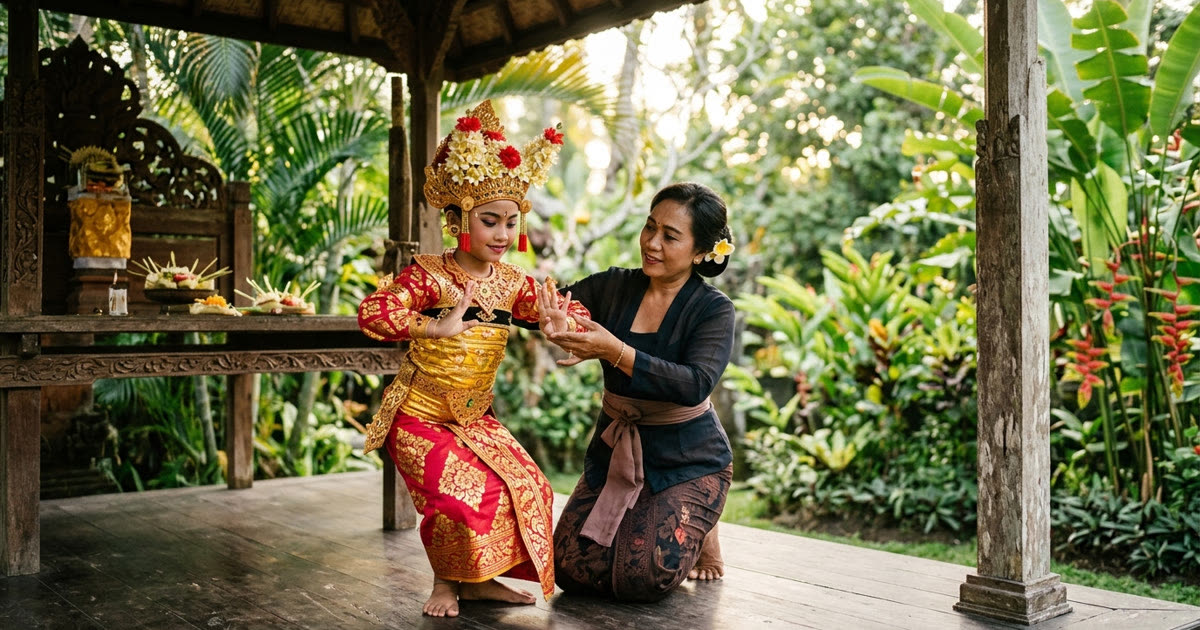
Di Mana Anak-Anak Bisa Mengikuti Kelas Tari atau Gamelan Bali yang Asli di Bali?
Bagi keluarga yang mencari pengajaran autentik — bukan demo turis selama 20 menit — Sanggar Cudamani di Pengosekan dan ARMA di Ubud adalah dua pilihan terbaik Anda. Sanggar Cudamani adalah sekolah seni pertunjukan desa aktif tempat anak-anak lokal Bali berlatih. ARMA menjalankan program budaya terstruktur yang terbuka untuk keluarga ekspatriat dan pengunjung. Keduanya menyediakan kelas nyata yang berkelanjutan.
Realitas Kelas Budaya di Bali
Inilah yang tidak disadari oleh sebagian besar orang tua saat mereka tiba: budaya seni pertunjukan Bali ada di mana-mana, tetapi akses ke pengajaran yang autentik tidak demikian.
Anda akan menemukan banyak sekali "pengalaman budaya" satu jam yang dipasarkan kepada keluarga: demo berpakaian adat, tabuhan gendang cepat, swafoto dengan penari. Bagus untuk hari Selasa yang hujan. Tapi itu bukan pendidikan seni.
Tari Bali yang asli — legong, kecak, baris — membutuhkan waktu bertahun-tahun untuk dipelajari. Gerakan kaki, gerakan mata, gerakan tangan (mudra): tidak ada kelas yang bisa mengajarkan ini dalam satu pagi. Apa yang dapat Anda akses sebagai keluarga ekspatriat atau nomad adalah masuk ke dalam sistem tersebut. Dan itu sebenarnya sangat berarti, jika Anda menemukan pintu yang tepat.
Menurut keluarga ekspatriat yang sudah lama tinggal di Ubud, kesalahan paling umum yang dilakukan pendatang baru adalah berasumsi bahwa karena Bali ramah turis, akses budaya akan otomatis didapatkan. Nyatanya tidak. Program-program terbaik dijalankan oleh dan untuk komunitas Bali. Anak-anak Anda adalah tamu. Jika Anda mendekatinya dengan cara seperti itu, pintu-pintu akan terbuka.

Gamelan sering kali lebih mudah diakses oleh anak-anak daripada tari. Instrumennya bersifat taktil, berbasis kelompok, dan kurva pembelajarannya lebih landai. Banyak anak yang enggan menari malah jatuh cinta sepenuhnya pada gamelan. Mulailah dari sana jika Anda ragu.
Rekomendasi Teruji
Sanggar Cudamani — Pengosekan, Ubud
Ini adalah tempat yang asli. Sanggar Cudamani adalah kolektif seni pertunjukan yang dikelola keluarga yang telah melatih penari Bali dan musisi gamelan selama beberapa dekade. Berbasis di Pengosekan, sebuah desa tepat di selatan pusat Ubud, sanggar ini adalah salah satu institusi seni tradisional paling dihormati di pulau ini. Tari tradisional Bali terdaftar dalam daftar Warisan Budaya Takbenda Kemanusiaan UNESCO pada tahun 2015 — dan garis keturunan pengajaran Cudamani mengalir langsung ke dalam tradisi hidup tersebut.
Anak-anak dari komunitas lokal berlatih di sini bersama siswa pengunjung. Kelas mencakup tari legong, topeng, baris, dan gamelan. Pengajarannya mengikuti gaya belajar tradisional Bali: lihat, serap, ulangi. Berbeda dengan metode Barat yang bertahap langkah demi langkah. Beberapa anak beradaptasi dengan cepat. Yang lain membutuhkan beberapa minggu untuk membiasakan diri dengan ritme tersebut. Keduanya tidak masalah.
Anda harus menghubungi mereka secara langsung. Tidak ada formulir pemesanan, tidak ada pembayaran di situs web. Tanyakan di grup Facebook ekspatriat Ubud (cari "Ubud Community" atau "Ubud Expats"), atau cukup datang dan perkenalkan diri Anda dengan sopan. Bawa anak Anda. Biarkan mereka terlihat menunjukkan minat yang tulus. Tidak ada biaya tetap. Donasi sebesar IDR 100.000–200.000 per sesi (sekitar $6–12 USD) dan kehadiran yang konsisten adalah cara Anda memberikan kontribusi balik.
ARMA — Agung Rai Museum of Art, Ubud
ARMA adalah institusi budaya yang paling terorganisir di Ubud untuk keluarga. Mereka menjalankan jadwal rutin kelas tari, gamelan, dan melukis. Berbeda dengan sanggar komunitas, ARMA memiliki proses penerimaan terstruktur yang memudahkan keluarga yang tidak berbicara bahasa Indonesia.
Untuk anak-anak ekspatriat, ARMA biasanya merupakan langkah awal terbaik. Keluarga yang sudah berpengalaman di Bali merekomendasikannya secara khusus karena lingkungannya ramah, pengajarnya terbiasa dengan siswa internasional, dan ada cukup struktur untuk membangun rutinitas mingguan yang nyata. Periksa jadwal terbaru mereka secara langsung. Program berubah secara musiman. Program budaya terpisah dari tiket masuk museum.
ARMA juga rutin menyelenggarakan pertunjukan langsung secara berkala. Hadiri pertunjukan ini bahkan sebelum anak-anak Anda memulai kelas. Menonton adalah bagian dari belajar, dan tidak ada yang mempersiapkan seorang anak untuk berpartisipasi lebih baik daripada melihat pertunjukan lengkap yang dibawakan oleh para maestro.
Sekolah Memasak Casa Luna — Ubud
Casa Luna adalah sekolah memasak, tetapi imersi budaya di Bali tidak terbatas pada seni pertunjukan saja. Casa Luna, yang didirikan oleh Janet DeNeefe, menawarkan kelas memasak Bali praktis yang mengenalkan anak-anak pada budaya Bali melalui makanan.
Jika Anda memiliki anak-anak yang lebih muda yang belum siap untuk pelajaran tari, menghabiskan pagi di Casa Luna — belajar membuat jaja (jajanan pasar upacara Bali) atau hidangan nasi sederhana — adalah titik awal yang baik. Kegiatan ini mengajarkan mengapa sesaji dibuat, arti makanan dalam upacara, dan bagaimana dapur terhubung dengan pura.
Beberapa keluarga melakukan rotasi: tari dalam satu minggu, memasak di minggu berikutnya. Semua itu membangun hal yang sama — kefasihan budaya yang nyata dan rasa hormat yang tulus.
Tips Profesional: Apa yang Diketahui Warga Lokal
- Konsistensi adalah segalanya. Hanya datang sekali tidak akan membuat anak Anda belajar apa pun. Berkomitmenlah selama sebulan, atau dua minggu penuh dengan kehadiran harian, maka mereka akan mendapatkan sesuatu yang nyata.
- Mulailah dengan gamelan jika anak Anda berusia di bawah 7 tahun. Instrumennya ramah bagi pemula, dinamika kelompoknya menyemangati, dan ini melatih musikalitas yang dapat langsung diterapkan pada tari di kemudian hari.
- Tanyakan ke sekolah anak Anda terlebih dahulu. Banyak sekolah internasional di daerah Ubud yang telah memasukkan seni Bali ke dalam kurikulum mereka atau dapat menghubungkan Anda dengan instruktur lokal yang mengajar secara privat.
- Upacara pura adalah kelas master gratis. Saat lingkungan Anda mengadakan odalan (hari jadi pura), hadirilah. Duduklah di dekat gamelan. Biarkan anak-anak Anda menonton para penari dari dekat. Ini adalah pendidikan dari sumber primer yang tidak dapat ditiru oleh kelas mana pun.
- Hindari paket tur harian "paket budaya". Jika paket tersebut mencakup jalan-jalan di sawah terasering, lokakarya perak, dan kelas tari tradisional dalam setengah hari yang sama, komponen tari tersebut bukanlah sebuah kelas belajar.
- Berpakaianlah dengan sopan sejak hari pertama. Bawakan sarung dan selendang untuk anak Anda saat menghadiri sanggar apa pun. Ini menunjukkan bahwa Anda memahami konteksnya, dan para instruktur akan memperhatikannya.
- Jangan merekam selama pengajaran tanpa izin. Rekam anak Anda saat berlatih di rumah jika Anda ingin kenang-kenangan. Jangan mengarahkan kamera ke guru atau siswa lain tanpa izin yang jelas.
Catatan Kesadaran
Tari dan gamelan Bali bukanlah produk hiburan. Keduanya adalah praktik spiritual yang hidup, terikat pada upacara pura, identitas komunitas, dan transmisi yang diwariskan dengan cermat dari generasi ke generasi. Ketika anak Anda memasuki sistem itu, meskipun hanya sementara, Anda meminta untuk diterima oleh sesuatu yang sakral.
Dukung para instruktur dengan murah hati. Belilah sarung dari toko desa, bukan dari kios turis. Jika anak Anda diundang untuk tampil di acara komunitas, tinggallah sampai seluruh upacara selesai. Biarkan keluarga Anda dikenal sebagai orang-orang yang hadir sepenuhnya dan dengan rasa hormat. Reputasi itu membuka lebih banyak pintu daripada uang dalam jumlah berapa pun, dan itu berarti sesuatu yang nyata bagi komunitas yang telah memilih untuk membagikan hal ini kepada anak Anda.
FAQ Referensi Cepat
Berapa usia minimal anak saya untuk dapat memulai kelas tari atau gamelan Bali? Sebagian besar sanggar di Bali menyambut anak-anak dari usia sekitar 5–6 tahun untuk gamelan, dan usia 7–8 tahun untuk pelatihan tari formal. Anak-anak yang lebih muda sering kali dipersilakan hadir dan mengamati — banyak instruktur merasa bahwa sekadar hadir di sana juga merupakan bentuk pembelajaran. Beberapa guru bersifat fleksibel tergantung pada fokus dan temperamen anak, jadi selalu ada baiknya untuk bertanya langsung daripada berasumsi bahwa jawabannya adalah tidak.
Apakah anak-anak saya harus bisa berbahasa Indonesia atau bahasa Bali untuk mengikuti kelas? Di ARMA, bahasa bukanlah kendala — instruktur terbiasa bekerja dengan siswa internasional dan berkomunikasi secara efektif melalui demonstrasi. Di sanggar komunitas seperti Cudamani, menurut keluarga ekspatriat yang telah mendaftarkan anak-anak mereka di sana, pengajarannya sebagian besar bersifat fisik dan demonstratif, membuat bahasa lisan jauh kurang penting daripada yang diperkirakan sebagian besar orang tua. Beberapa kata dalam bahasa Bali atau bahasa Indonesia sangat membantu dalam menunjukkan iktikad baik, tetapi itu bukan prasyarat untuk bergabung.
Berapa biaya yang harus kami keluarkan untuk kelas yang berkelanjutan? Di sanggar komunitas, tidak ada struktur biaya tetap. Keluarga yang berpengalaman di Bali dan komunitas ekspatriat Ubud yang lebih luas secara konsisten menyarankan kontribusi sebesar IDR 100.000–300.000 per sesi (sekitar $6–18 USD) sebagai jumlah yang pantas dan penuh hormat. ARMA memiliki harga terstruktur yang dipublikasikan — periksa jadwal terbaru mereka secara langsung, karena tarif berubah secara musiman. Instruktur privat mengenakan biaya yang sebanding dan menawarkan keuntungan berupa kemajuan satu-lawan-satu yang konsisten yang disesuaikan dengan kecepatan anak Anda.
Get the weekly Bali family digest
Events, new guides, one seasonal tip. No spam.
One email a week. Unsubscribe anytime.
Artikel Terkait
Mitra keluarga Bali tepercaya
Everytuft Bali
CangguStudio tufting langsung di Canggu, tempat anak-anak, remaja, dan orang dewasa bisa bikin karpet sendiri dari nol. Pilih salah satu desain…
Lihat mitra →Rumah Rabbit Bali
MungguRumah Rabbit adalah studio seni rumahan yang santai di Munggu, tempat anak-anak mulai dari sekitar usia 3 tahun hingga remaja bisa bereks…
Lihat mitra →Bali Arthouse
Umalas**Bahasa Indonesia:** Bali Arthouse adalah kafe seni sekaligus ruang komunitas di Umalas. Pilih aktivitas kreatif dari menu seni harian m…
Lihat mitra →