Monkey Bite in Bali 2026: Rabies Risk & What to Do First
Need personalized advice for your Bali journey? Ask our AI Bali Mom—expertly trained by parents with 10+ years on the island.
Start Chatting →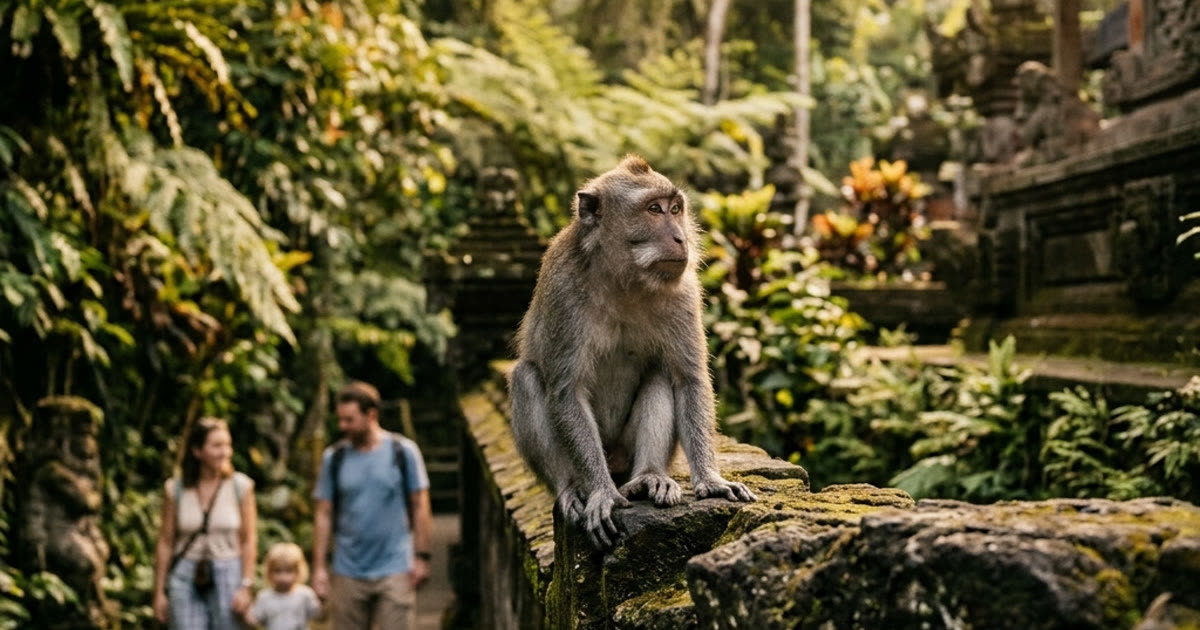
Monkey Bite in Bali 2026: Rabies Risk & What to Do First
If your child was just bitten by a monkey at Ubud Monkey Forest: wash the wound under running water for 15 minutes immediately, then go to Ubud Medical Centre (5-minute drive, Jl. Raya Campuhan). Yes, rabies shots are required — Bali is endemic, and all monkey bites need Post-Exposure Prophylaxis (PEP). Do not wait for symptoms.
The Reality of Rabies in Bali
Bali has never been declared rabies-free. The island experienced a major outbreak starting in 2008 that resulted in over 100 human deaths by 2011 (Bali Provincial Health Department), and while vaccination campaigns have dramatically reduced transmission, rabies remains endemic in Bali's monkey and dog populations as of 2026. Ubud's monkey populations, particularly at Monkey Forest, Sacred Monkey Forest Sangeh, and Tirta Empul, are not systematically vaccinated.
What newcomers get wrong: they assume tourist-heavy areas are safe. They assume a small scratch doesn't count. They wait overnight to see if the bite looks infected. All three mistakes can be fatal. Rabies has a near-100% fatality rate once symptoms appear — according to the WHO, fewer than 20 unvaccinated individuals have ever survived symptomatic rabies globally. The only window that matters is before symptoms, and that window is measured in hours, not days.
What the healthcare system here gets right: BIMC Hospital Kuta and Siloam Denpasar maintain PEP stock specifically because foreigners get bitten regularly. Experienced Bali expat communities consistently recommend calling BIMC before you leave the scene to confirm HRIG availability — the system knows this happens, and they're prepared. Use it.
⚠️ Warning: Rabies PEP protocols, vaccine availability, and hospital guidelines change. Always verify current stock and procedures directly with the clinic before presenting. This guide reflects conditions as of June 2026. Call ahead.
Vetted Hospitals for Rabies PEP in Bali
Ubud Medical Centre — Immediate Wound Care (Nearest to Monkey Forest)
Address: Jl. Raya Campuhan No.36, Ubud Distance from Monkey Forest: ~5 minutes by car, ~15 minutes on foot
This is your first stop if you're in Ubud. Ubud Medical Centre is equipped for initial wound washing and triage, and can begin the PEP sequence. Confirm PEP vaccine availability by phone before you leave the scene. Stock fluctuates. If they're out of Human Rabies Immunoglobulin (HRIG), they'll refer you to Denpasar. Do not skip this stop to "go somewhere better." The wound wash in the first 15 minutes is as critical as the vaccine itself.
BIMC Hospital Kuta — Primary Expat ER with Confirmed PEP Stock
Address: Jl. Bypass Ngurah Rai No.100X, Kuta Phone: +62 361 761263 Emergency: 24/7
BIMC is the gold standard for expat emergency care in Bali. They maintain confirmed rabies PEP stock including both Rabipur/Verorab vaccine and Human Rabies Immunoglobulin (HRIG), the combination required for category III bites (any break in skin). English-speaking doctors, Western clinical standards, insurance billing support. According to long-term expat families in the Ubud area, BIMC typically processes bite cases within 30–60 minutes during standard hours. If you're driving south from Ubud, this is your definitive care destination. Expect to return for doses on days 3, 7, and 14 after your initial visit. Book those follow-ups before you leave.
Siloam Hospitals Bali Denpasar — Backup When BIMC Runs Low
Address: Jl. Sunset Road No.818, Kuta (physically near Kuta, branded as Denpasar) Phone: +62 361 779900
Siloam is a large Indonesian hospital chain with a reliable PEP supply chain. When BIMC's HRIG stock runs low, which happens during peak season and after clusters of bite incidents, Siloam is your backup. Quality of English communication varies by shift, but their vaccine supply is consistent. If you're already in the Denpasar area or BIMC has a long wait, Siloam is a legitimate first choice.
Pro-Tips: What the Locals Know
- Wound wash first, hospital second. Clean running water for 15 minutes, then soap. This single step cuts transmission risk significantly. Don't rush past it to get to the car.
- Category III bite = HRIG + vaccine. Any break in skin requires both Human Rabies Immunoglobulin (injected into and around the wound) and the vaccine series. Vaccine alone is not sufficient for category III.
- Call ahead for HRIG specifically. Vaccine is easier to source than HRIG. HRIG is dosed by body weight and must be available same-day as your first vaccine dose. Confirm by phone: "Do you have rabies immunoglobulin in stock today?"
- The 4-dose schedule is non-negotiable. Days 0, 3, 7, and 14. Missing a dose, especially early doses, compromises the protocol. Plan your itinerary around it.
- Monkey Forest monkeys are habituated, not domesticated. Macaques at Ubud grab bags, food wrappers, and hands. Don't let children hand-feed. A bite while feeding is still category III.
- Travel insurance pre-auth is worth the 10-minute call. BIMC accepts most international policies but may require a deposit upfront. Experienced Bali families recommend calling your insurer from the clinic waiting room — not after — to avoid upfront cost disputes.
- If bitten by a dog too: Same protocol, same urgency. Dogs are the primary rabies vector in Bali. Stray encounters around rice fields and temples are common.
- Pre-exposure vaccination (pre-PEP) is available. If you're staying in Bali long-term, consider a 3-dose pre-exposure course. It simplifies post-bite treatment to 2 doses, and HRIG is no longer required.
A Conscious Note
Monkey populations at Ubud's tourist sites are under real stress, habituated to humans, fed junk food, and trapped between forest and development. The bites that send families to BIMC are often the result of boundary failures: fed, provoked, or approached too closely in a foreign language they've learned not to trust. If you're in Bali long-term, remember that local clinics in Ubud are often the first responders for Balinese families who can't afford BIMC. Tread lightly around the monkeys. Support the clinics. The island takes better care of you when you take better care of it.
Quick-Reference FAQ
Does every monkey bite in Bali require rabies shots? Yes — every monkey bite, scratch, or mucous membrane contact in Bali requires immediate Post-Exposure Prophylaxis (PEP), regardless of how minor the wound looks. Bali is classified as a rabies-endemic region, and the monkey populations at tourist sites like Ubud Monkey Forest are not systematically vaccinated. Experienced Bali expat communities and local health practitioners are unanimous on this: do not wait for symptoms. By the time symptoms appear, rabies is near-universally fatal. Go directly to Ubud Medical Centre or BIMC Kuta — do not delay.
How long do I have to get the first rabies shot after a bite? Start PEP within 24 hours whenever possible — the sooner treatment begins, the more effective it is. The WHO recommends initiating treatment as promptly as possible after exposure, and effectiveness decreases measurably with delay. There is no fixed hard cutoff, but delays beyond 48–72 hours significantly increase risk. There is no benefit to watching and waiting; by the time rabies symptoms appear, the disease is almost always fatal. BIMC Kuta operates 24/7 — go now, even if it's the middle of the night.
Can I get rabies PEP at a pharmacy without a prescription in Bali? No. Rabies vaccine and Human Rabies Immunoglobulin (HRIG) cannot be obtained over the counter at pharmacies in Bali. Both require a doctor's clinical assessment, proper administration, and weight-based HRIG dosing that cannot be self-administered. Your three options are Ubud Medical Centre (closest to Monkey Forest, ~5 minutes), BIMC Kuta (primary expat ER with confirmed PEP and HRIG stock, 24/7), and Siloam Denpasar (reliable backup during peak season when BIMC stock runs low). Call ahead to each to confirm HRIG availability before you travel there.
Get the weekly Bali family digest
Events, new guides, one seasonal tip. No spam.
One email a week. Unsubscribe anytime.
Related Articles
Trusted Bali family partners
Nouvelle Bookstore & Coffee
Seseh / CemagiNouvelle Bookstore & Coffee is an independent English-language bookstore and café on Jalan Pantai Seseh, where a carefully curated childr…
View partner →Sama Sama Store
SesehSama Sama Store is a charming boutique nestled in Seseh, one of Bali's most serene and authentic villages, offering a lovingly curated se…
View partner →Wildflwr
KedunguWildflwr is a beautifully curated boutique in Kedungu, Bali's laid-back surf village on the west coast, offering handpicked clothing, acc…
View partner →