Green School Bali Fees 2026/2027: Costs, Waitlist & Alternatives
Need personalized advice for your Bali journey? Ask our AI Bali Mom—expertly trained by parents with 10+ years on the island.
Start Chatting →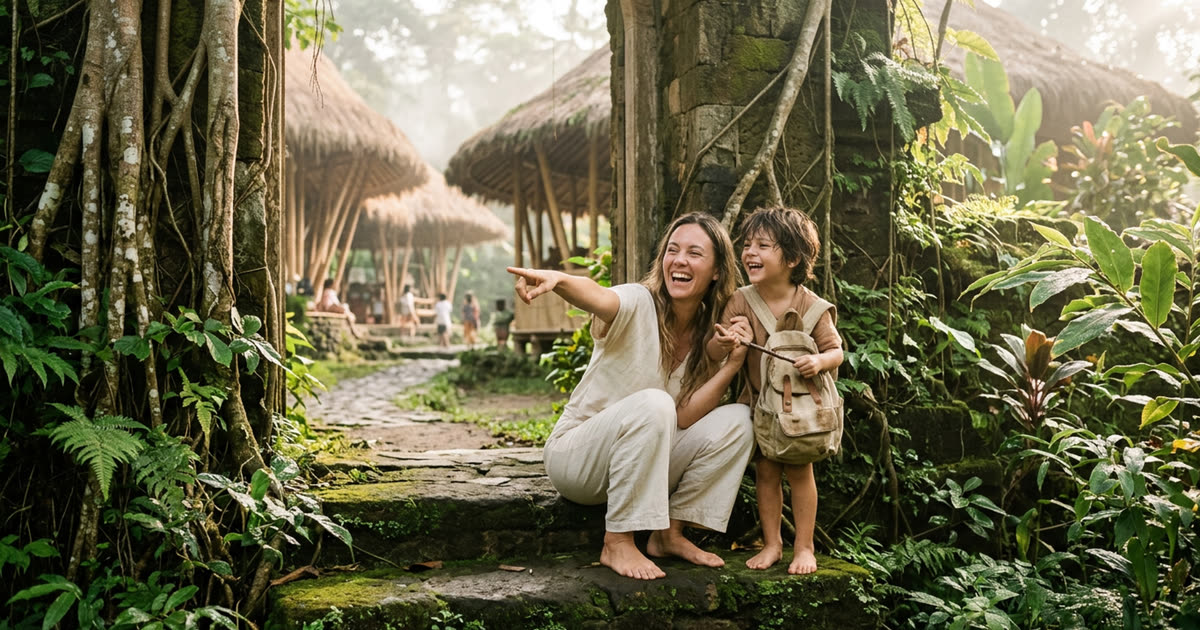
Green School Bali Fees 2026/2027: Real Costs, Waitlist & Best Alternatives
Green School Bali's official 2026/27 tuition runs from Rp 185,445,400 a year for Pre-K (about US$10,400) to Rp 328,600,900 for Grades 11–12 (about US$18,400), converted at roughly Rp 17,900 per US$ in early October 2026. On top of tuition, every family pays a mandatory Rp 8.5 million Local Scholar levy and a Rp 2.3 million parent-programme fee each year, High School students pay a Rp 7.25 million service-trip fee, and new families pay Rp 40 million in non-refundable application and registration fees plus a Rp 30 million refundable deposit. Added up for one child paid annually, that is about Rp 196–347 million a year (roughly US$11,000–19,400), plus Rp 70 million once in the first year. The school's fee documents do not price lunch, uniforms or transport, so ask for those in writing. Add a 6–18 month waitlist for most year levels. For the right family (project-based learners, long-term Bali residents) it's worth it. Families who can't get off the waitlist overwhelmingly choose Tumbuh International School in Canggu or Bali Island School in Sanur as their next-best option.
The Reality of Education in Bali
Here's what nobody tells you before you land: Bali's international school market is small, oversubscribed, and moves fast. The school that looked perfect on Instagram has a 14-month waitlist. The one you'd never heard of has incredible teachers and available spots in September.
Most newcomers make the same mistakes. They anchor on Green School because it's famous, delay applying to alternatives "just in case," and end up scrambling three weeks before term starts. Or they visit one school, fall in love with the bamboo architecture, and skip the hard questions about academic continuity and university pathways.
Bali is not Singapore or Kuala Lumpur. The international school ecosystem here is intimate: maybe eight schools worth considering, three or four that can genuinely serve most foreign families. That intimacy is also a strength. You can actually talk to the head teacher. You can walk into a classroom before you enroll. Use that access.
The other thing newcomers underestimate: the community you choose is the community your child grows up in. These schools are small enough that the parent body becomes your social world, your support network, your emergency contact list. Vet accordingly.
Vetted Schools Worth Your Time
Green School Bali (Sibang Kaja, Abiansemal)

Green School sits about 30 minutes from Canggu on a stunning campus along the Ayung River: bamboo structures, composting toilets, rice paddies, the whole thing. It is genuinely unlike any school on earth, and for children who thrive in project-based, interdisciplinary learning, it can reshape how they see themselves as learners. The school enrols roughly 600 students from over 40 countries (per school-published figures) — small enough that teachers know every child by name.
Official 2026/27 fees (Green School Bali Tuition & Fees Schedule 2026-2027 and Enrolment & Admissions Policy, checked 4 October 2026):
One-time fees for new students:
- Application fee: Rp 4,000,000 per child, charged for each enrolment cycle, non-refundable
- Registration fee: Rp 36,000,000 per child, invoiced when you accept an offer, non-refundable, valid for one year (a new fee applies if you defer beyond two semesters)
- Refundable deposit: Rp 30,000,000 per child, held while your child is enrolled and not refunded if you leave before the 12-month minimum or give late notice (the policy also lets the school deduct unpaid materials, sport uniforms and damages)
Annual tuition, paid in full (US$ at about Rp 17,900 per US$):
- Pre-K (ages 3–4): Rp 185,445,400 (about US$10,400)
- Kindergarten (age 5): Rp 219,176,020 (about US$12,200)
- Grades 1–3: Rp 249,263,690 (about US$13,900)
- Grades 4–5: Rp 254,894,600 (about US$14,200)
- Grades 6–8: Rp 287,350,080 (about US$16,100)
- Grades 9–10: Rp 304,468,000 (about US$17,000)
- Grades 11–12: Rp 328,600,900 (about US$18,400)
Other charges on the schedule:
- Local Scholar levy: Rp 8,500,000 per family (not per child), every year, mandatory
- Parent programmes membership: Rp 2,300,000 a year (GSPA Rp 280,000 plus The Bridge Rp 2,020,000), for up to two parents
- High School service trips: Rp 7,250,000 per student (High School is Grades 9–12), billed in the second cycle. Optional extras such as sports tournaments cost more
- Semester payment: 3% on top of the annual fee (70% / 30%). Termly payment: 8% on top, open only to existing families who have completed 12 months. PayPal adds a 4% surcharge, and late payment adds 10% plus Rp 500,000 per invoice
- Sibling discount on tuition: 5% for the second child, 10% for the third, 15% for the fourth
- Extra learning support, if the school decides your child needs it: Rp 10,000,000 a term for English-language support or Rp 20,000,000 a term for intensive learning or behaviour support; a one-on-one aide is at the family's own cost
What the school's documents do not price: lunch (the admissions page mentions vegetarian school lunches), uniforms (the policy mentions sport uniforms), transport (the school runs the Bio Bus) and trips other than the High School service trips. We have not found official prices for these, so we are not quoting any. Ask admissions for a written quotation (the policy points families to accounts@greenschool.org). The school lists no building or development fee.
What it adds up to (our arithmetic from the figures above, one child, annual payment, no discounts):
- Pre-K: Rp 185,445,400 + Rp 8,500,000 + Rp 2,300,000 = Rp 196,245,400 a year (about US$11,000)
- Grades 1–3: Rp 249,263,690 + Rp 10,800,000 = Rp 260,063,690 (about US$14,500)
- Grades 6–8: Rp 287,350,080 + Rp 10,800,000 = Rp 298,150,080 (about US$16,700)
- Grades 11–12: Rp 328,600,900 + Rp 10,800,000 + Rp 7,250,000 = Rp 346,650,900 (about US$19,400)
- First year only: add Rp 40,000,000 (application plus registration, non-refundable) and the Rp 30,000,000 deposit, so Rp 70,000,000 in total. A new Pre-K family therefore pays Rp 196,245,400 + Rp 70,000,000 = Rp 266,245,400 in year one, Rp 30,000,000 of which comes back if you stay the minimum period and give notice on time.
Typical extra costs, then, are a modest slice of the bill: the recurring family fees add about 5.8% to Pre-K tuition and about 5.5% to Grade 11–12 tuition (Rp 10.8 million of Rp 185.4 million, and Rp 18.05 million of Rp 328.6 million). The larger unknowns are the items the school does not price. Budget in IDR, not USD: Green School bills in rupiah, so your dollar cost moves with the exchange rate.
The waitlist is real. According to long-term Bali expat communities, applying 12–18 months before your target start date is the minimum — not a suggestion. The school prioritises siblings and returning families, which means spots genuinely are tight. Apply anyway. Cancellations happen, and being on the list costs nothing.
The honest caveat: Green School runs its own curriculum. If you're likely to relocate again in a few years, talk to them directly about how students transition back into IB or national curricula. Some kids reintegrate seamlessly; others need significant support. This is not a dealbreaker, just a conversation to have before you commit.
Tumbuh International School (Canggu)
Tumbuh has become the go-to for digital nomad families and long-term Canggu residents who want rigorous but not rigid schooling. It is smaller, newer, and has a noticeably warm parent community. The name means "to grow" in Indonesian, which tells you something about the ethos.
The curriculum blends structured academics with student agency, closer to traditional international schooling than Green School, which makes transitions smoother. Fees are reported to be lower, around IDR 130–220 million per year, but that is an unverified estimate we could not check against a published fee schedule, so ask the school for its 2026/27 schedule in writing. Waitlists exist but move faster.
If you're living in Canggu or Berawa, the location matters more than it sounds. Mornings without a 40-minute crawl through Bali traffic are not a small thing.
Bali Island School – BIS (Sanur)
BIS is the most established international school on the island, running IB programmes from early years through Diploma. If your child needs a recognised pathway to Western universities, or there's any chance you're heading back to the UK, Australia, or Europe, BIS gives you the clearest continuity.
It sits in Sanur, which is quieter and more local-feeling than Canggu. Families who live there tend to stay. The school has decades of expat institutional knowledge baked in: clear admissions processes, experienced pastoral care, an alumni network that can actually help your kid when they apply to university.
Fees are an unverified estimate of roughly IDR 190–310 million per year, which we could not check against a published fee schedule, so ask the school for its 2026/27 schedule in writing. Apply early. Year 11 and 12 IB spots fill quickly.
Pro-Tips: What the Locals Know
Experienced Bali families — drawing on years of collective knowledge in the Bali Kids Community Facebook group and local parent WhatsApp networks — recommend the following:
- Apply to three schools simultaneously. One waitlist backup is not enough. Apply to your top choice and two realistic alternatives at the same time.
- Visit on a regular Tuesday, not an open day. Open days are curated. A Tuesday morning visit tells you who the teachers really are and whether the kids seem happy.
- Ask specifically about teacher turnover. Bali has a rotation problem: some schools cycle through expat teachers every 12–18 months. Continuity matters for children.
- Check the visa situation for your child. Some schools sponsor student visas, others don't. This affects your family's overall visa strategy.
- Probe the learning support provision. If your child has any additional needs (dyslexia, ADHD, social anxiety), ask directly what support exists. Answers vary wildly.
- Talk to current parents, not the admissions office. Find the school's parent WhatsApp group or ask in Bali Kids Community on Facebook. Unfiltered truth lives there.
- Factor in the commute. Bali traffic is not a minor variable. A 45-minute school run each way is two hours of your day.
- Indonesian curriculum schools are an underrated option. For families staying long-term and wanting genuine cultural integration, several excellent bilingual schools offer this. The social and linguistic benefits are real.
A Conscious Note
Choosing a school in Bali is also a choice about what kind of presence your family has here. The island's education system is under real pressure. Underfunded local schools sit alongside international schools charging well over Rp 100 million a year. Many expat families find meaning in bridging that gap: volunteering with local schools, supporting the Bali Children Foundation, hiring Balinese staff and paying fairly. Whatever school you choose, think about what your family gives back to the community you're benefiting from. It doesn't have to be grand. It has to be intentional.
Quick-Reference FAQ
How much does Green School Bali cost per year in 2026/2027? Annual tuition on the official 2026/27 schedule runs from Rp 185,445,400 for Pre-K to Rp 328,600,900 for Grades 11–12 (about US$10,400 to US$18,400 at roughly Rp 17,900 per US$). Every family also pays a mandatory Rp 8.5 million Local Scholar levy plus a Rp 2.3 million parent-programme fee each year, and High School students pay a Rp 7.25 million service-trip fee. New families pay Rp 40 million in non-refundable application and registration fees plus a Rp 30 million refundable deposit. For one child paying annually, that comes to about Rp 196 million (Pre-K) to Rp 347 million (Grades 11–12) a year, plus Rp 70 million once in the first year. Lunch, uniforms and transport are not priced in the school's documents, so ask admissions for a written quotation.
Is Green School Bali accredited and will it help my child get into university? Green School Bali states that it is accredited by the Western Association of Schools and Colleges (WASC), which is recognised by most Western universities, and many graduates do go on to higher education. However, because Green School runs its own curriculum rather than the IB, the university pathway requires deliberate planning. Experienced Bali families recommend discussing your child's specific university goals with the admissions team before enrolling — the answer differs significantly depending on year level and target institutions. Students aiming at competitive UK or US universities sometimes supplement their Green School education with external IB preparation in later years, which is not unusual but is worth budgeting for.
How long is the Green School Bali waitlist in 2026? Realistically 6–18 months for most year levels. According to local expat communities, younger year groups tend to have the longest waits because families secure spots early and siblings receive priority placement. The most common entry route for newcomers is a cancellation, which is why being on the list as early as possible — even before your move date is confirmed — is the standard advice from families who've been through it. You can always defer a confirmed spot if your timeline shifts, so there is no downside to applying immediately.
What's the most affordable international school in Bali without sacrificing quality? Tumbuh International School in Canggu is the most frequently cited alternative by long-term Bali expat parents, offering strong academics and an engaged community at fees we could not verify against a published schedule, so ask the school for its 2026/27 fee schedule and compare it with Green School's official US$10,400–18,400 tuition range only once you have a written quote. For families where budget is a genuine constraint, Montessori-style and bilingual Indonesian schools in Ubud and Sanur also have solid reputations within the long-term expat community, with the added benefit of genuine cultural and linguistic immersion that international schools cannot replicate.
Get the weekly Bali family digest
Events, new guides, one seasonal tip. No spam.
One email a week. Unsubscribe anytime.
Related Articles
Trusted Bali family partners
Balu Kids
UbudBalu Kids is a Montessori children's center near Ubud, in Kemenuh, Sukawati (Gianyar), about 30 minutes by car from central Ubud. It offe…
View partner →Malinki School
KerobokanMalinki School is a nurturing international school in Kerobokan, Bali, offering a creative, child-centred curriculum that blends global l…
View partner →Bali Sunny Kids
UbudBali Sunny Kids is a play-based preschool in Ubud for little ones aged 18 months to 6 years, welcoming both local and international famil…
View partner →