Bring vs Buy in Bali 2026: Expat Family Packing Guide
Need personalized advice for your Bali journey? Ask our AI Bali Mom—expertly trained by parents with 10+ years on the island.
Start Chatting →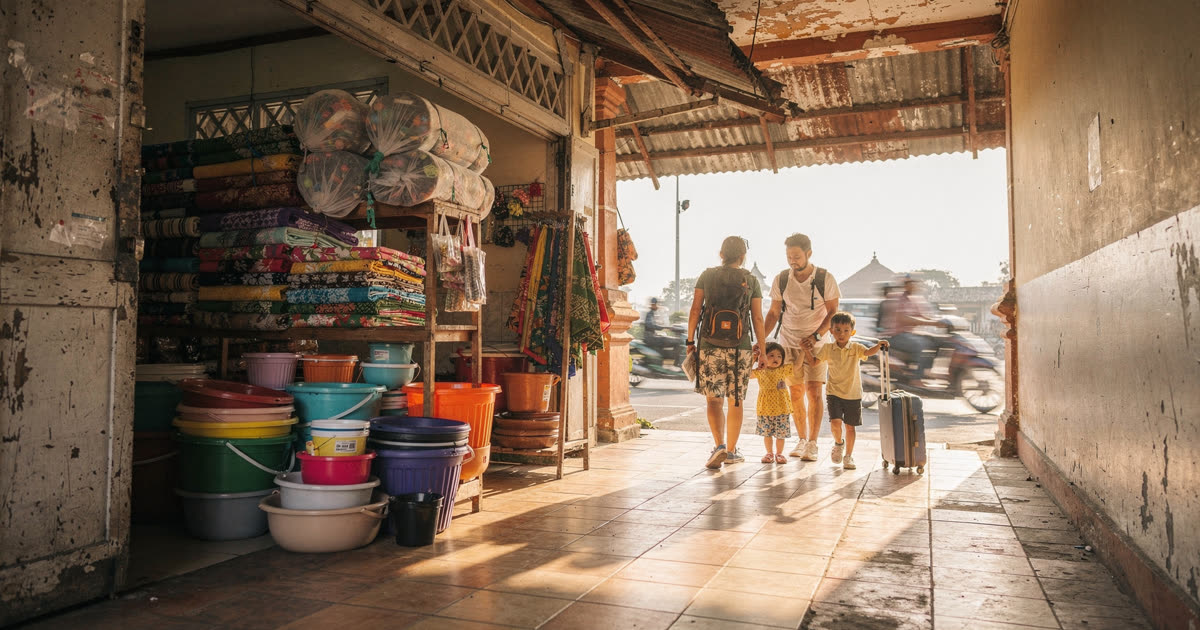
Bring vs Buy in Bali 2026: Expat Family Packing Guide
Don't ship — but don't arrive empty-handed. Bring car seats, prescription medications, and specialty formula: you cannot reliably source these in Bali. Everything else — kids' clothes, school supplies, toiletries, OTC medicine — is available locally, often at a fraction of the price. Buy in Bali where you can.
The Reality of Shopping in Bali
Here's what most expat families get wrong: they either over-pack like they're moving to the wilderness, or they arrive assuming Bali is basically Singapore. Neither is true.
Bali in 2026 is genuinely well-stocked for daily family life. You can find H&M, Zara, decent pharmacies, and same-day delivery via Tokopedia and Shopee. But there are real gaps, and the families who didn't research them are the ones posting desperate questions in the Bali expat WhatsApp groups at 11pm.
The thing newcomers miss: what's available and what's reliable are different. A product might appear on Tokopedia, arrive in two weeks, and be a counterfeit. Or it might be exactly what you needed for a third of the price back home. You learn to read the signals.
Vetted Recommendations
Beachwalk Shopping Center (Kuta)
Your baseline reference for international brands. Beachwalk is the closest Bali gets to a Western mall, with H&M, Zara, Miniso, and a solid supermarket. Good for basics: kids' clothes, shoes, costume items for school events, light homeware. Don't expect flagship-level stock. Sizes run smaller than Western sizing, and popular items sell out and don't restock quickly. Still, for "I need school shoes by Monday," Beachwalk solves the problem.
Also worth knowing: there are several malls in Denpasar (Tiara Dewata, Discovery Mall, Bali Collection in Nusa Dua) with comparable or better stock depending on what you need. Beachwalk is just the one most expats default to because it's well-known and easy to reach from Seminyak and Canggu.
Kimia Farma
The pharmacy you'll use most. A nationwide chain with over 1,000 branches across Indonesia — including a dozen locations across Bali's main tourist corridors — generally well-stocked, with English-friendly staff in tourist-area branches. You'll find paracetamol, ibuprofen, antihistamines, basic wound care, oral rehydration salts, and many common antibiotics, often over the counter with no prescription needed.
What you won't find: brand-name Western formulations, prescription-only medications from your home country, ADHD medications, most mental health prescriptions, and anything with a controlled substance classification in Indonesia. Indonesian customs allows travelers to import up to a 30-day personal supply of most prescription medications without documentation; for longer stays, a doctor's letter is strongly recommended (BPOM, Indonesia's food and drug authority). If your child takes a specific medication daily, bring a generous supply (3–6 months) and work with your doctor to establish a local alternative before you run out.
Tokopedia
Indonesia's dominant e-commerce platform, underused by families who don't know to look here. Think of it as Amazon for Southeast Asia: faster than you'd expect, but buyer caution applies. You can find specialty formula, imported snacks, specific school supplies, white noise machines, ergonomic kids' chairs, and plenty more that never makes it to Bali shop shelves.
Verified sellers matter. Check ratings obsessively, read reviews in Google Translate if needed, and stick to "Star Seller" or official brand stores when buying anything health-related or for small children. Delivery to Bali is 2–5 days from most Java-based sellers. Plan ahead rather than ordering in a panic.
Pro-Tips: What the Locals Know
- Car seats are a bring-it situation. Experienced Bali families and local expat communities consistently recommend bringing your car seat from home. Indonesian car seat safety standards lag behind Australian, EU, and US equivalents, counterfeits are common on marketplaces, and you won't find a quality-assured infant seat at Beachwalk. Bring your own, especially for under-2s.
- Baby formula varies wildly. Popular international brands (Aptamil, Kendamil) appear on Tokopedia but supply is inconsistent. Bring a 2-month buffer. Local formula is nutritionally fine, but switching brands can cause stomach upset, especially in babies under 12 months.
- Sunscreen: overpriced and often fake. A decent SPF 50 at Kimia Farma runs Rp 150,000–350,000 (roughly USD $9–22), and reef-safe options are rare. Counterfeits are common on marketplaces. Bring a solid stock. You'll use triple what you think.
- School supplies are easy to source locally. According to long-term Bali expat families, stationery shops like Art+1 and Ace Hardware (for craft supplies) cover 90% of standard school supply lists. Check with your school before packing 48 glue sticks.
- Indonesian kids' clothing is excellent value and good quality. Cotton On Kids and market finds at Pasar Badung (Rp 50,000–150,000 per piece, roughly USD $3–9) are genuinely well-made. Don't ship clothes unless they're specific to your culture or a beloved comfort item.
- Electronics and tech accessories: bring what you rely on. Adapters are easy (Indonesia uses Type C/F plugs), but specific cables, baby monitors with your preferred specs, and quality headphones for kids are cheaper and more reliable from home.
- Prescription eyewear and contact lenses: Bali has excellent, inexpensive opticians in Seminyak, Canggu, and Ubud. Bring your prescription written out clearly. Getting glasses made locally is a genuine perk of expat life here.
A Conscious Note
Bali's community of local families, warung owners, and small traders is what makes this place worth living in, and they absorb real costs when expats default entirely to importing or buying from international chains. Where you can, buy local: choose the market over the mall, the apotik down the road over the chain pharmacy, the ibu selling school snacks over the imported brand. You're not just a consumer here; you're a resident. The money you circulate locally stays local. And the relationships you build, knowing your fruit lady, your kids' favourite sate man, your neighbourhood pharmacy, those are what make Bali feel like home.
Quick-Reference FAQ
Can I buy a quality car seat in Bali? Experienced Bali families and expat community groups consistently advise against purchasing car seats locally. International brand car seats sold in Bali frequently do not meet Australian, EU, or US safety standards, and counterfeits are widespread on Tokopedia and other local marketplaces. The near-universal advice from families who have lived here long-term: bring your own from home, particularly for infants and toddlers under three years old. It is one purchase you do not want to compromise on.
What medications should I bring from home? Bring any prescription medication your child takes regularly — including ADHD or mental health medications, controlled substances, and brand-specific formulations. Indonesian customs permits travelers to import up to a 30-day personal supply of most prescription drugs without documentation; for longer stays, a signed doctor's letter is recommended (BPOM). Kimia Farma covers most OTC needs reliably — fever reducers, antihistamines, basic antibiotics — but do not rely on any Indonesian pharmacy for specialist or controlled medications. A 3–6 month supply from home gives you time to establish a local medical relationship before running out.
Is Tokopedia safe for buying baby products? Tokopedia is safe and reliable for baby products when used carefully. Stick to sellers with "Star Seller" status or official brand storefronts, and read reviews thoroughly — use Google Translate if needed. Avoid unknown sellers for anything health-related or intended for infants. According to expat families living in Bali, Tokopedia works well for school supplies, branded household items, specialty formula, and general goods; the platform is less reliable for safety-critical items like car seats or unverified health products. Allow 3–5 days for delivery from Java-based sellers and plan ahead rather than ordering in a crunch.
Get the weekly Bali family digest
Events, new guides, one seasonal tip. No spam.
One email a week. Unsubscribe anytime.
Related Articles
Trusted Bali family partners
Wildflwr
KedunguWildflwr is a beautifully curated boutique in Kedungu, Bali's laid-back surf village on the west coast, offering handpicked clothing, acc…
View partner →Sama Sama Store
SesehSama Sama Store is a charming boutique nestled in Seseh, one of Bali's most serene and authentic villages, offering a lovingly curated se…
View partner →Alive Wholefoods
Canggu / Umalas / KedunguAlive Wholefoods is one of the best-loved organic shops in Canggu, stocking everything from vegetables and snacks to ready-made meals, an…
View partner →