Bali Rip Currents 2026: What to Do If Your Kid Gets Pulled
Need personalized advice for your Bali journey? Ask our AI Bali Mom—expertly trained by parents with 10+ years on the island.
Start Chatting →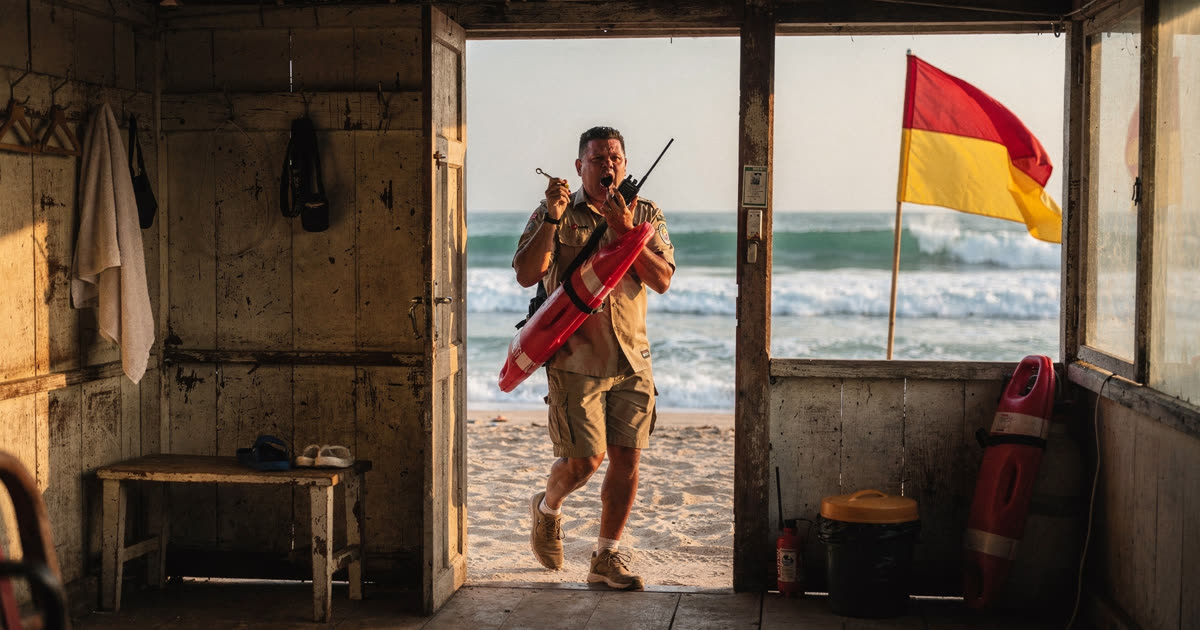
Featured Snippet Lead
If your child gets caught in a rip current at a Bali beach, stay calm and don't swim against it: get them to float on their back, breathe steadily, and wait for the current to release its pull before swimming parallel to shore. Signal a Balawista lifeguard tower immediately (blow a whistle, wave both arms), or call BASARNAS Bali search and rescue at 115. Rip currents pull out, not under — a strong swimmer's instinct to fight straight back to the beach is what causes exhaustion and real danger.
The Reality of Beaches in Bali
I've stood on Kuta beach at 5pm with the light going gold and the whole horizon on fire, and I've also stood there at the same hour watching a lifeguard tower blast a whistle at a father who didn't even realize his son had drifted forty meters down the shoreline in under a minute. Both things are true about this coast. It's one of the most beautiful stretches of ocean your kids will ever play in, and it's also a working Indian Ocean beach with real surf, real sandbar channels, and real currents. Not a resort pool.
Here's what newcomers consistently get wrong: they read "calm-looking water" as "safe water." Rip currents often look like the smoothest, least choppy patch of ocean, because the water there isn't breaking, it's flowing. Parents also assume every beach is patrolled, all day, everywhere. It isn't. Balawista covers the main tourist strips (Kuta, Legian, Seminyak, Double Six, Sanur, Nusa Dua) roughly 9am to 6pm (per Balawista's posted tower schedule, current as of 2026), and coverage thins fast the moment you walk past the flagged zone or head to a quieter beach in Canggu, Uluwatu, or the Bukit. Dry season (April to October, per Indonesia's BMKG climate data) brings bigger, more consistent Indian Ocean swell and stronger rip formation, especially around river mouths and the man-made rock groynes near Kuta and Legian.

The fix isn't fear. Experienced Bali families recommend a simple habit: know exactly where the safe strip is on any given beach, check it before your kids are ankle-deep, and know precisely who to call if the day goes sideways.
Vetted Recommendations
Balawista (Bali Life Saving Patrol)
Balawista is Bali's official volunteer-and-professional lifesaving patrol, and their red-and-yellow flagged zones are the single most important piece of beach infrastructure on the island. Swim between the flags, in front of a manned tower, full stop — experienced Bali families treat that as the entire safety strategy for 90% of family beach days. Towers are staffed with binoculars, rescue boards, and radios, and the guards are trained specifically for the sandbar-channel rips common along Kuta, Legian, and Seminyak. If you can't see a flag or a tower, that beach is not patrolled right now. Treat it as swim-at-your-own-risk, kids included.
BASARNAS Bali (Search & Rescue)
BASARNAS is Indonesia's national search-and-rescue agency. Their Bali hotline, 115, is the number to call for anything beyond what a beach lifeguard can handle: a missing swimmer, a rescue at an unpatrolled beach, or an emergency after dark when Balawista towers have gone home. They coordinate boats, jet skis, and personnel across the island and handle tourist-beach incidents routinely. According to local expat communities, save 115 in your phone before you need it, not after.
BIMC Hospital Kuta
Getting your child out of the water isn't automatically the end of the danger. Secondary (or "dry") drowning, where a small amount of inhaled water irritates the lungs and causes breathing trouble hours later, is real, and it's why local expat communities say every Bali parent should know where the nearest proper ER is. BIMC Hospital Kuta is a trauma-equipped, English-speaking, 24/7 hospital minutes from the main tourist beaches, with a sister location in Nusa Dua. If your child coughed, gasped, swallowed water, or seemed "off" after a rip current scare, even if they seem fine twenty minutes later, get them checked. Watch for coughing, unusual fatigue, or labored breathing over the following 24 hours, and go straight in if you see any of it.
Pro-Tips: What the Locals Know
- Read the flags, not the crowd. A busy beach with no flags flying isn't safer than an empty one with flags up. It just means more people are taking the same risk.
- Spot a rip visually: a channel of flatter, choppier, or discolored water cutting through the surf line, a gap where waves aren't breaking, or foam and debris steadily moving away from shore.
- Teach one phrase: "flip, float, follow." Experienced Bali families drill this with kids before every beach trip: flip onto their back, float to conserve energy, follow the current until it releases them, then swim parallel to shore.
- Never swim out to rescue a child yourself without a flotation aid: a boogie board, cooler lid, anything that floats. Throw it, don't just swim; double-drownings from panicked parent rescues are tragically common worldwide, Bali included.
- Ask the tower, not the internet. According to local expat communities, Balawista guards know that day's conditions (swell direction, tide, which stretch has an active rip) better than any app.
- Sunset swims need extra caution. Guard towers stand down around 6pm, right when the golden light pulls everyone back in the water for "just one more dip."
A Conscious Note
The ocean that gives your family this much joy also supports the fishing families, the surf schools, and the Balawista volunteers who've made lifesaving on this island possible with limited public funding. Treat their flagged zones and instructions as final, not a suggestion. It keeps their job doable and your kids safer. Where you can, support the local guides, surf schools, and beach warungs who work these shores every day, and teach your kids that the sea is a living thing to be respected, not a backdrop for content. That respect, modeled early, is some of the best safety training there is.
Quick-Reference FAQ
What's the very first thing I should do if I see my child caught in a rip current? If you see your child caught in a rip current, don't jump in after them without a flotation device — double-drownings from panicked rescues happen worldwide, Bali included. Experienced Bali families recommend yelling for the child to float on their back, alerting the nearest Balawista tower immediately (whistle, wave, shout), and calling BASARNAS Bali search and rescue at 115 if no lifeguard is in sight.
Are all Bali beaches patrolled by lifeguards? No, not all Bali beaches are patrolled. According to local expat communities and Balawista's own coverage, active lifeguard patrol is limited to the main tourist beaches — Kuta, Legian, Seminyak, Sanur, Nusa Dua, and Double Six — roughly 9am to 6pm. Beaches outside those zones or hours, including quieter spots in Canggu, Uluwatu, and the Bukit, have no lifeguard coverage, so swim only between the flags.
My child seems fine after being pulled by a current. Do we still need a doctor? Yes, if your child coughed, gulped water, or struggled to breathe at any point during the rip current scare, they should still be checked by a doctor even if they seem fine afterward. Secondary drowning symptoms — including coughing, unusual fatigue, or labored breathing — can appear hours later, so watch for those over the next 24 hours and go straight to BIMC Hospital Kuta if anything seems off.
Get the weekly Bali family digest
Events, new guides, one seasonal tip. No spam.
One email a week. Unsubscribe anytime.
Related Articles
Trusted Bali family partners
Wildflwr
KedunguWildflwr is a beautifully curated boutique in Kedungu, Bali's laid-back surf village on the west coast, offering handpicked clothing, acc…
View partner →Berawa Luxe
CangguBerawa Luxe is a shop in Canggu offering 20% off both online and in-store.
View partner →Billie's
Kerobokan / Munggu / LombokBillie's is a shop with locations in Kerobokan, Munggu, and Lombok, offering a free bracelet from a selected range with a minimum spend o…
View partner →